Pixel 11 missed the upgrade everyone was counting on
The Pixel 11's Tensor G6 chip is less capable than previously thought.
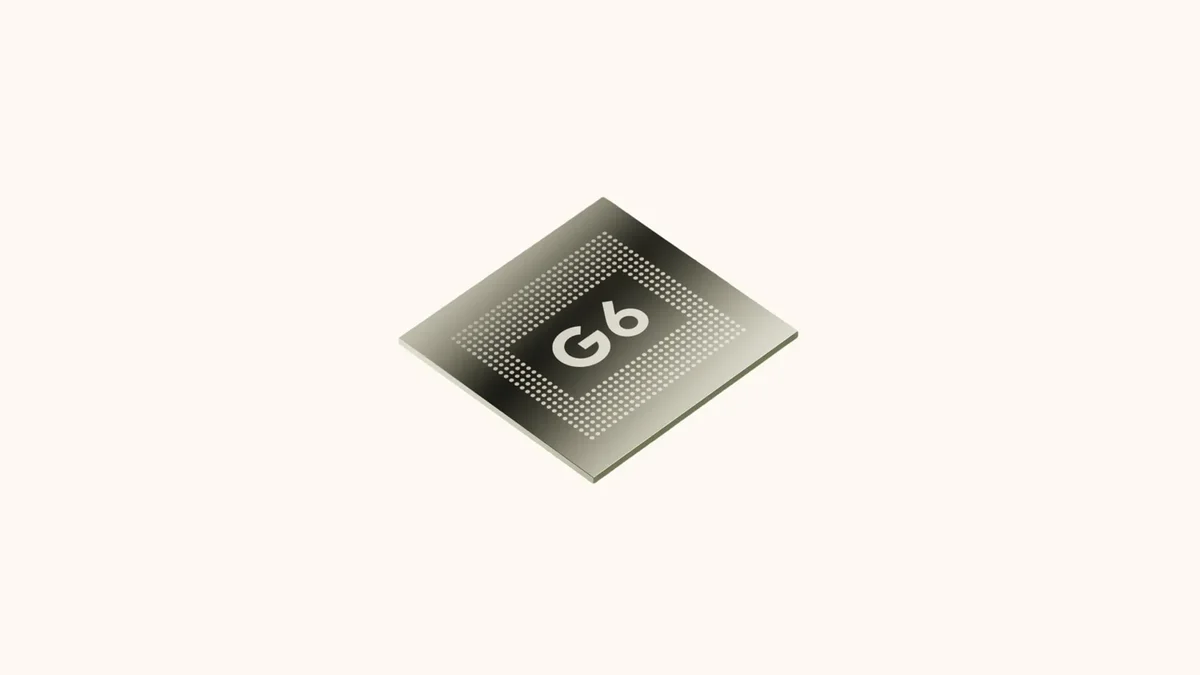
The Pixel 11 will continue to lag behind the iPhone 18 Pro and Galaxy S26 Ultra in speed. | Image by Google
The Pixel 11 is hard to love. Don't get me wrong. Google's new phones offer a unique selling proposition, but the modest upgrades mean switching won't make sense for customers with recent flagships. The Tensor G6 is one of the key hardware improvements introduced this year, but even that silicon fails to meet expectations.
Not quite a giant leap
The Tensor G6 was widely expected to transition from Taiwan Semiconductor Manufacturing Company's (TSMC) 3nm process to a cutting-edge 2nm node. However, Google's Vice President of Hardware, Peng Yu-chun, shattered those expectations when he revealed to CNA that the G6 is built on TSMC's latest 3nm-class process.
Compounding matters, entry-level variants of the Pixel 11 Pro and Pro XL have been scaled back from 16GB of RAM to 12GB, raising performance concerns.
Google insists buyers have no cause for alarm.
How much of a letdown is this?
328 Votes
It's not. We don't need blazing-fast speeds.
36.89%
Enough to make me not want to buy the Pixel 11.
36.59%
Reduced RAM bothers me more.
26.52%
Optimizations
Google says its engineering team optimized the UI system, memory management, and the hardware and software architecture for better performance.
A spokesperson previously told Engadget that tight integration across hardware and software allows AI models to run efficiently and boost performance on the new phones.
The tech industry is navigating a severe, supplier-driven RAM shortage and we will need to adjust Pixel 11 pricing and RAM configurations to mitigate this while delivering maximum value for our customers.
In fact, through software and silicon optimization, you can expect faster and smoother performance from this year's Pro models when compared to last year's comparable 256GB SSD SKUs.
That said, we are aggressively engineering our way through these challenges. Pixel's full stack approach allows us to optimize the way on-device models load and execute, keeping our hardware lean, fast, and highly responsive.
Google spokesperson, August 2026
Yada yada
Leaked benchmark scores suggest the Tensor G6 delivers only marginal gains over the G5. Google's own numbers are more impressive, with the company claiming a 25% faster CPU, 50% more TPU compute, and AI tasks that execute 3.5 times faster.
The Tensor G6 is also credited with expanding digital zoom range. The Image Signal Processor (ISP) has been upgraded for better low-light photography.
Repeated theme
Google never set out to build the fastest chip. Blame the rumor mill or high expectations, but in hindsight, Google was unlikely to be the first with a 2nm chip. The company says its Tensor G6 is a "purpose-driven engine" designed to make the Pixel 11 "more intuitive, fluid, and helpful."
Still, with modest silicon upgrades and reduced RAM paired with a $100 hike, these trade-offs are getting harder to accept.
Read more about the Pixel 11:
- It was unveiled alongside other Google products
- It's heavy on AI
- And comes with several new camera features


Popular stories






Latest News




![Another batch of Galaxy S26 series users in the US are getting a nice surprise today [UPDATED]](https://m-cdn.phonearena.com/images/article/183643-wide-two_350/Another-batch-of-Galaxy-S26-series-users-in-the-US-are-getting-a-nice-surprise-today-UPDATED.webp)
Things that are NOT allowed:
To help keep our community safe and free from spam, we apply temporary limits to newly created accounts: