
AT&T makes an historic change to modernize its long-distance technology
After years of helping AT&T carry long-distance calls, the legacy 4ESS platform is shut and replaced.
AT&T makes historic change to long distance platform. | Image by PhoneArena
AT&T announced this morning that it has shut down its final No. 4 Electronic Switching System (4ESS). This is a digital, high-capacity toll switch that served as the core backbone for long-distance traffic across North America for several decades.
AT&T shuts down a legacy long-distance platform
The technology was launched in Chicago back in 1976 and was developed by Bell Labs and manufactured by Western Electric (which later became Lucent Technologies). It helped AT&T move long-distance traffic across its network for many years. Shutting down the 4ESS is a sign that AT&T continues to move forward with software-driven platforms built for modern communications needs.
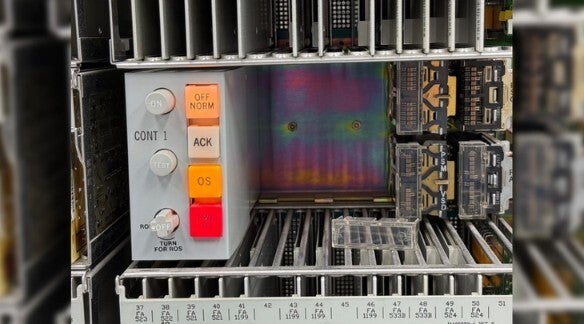
Power switch for a 4ESS platform in Anchorage, Alaska, the night it was powered off. | Image by AT&T
The switches used with this technology were extremely large. They took up as much as 5,000 square feet, larger than a pro basketball court. Modern long-distance routing has changed dramatically as customers now turn to AT&T for mobile, fiber, streaming, digital, and cloud-based applications. As a result, to modernize its network, AT&T moved functions handled by the 4ESS to a next-generation platform.
The new platform takes up much less space
This new N4E platform was designed by AT&T to enhance efficiency, flexibility, and long-term service reliability. Check out the difference in the updated platform's footprint. The equipment for the 4ESS, which required the same space as 100 equipment bays, equivalent to as much as 5,000 square feet, was replaced by gear that needed the same room as only four equipment bays, taking up only 28 square feet.

AT&T replaces its old 4ESS switching technology for long-distance with a modern, smaller N4E platform. | Image by AT&T
By shutting down its last connection to the 4ESS, AT&T can still provide support for long-distance voice service while dropping the use of old, legacy equipment and replacing it with technology that sets the telecom giant up for the future. AT&T's goal is to create a fully IP-enabled fiber network by 2029.
While AT&T is looking ahead, it still recognizes that this is the end of a chapter
Fiber uses light instead of electricity, preventing speeds from declining due to electromagnetic interference. It can also transmit data over longer distances without quality degradation. An IP-enabled fiber network delivers massive bandwidth, ultra-fast speeds, and a highly reliable network. The last switch AT&T had to shut was located in Anchorage, Alaska.
Given Alaska’s vast geography and the importance of maintaining dependable connectivity across the state, the effort required careful planning and close coordination across engineering teams and network partners to migrate traffic and complete the transition seamlessly for customers.
AT&T
Realistically, where will AT&T finish this year?
71 Votes
As the fastest 5G network in the US
33.8%
As the second fastest 5G network in the US
28.17%
As the third fastest 5G network in the US
38.03%
As for the 4ESS, AT&T says, "Its retirement marks the end of an important chapter in history, and reflects how our network continues to evolve."


Popular stories





Latest News





Things that are NOT allowed:
To help keep our community safe and free from spam, we apply temporary limits to newly created accounts: