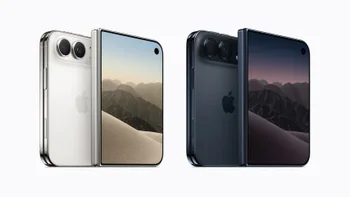
For roughly a decade now, or ever since the iPhone X at least, the mobile industry has been stuck in a bit of a rut. Most smartphones released since 2017 have been aping Apple and have utilized rounded display corners with large radii that emulate the iPhone's look.
This has been the de facto standard for the better half of a decade now, and probably 95% or more of all the currently used smartphones out and about around the globe feature rounded display corners.
And you know what?
After years of looking at displays with curved screens, I can't lie, I'm getting sick of that design language and I'm definitely experiencing fatigue. I'm craving the right angles, and more realistically, the less pronounced curves.
It's only the appearance, but the functional implications, too
Many may argue that curved screens only steal a few hundred pixels in the extreme corners, where no actual content is usually displayed, and that would be absolutely correct. I agree in principle that pretty much anything important belonging to the interface is already neatly positioned away from the corners of the display.
Yet, it does affect some use cases. Take gaming for example––the curved corners of some phones impede with some of my favorite games, like Call of Duty: Mobile, requiring me to shift the UI around in order to fit some interface elements. Watching videos or TV shows completely zoomed in also cuts out some of the frame. It's not much that's being cut, but why should I suffer for a dumb design decision?
Recommended For You
Samsung had (and still has) the right idea
But there's no actual reason for those exterior rounded corners to exist. Of course, aside from what manufacturers perceive would be appealing to the consumer eye.
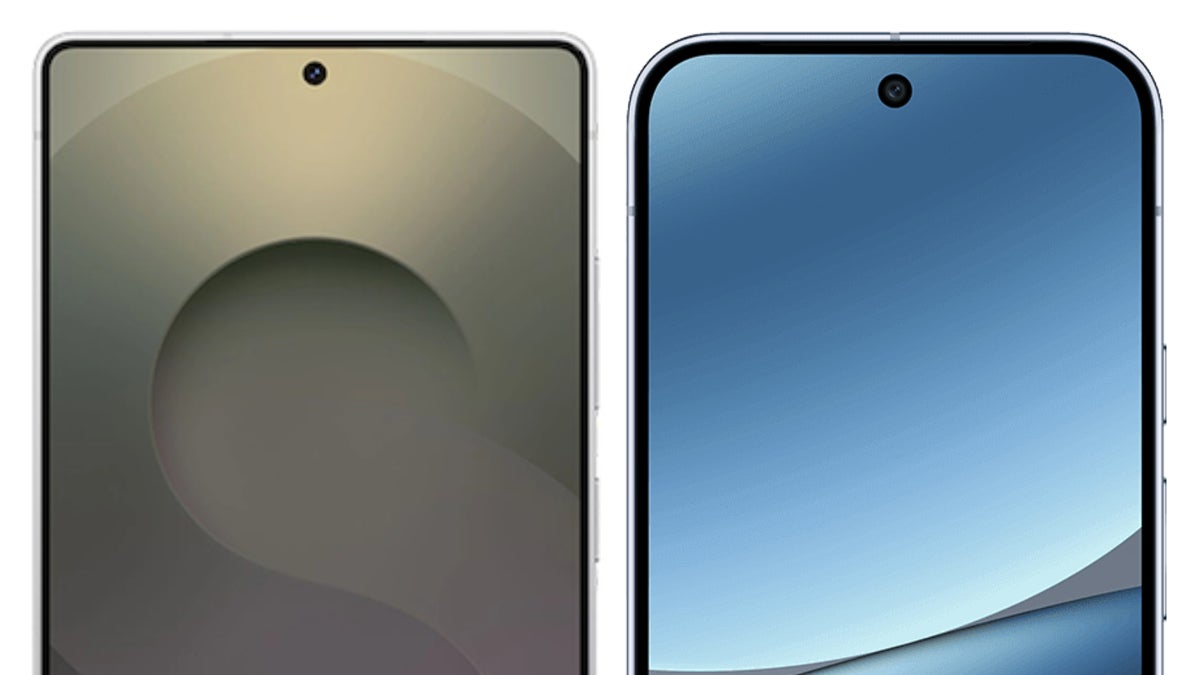
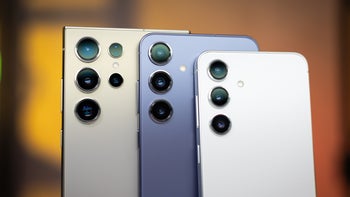
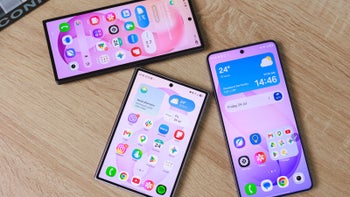
Samsung proved that with some of its older flagships, like the Galaxy S22 Ultra, Galaxy S23 Ultra, or the Galaxy S24 Ultra . These phones didn't lean into the overly curved-screen pitfall and instead relied on much more angular corners and edges, delivering a distinct look that definitely stood out among all other rivals.
The other day, I took a Galaxy S24 Ultra to test out some older One UI features since it wasn't updated to the latest software update, and I was instantly reminded how great a properly shaped screen looks. It lacks the excessively rounded edges and combines very thin bezels with nearly perfect right angles. It just feels right, and you get the maximum screen real estate.
With the Galaxy S25 Ultra and the Galaxy S26 Ultra, the curved corners start to seep in a little, but at least both of these devices combine that with a pleasantly flat frame, whereas the Galaxy S24 Ultra had a convex one, and that's not just everyone's cup of tea.
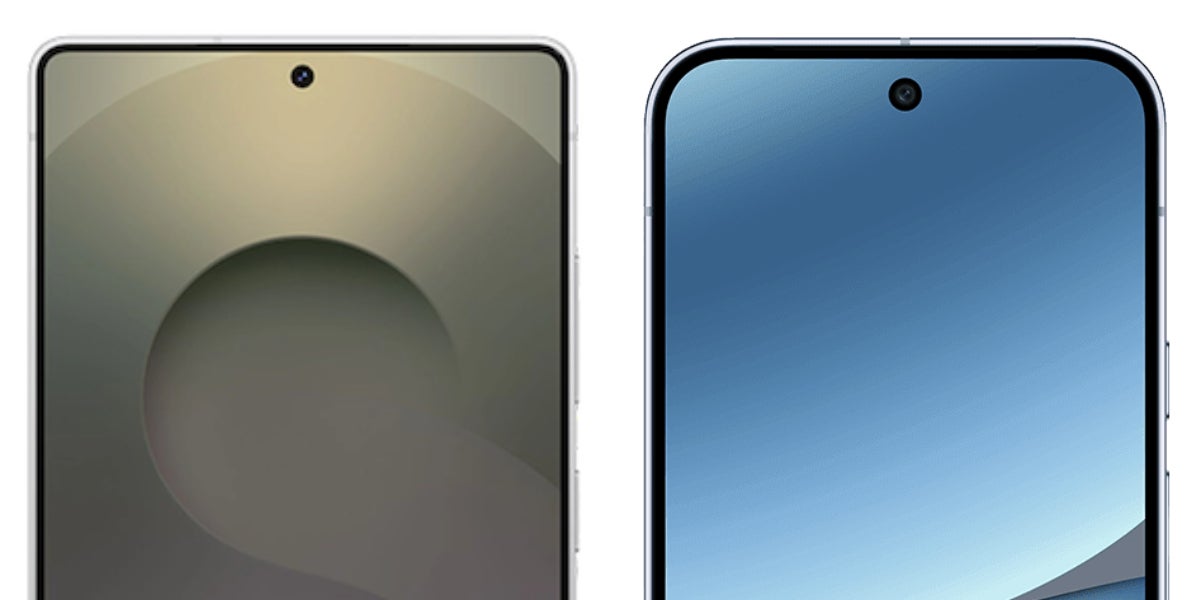
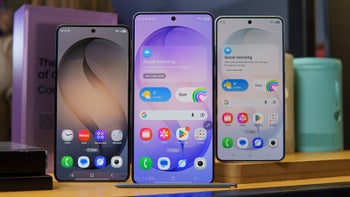
Which one do you prefer? I will always lean to the left. | Image by PhoneArena
Curved screens came second
Which came first, the rounded screen corners or the curved phone frame?
This question has a definite answer: exterior design was first, and the screen curves followed second.
Back in the day, around 2015 and 2016, flagship phones combined curved frame angles with a completely rectangular display and rather wide bezels were the norm. Some devices that fit the bill exactly are pretty much all of Apple's iPhones before the iPhone X, Galaxy SIII through S7, Google's Nexus 5X and 6P phones,many Motorola, LG, and HTC devices.
Sony phones also had a slight curve on the outside, but these were much less pronounced, making the Japanese giant's phones at the time some of the "sharpest" around. That hasn't changed a lot since then, luckily for all Sony fans.
My point is, once manufacturers found ways to eliminate those large bezels that were often wide enough to allow a jumbo jet landing, screens simply grew out to fill in the freed-up space, which led to their curved angles.
Rounded display corners are overstaying their welcome
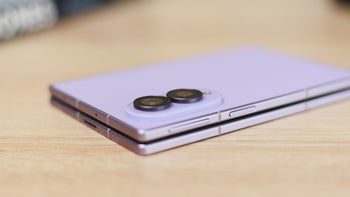
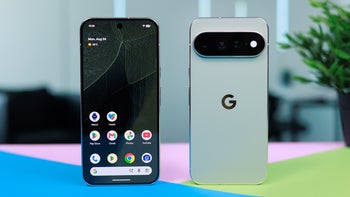
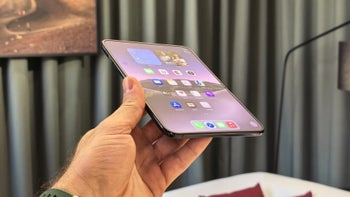
Some phones that really irk me in a bad way are Google's recent Pixel Folds, which employ pretty large corner radii, but that's not even the biggest offender here. When folded, the phone has an offset and asymmetric bezels towards the hinge, whereas the opposite part employs rounded corners.
The cover screen follows that logic and also employs rounded corners, which leads to a peculiar look that leaves a large bezel on the left side.
Google could have made the bezel symmetrical on the opposite side and filled the space with more screen, which would have given us a tiny amount of extra real estate and a more appealing exterior look. Was it that difficult to emulate what Samsung was doing with the Galaxy Z Fold 7?
I do hope that curves go out of fashion soon, because they are definitely overstaying their welcome and contributing to the samey-ness of most modern devices. It's pretty telling that phones from a few years ago look much better in comparison.
Trade in your old phone for cash at ecoATM!
Recycle your used phone and get instant cash. Find out how at ecoATM!
Peter is a skilled writer with over 13 years of experience at PhoneArena. He has published nearly 300 phone reviews and comparisons. This vast experience helps him navigate the mobile tech landscape with ease. He enjoys everything Android but relies on a MacBook Pro daily.
A discussion is a place, where people can voice their opinion, no matter if it
is positive, neutral or negative. However, when posting, one must stay true to the topic, and not just share some
random thoughts, which are not directly related to the matter.
Things that are NOT allowed:
Off-topic talk - you must stick to the subject of discussion
Offensive, hate speech - if you want to say something, say it politely
Spam/Advertisements - these posts are deleted
Multiple accounts - one person can have only one account
Impersonations and offensive nicknames - these accounts get banned
To help keep our community safe and free from spam, we apply temporary limits to newly created accounts:
New accounts created within the last 24 hours may experience restrictions on how frequently they can
post or comment.
These limits are in place as a precaution and will automatically lift.
Moderation is done by humans. We try to be as objective as possible and moderate with zero bias. If you think a
post should be moderated - please, report it.
Have a question about the rules or why you have been moderated/limited/banned? Please,
contact us.




Things that are NOT allowed:
To help keep our community safe and free from spam, we apply temporary limits to newly created accounts: