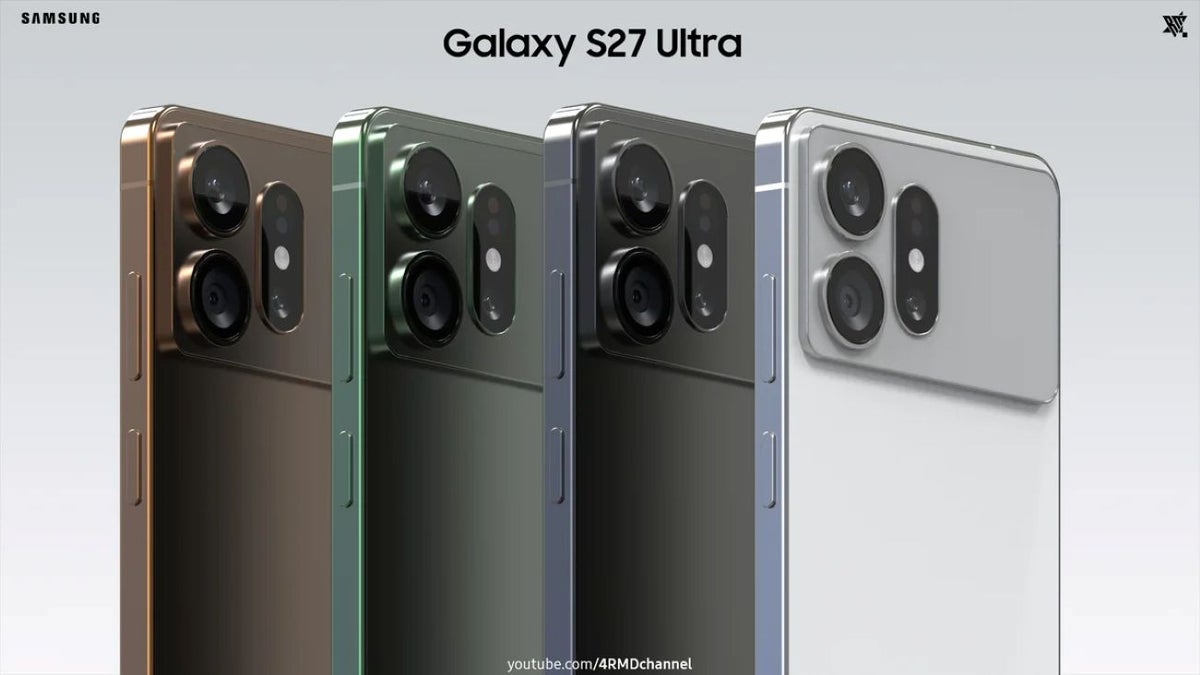
The best Android phones and the best iPhones to buy lists are usually topped by whatever Samsung and Apple have released recently. In 2027, the aforementioned lists will be usurped by the Galaxy S27 Ultra and the iPhone 20 Pro Max, respectively. Probably. Most likely.
The iPhone 20 Pro Max is still pretty much a mystery and there's a simple explanation for that: it won't be here until September next year—that's the usual Apple schedule. The Galaxy S27 Ultra, on the other hand, is much closer to the doorstep. The prognosis is that Samsung will unveil its next maxed-out high-end flagship in late January or February 2027.
Current state of affairs
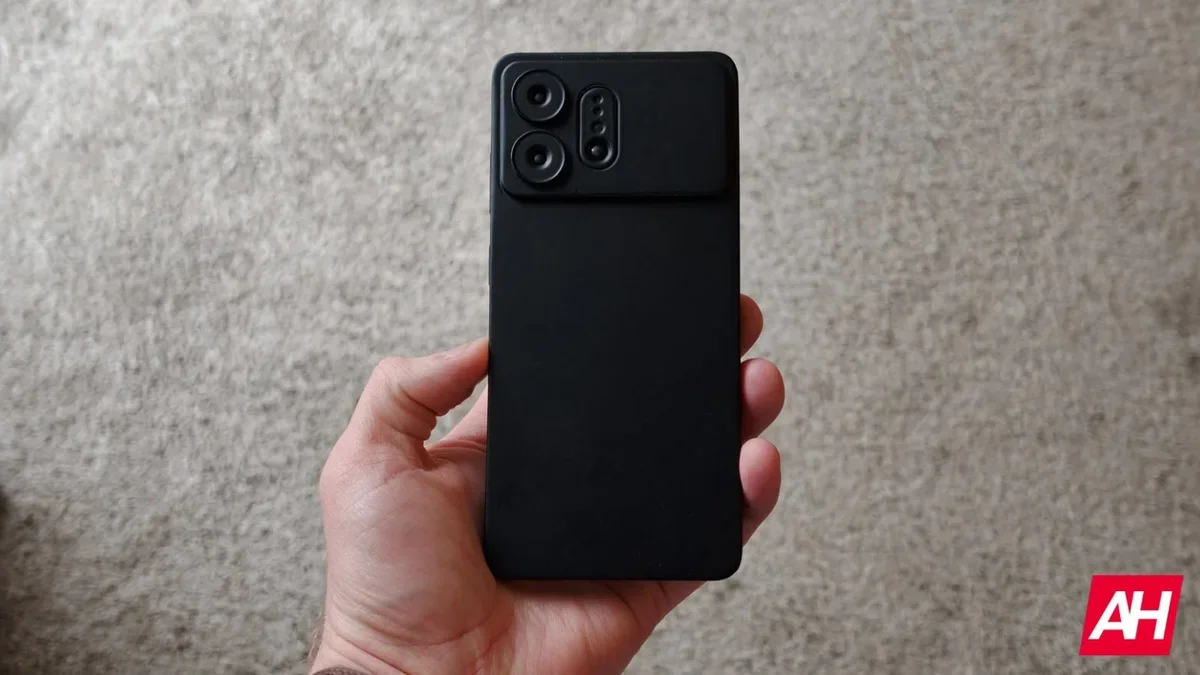
The Galaxy S27 Ultra dummy unit. | Image by Android Headlines
I'm not going to lie to you, I don't find any of the rumors surrounding the eventual Galaxy S27 Ultra enticing enough to make me put it in the oh-my-god-I-can't-wait-for-that-thing-to-be-finally-unveiled list. Yes, this list is real and I'm sure you have one, too.
So, what gives? The rumors are uninspiring. The Galaxy S27 Ultra will finally, after seven consecutive years, move past the 5,000 mAh battery capacity. But none of the rumors speak of a 6,000 mAh+ cell. Chinese competitors have been toying with capacities exceeding 10,000 mAh for quite some time now. The Galaxy S27 Ultra won't pack a physically huge telephoto sensor, either. Again, a point for Chinese rivals. Display brightness? Charging speeds? Foldables that don't break?! Yeah, you know who wins.
Recommended For You
The Galaxy S27 Ultra will surely offer Privacy Display? Sure, that feature is really nice, but the Galaxy S26 Ultra did it first, so what does the S27 Ultra bring to the table in terms of novelty?
"But Samsung's software is so-o-o-o much better than that of their Chinese rivals. One UI is great!", you might say. And I hear you. What's more, for all its eventual shortcomings Samsung's customer support and service programs are the saner option over importing a flagship phone from overseas.
But imagine how much better Samsung's flagships would be if their great software game were paired with equally respectable hardware.
Also, don't praise One UI that much. Give ColorOS (Oppo's take on Android) a chance and, who knows, maybe you'll convert in no time.
Which brings me to my main point.
How about an RYYB filter on the camera sensor?
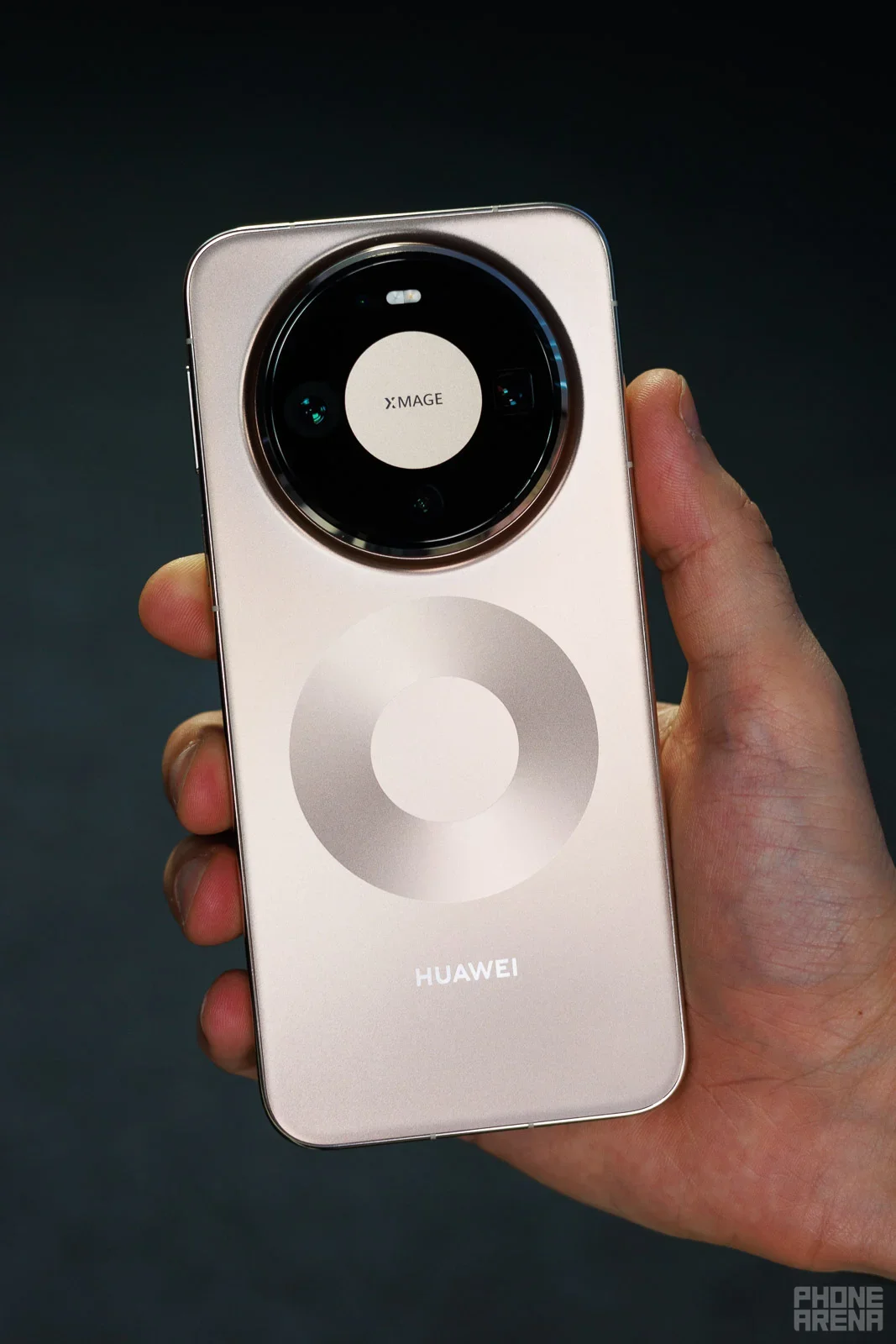
The Huawei Mate 80 Pro for reference. | Image by PhoneArena
If we're not getting a big telephoto sensor or a bonkers battery, Samsung should at least try to make the Galaxy S27 Ultra look sophisticated. For example, it can radically change the color filter array of its main camera: instead of the RGGB one that we're used to, let's have an RYYB one for a change.
Huawei has upped the ante with its decision to step in the RYYB territory. Recent flagships, like the Mate 90 Pro Max offer that RYYB experience and so does the legendary Huawei P30 Pro.
Basically, RGGB and RYYB are color filter arrays placed on top of an image sensor (the thing that gathers light from the lens and, with the help of your phone's software, "decodes" that light into an image).
RGGB is what virtually all phones and the vast majority of cameras use: it's also known as the standard Bayer filter arrangement. There's one red, two green and one blue filter for every four pixels. There's a reason for that: human vision is much more sensitive to green light than to red or blue, especially when it comes to brightness and fine detail.
RYYB, in contrast, replaces the two green filters with yellow ones, giving it one red, two yellow and one blue.
Here's the thing: yellow filters let more light in (compared to green filters) and that's good news for low-light photography. However, this array can make accurate color reproduction more challenging and requires more sophisticated image processing to correct color shifts.
Thankfully, our phones are extremely powerful and equipped with the latest technology: Huawei's phones can obviously handle the RYYB array. These phones, despite being rendered almost unusable for US users, are camera heroes.
I'm sure Samsung's Galaxy S27 Ultra can be turned into an RYYB monster, too. Don't be afraid to experiment, Samsung.
The "Made in China" phenomenon
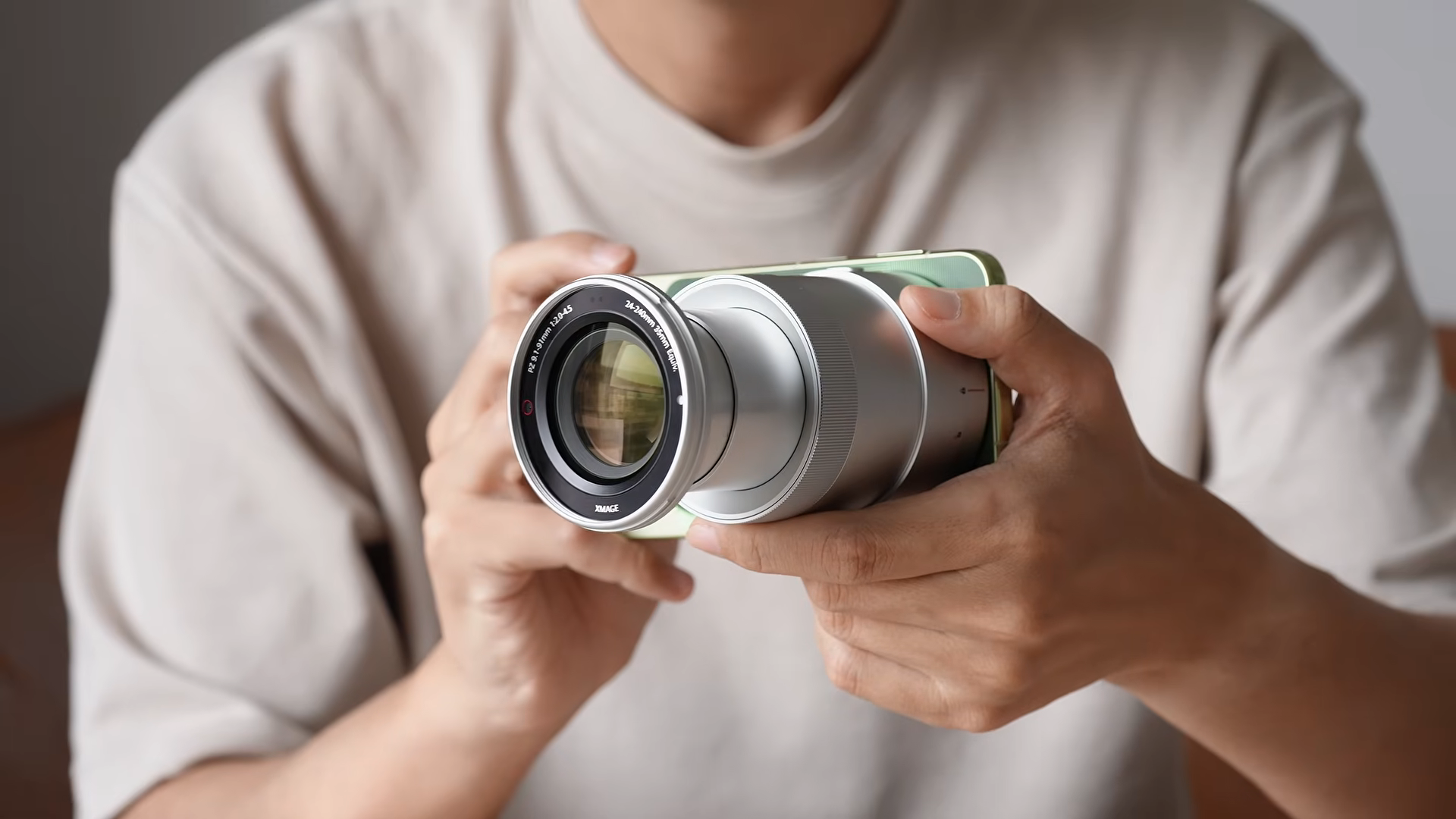
Huawei has been experimenting heavily in recent times. Yes, that's a phone with a modular 1-inch camera. | Image by Vincent Zhong
The speed we are running towards the "Made in China" branding is inversely proportional to the speeds we used to hit running away from it some 30 years ago.
Now, question time: is it because Chinese production has become that good recently, or is it because stuff made between the Bosphorus Strait and the Panama Canal has decreased in quality (but certainly not in terms of price)? Or is it both?
Sebastian is one of PhoneArena’s senior opinionators. A veteran news writer with almost 20 years of experience in media and technology, he not only covers all the hot news about Galaxies and iPhones, but often provides hot takes on industry trends. He’s fascinated with camera-focused flagships from the likes of Oppo and Vivo, as well as foldable phones.
A discussion is a place, where people can voice their opinion, no matter if it
is positive, neutral or negative. However, when posting, one must stay true to the topic, and not just share some
random thoughts, which are not directly related to the matter.
Things that are NOT allowed:
Off-topic talk - you must stick to the subject of discussion
Offensive, hate speech - if you want to say something, say it politely
Spam/Advertisements - these posts are deleted
Multiple accounts - one person can have only one account
Impersonations and offensive nicknames - these accounts get banned
To help keep our community safe and free from spam, we apply temporary limits to newly created accounts:
New accounts created within the last 24 hours may experience restrictions on how frequently they can
post or comment.
These limits are in place as a precaution and will automatically lift.
Moderation is done by humans. We try to be as objective as possible and moderate with zero bias. If you think a
post should be moderated - please, report it.
Have a question about the rules or why you have been moderated/limited/banned? Please,
contact us.






Things that are NOT allowed:
To help keep our community safe and free from spam, we apply temporary limits to newly created accounts: