There have been some amazing turnaround stories in my lifetime. T-Mobile went from being dead last among what was then the four facilities-based network operators in the States (Verizon, AT&T, Sprint, and T-Mobile) to becoming the fastest-growing and most innovative carrier in the US.
The 1969 New York Mets winning the World Series was one of the most compelling turnarounds in my life as baseball's lovable losers stunned the world during the same year that we first walked on the moon.
Samsung's Exynos application processors are now competitive with Qualcomm's Snapdragon APs
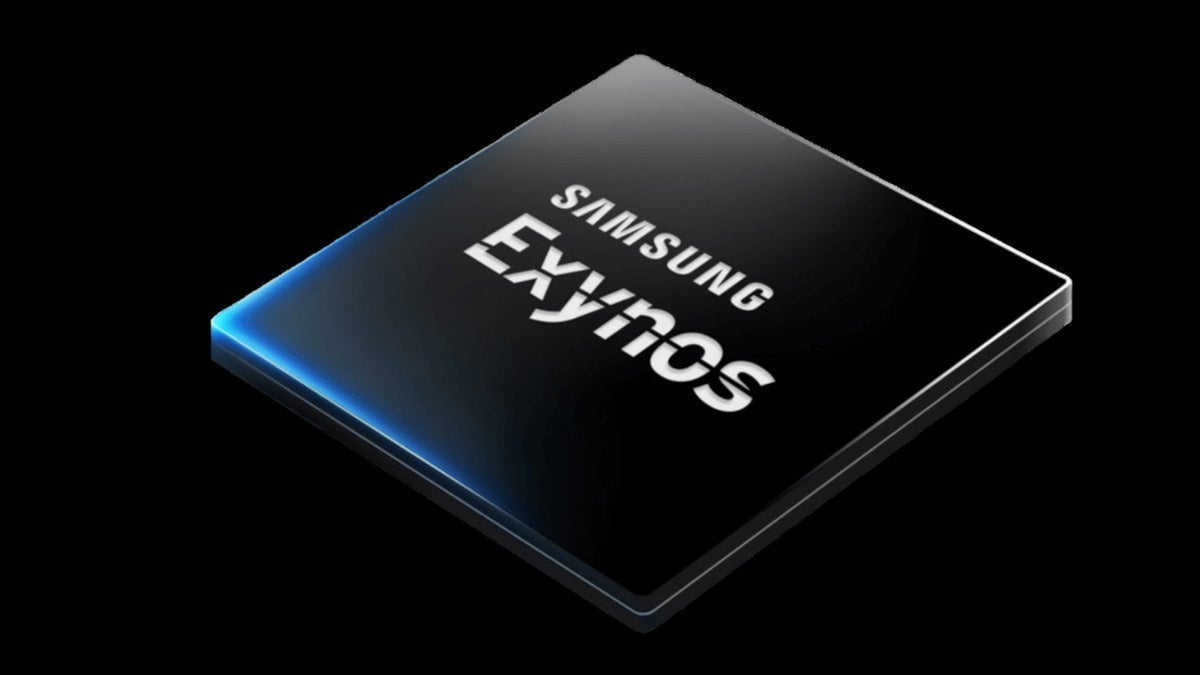
And yeah, while this is not on the same level as T-Mobile and the Mets, the once-maligned Exynos flagship line of application processors (APs) has become competitive in a technology sector that features high-performance components from Qualcomm, MediaTek, and Apple.
The three chip designers mentioned above are considered to be fabless since they don't own their own fabrication facilities. The trio each relies on TSMC to produce their APs, which could backfire in today's dangerous geopolitical climate.
Samsung not only designs its own chipsets, but has them built by its Samsung Foundry unit. By the way, the first Galaxy handset to employ an Exynos AP was the Galaxy S, released in 2010. The phone employed the Hummingbird S5PC110 processor, which was later rebranded as the Exynos 3110 in 2011 when the company unveiled the Exynos name.
Exynos APs have a reputation for heating up during complex tasks
Built on Samsung Foundry's 45nm process node, one of the complaints about the Exynos 3011 AP was excessive heat generation when the chip was processing what was considered heavy-duty tasks at that time, such as 3D gaming and 720p video playback.
Recommended For You
The Exynos APs really became associated with overheating when Samsung Foundry's 5nm and 4nm process nodes failed to deliver power efficiency on the same level as TSMC's processors. The chips produced by Samsung Foundry at this point also suffered from current leaks.
The Exynos 2500 showed that the component had turned the corner
The Exynos APs started to turn the corner with the Exynos 2500, which powered last year's Galaxy Flip 8 foldable. Produced on Samsung Foundry's 3nm process node, the Exynos 2500 was the first SoC using the Gate-All-Around (GAA) transistor architecture to power a smartphone.
The Exynos uses a Heat Path Block to draw heat away from the CPU and GPU
With GAA, the gate surrounds the channel on all four sides, significantly reducing current leaks. It also hikes the drive current, allowing transistors to switch faster from on to off and vice versa. This leads to longer smartphone battery life, snappier performance, and faster on-device AI processing.
Tipster Ice Universe says the Exynos 2700 AP is now being mass produced. | Image by X
The Exynos 2600 became the first chip built on a 2nm GAA process node. The deca-core chip also debuted the Heat Path Block. A copper heat sink, the HPB was placed side-by-side with the DRAM chip on top of the AP. The goal is to draw the heat away from the CPU and GPU and move it toward the vapor chamber that cools the interior of the device.
Samsung has started mass production of the Exynos 2700 AP according to tipster Ice Universe, whose tweet says, "Exynos 2700 has entered front-end wafer mass production, moving beyond the small-scale sample stage."
Ice Universe adds that Samsung is expected to manufacture 10% more Exynos 2700 APs than the number of Exynos 2600 APs that rolled off the line at Samsung Foundry.
Samsung will continue to use the dual-sourcing strategy for its flagship Galaxy handsets, according to the tipster, who writes in his tweet that the US and China will continue to feature Qualcomm's Snapdragon chips on these phones.
In Europe, South Korea, India, Asia, Latin America, and Australia, the Galaxy S27, Galaxy S27+, and the Galaxy S27 Pro will be powered by the Exynos 2700. In markets like the US and China, the aforementioned phones will be equipped with the Snapdragon 8 Elite Gen 6 AP although we could see the higher-tiered Snapdragon 8 Elite Extreme Gen 6 power those models instead.
In case you're wondering what the difference is, the Elite Extreme Gen 6 delivers a clock speed topping 5GHz while offering 8K 60 frames-per-second video capture, and delivering enhanced AI graphics.
Here is something interesting: Ice Universe says that Samsung, which has typically powered the Galaxy S Ultra model with a Snapdragon AP regardless of the market it is being shipped to, is considering using the dual-sourcing strategy for that phone model for the first time ever, and has yet to make a final decision.
Sammy's LSI division is the unit that designs the company's chips. This unit wants all Galaxy S27 Ultra handsets equipped with the Exynos 2700 AP. Samsung's MX (Mobile eXperience) unit is responsible for the tech firm's smartphones, tablets, wearables and laptops. This business segment is still evaluating certain metrics before making a decision on the chip it wants to power the Galaxy S27 Ultra.
Samsung internally ran a Geekbench test that showed the Exynos 2700's multi-core performance scoring 9.5% higher than the Snapdragon 8 Elite Extreme Gen 6.
Based on the multi-core score of 12,856 for the Snapdragon AP, the Exynos 2700 would have had a score above 14,000 points in Geekbench 6 multi-core.
If Samsung decides to go with the Exynos 2700 on some Galaxy S27 Ultra models, it would be a huge admission that the Exynos 2700 is just as powerful an application processor as the Snapdragon 8 Elite Extreme Gen 6 is.
On the Visible+ Pro plan, you get access to 5G Ultra Wideband data on Verizon's fastest network. Along with unlimited roaming across Mexico and Canada, 2 days of Global Pass per month, 3x hotspot speeds, 4K streaming, and Smartwatch service.
Alan, an ardent smartphone enthusiast and a veteran writer at PhoneArena since 2009, has witnessed and chronicled the transformative years of mobile technology. Owning iconic phones from the original iPhone to the iPhone 15 Pro Max, he has seen smartphones evolve into a global phenomenon. Beyond smartphones, Alan has covered the emergence of tablets, smartwatches, and smart speakers.
A discussion is a place, where people can voice their opinion, no matter if it
is positive, neutral or negative. However, when posting, one must stay true to the topic, and not just share some
random thoughts, which are not directly related to the matter.
Things that are NOT allowed:
Off-topic talk - you must stick to the subject of discussion
Offensive, hate speech - if you want to say something, say it politely
Spam/Advertisements - these posts are deleted
Multiple accounts - one person can have only one account
Impersonations and offensive nicknames - these accounts get banned
To help keep our community safe and free from spam, we apply temporary limits to newly created accounts:
New accounts created within the last 24 hours may experience restrictions on how frequently they can
post or comment.
These limits are in place as a precaution and will automatically lift.
Moderation is done by humans. We try to be as objective as possible and moderate with zero bias. If you think a
post should be moderated - please, report it.
Have a question about the rules or why you have been moderated/limited/banned? Please,
contact us.














Things that are NOT allowed:
To help keep our community safe and free from spam, we apply temporary limits to newly created accounts: