The iPhone 17 series has now been around for a couple of weeks, and after the initial hype, things are starting to settle down. The star of the show is the iPhone Air, of course, being a completely new model, but the Pro models have undergone a great transformation as well.
The iPhone 17 Pro now features a new two-tone unibody aluminum look, reworked telephoto and front cameras, and a big boost in sustained performance with vapor chamber cooling. The switch back to aluminum comes with some durability concerns (scroll down to find out more), but all in all, the new Pro model is a monster of a flagship.
Which begs the question—is it time to upgrade? This particular dilemma is especially relevant to iPhone 15 Pro users, as most people upgrade their phones on a two-year basis. The iPhone 15 Pro is still a good phone, and it actually has some advantages over the new model due to its titanium frame, so it will be extremely interesting to pit these two against each other.
To see what's what, we ran both phones through our own lab tests for battery life, display accuracy, performance benchmarks, and camera quality. And beyond the data, we used both of them in daily life.
iPhone 17 Pro: $0.00/mo. at Verizon
$0
/mo
$30
55
$31 off (100%)
The powerful iPhone 17 Pro is finally here! You can now get the new Pro with an upgraded design and a brilliant display for as low as $0.00/mo. at Verizon. You must set up a new line on an Unlimited Ultimate plan and trade in a device to take advantage.
The impressive iPhone 17 Pro Max is available at Verizon. Right now, you can save up to $1,100 on the premium device when you activate a new line and trade in an eligible device. The promo is only available with an Unlimited Ultimate plan.
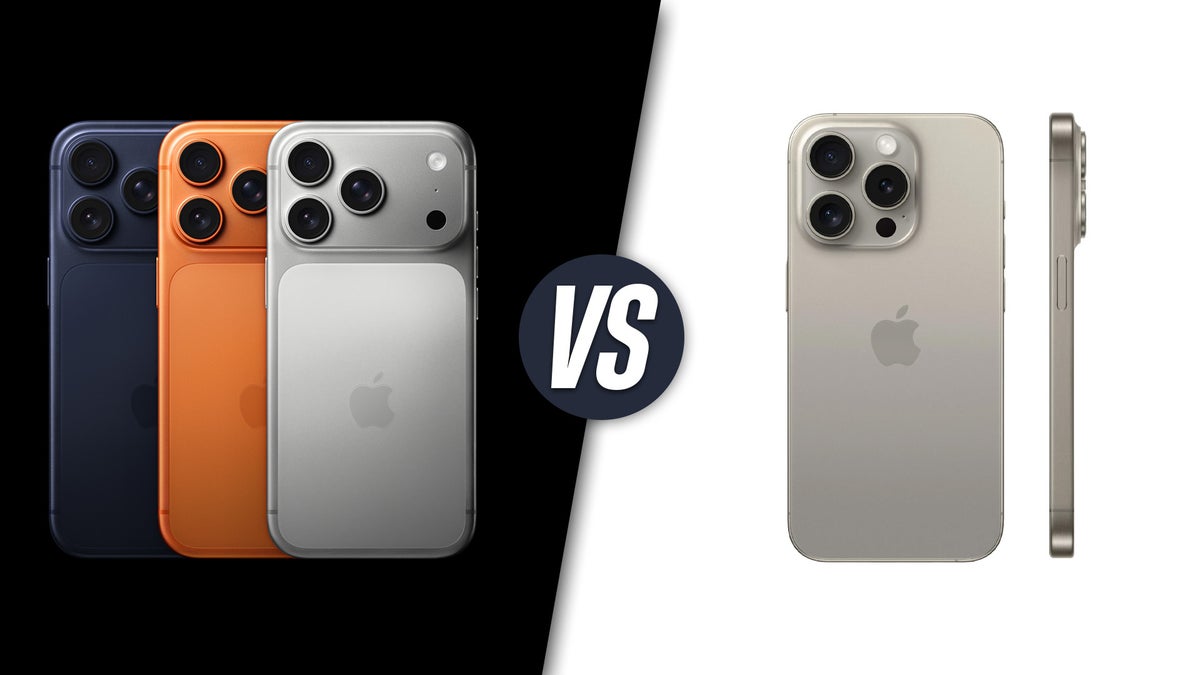
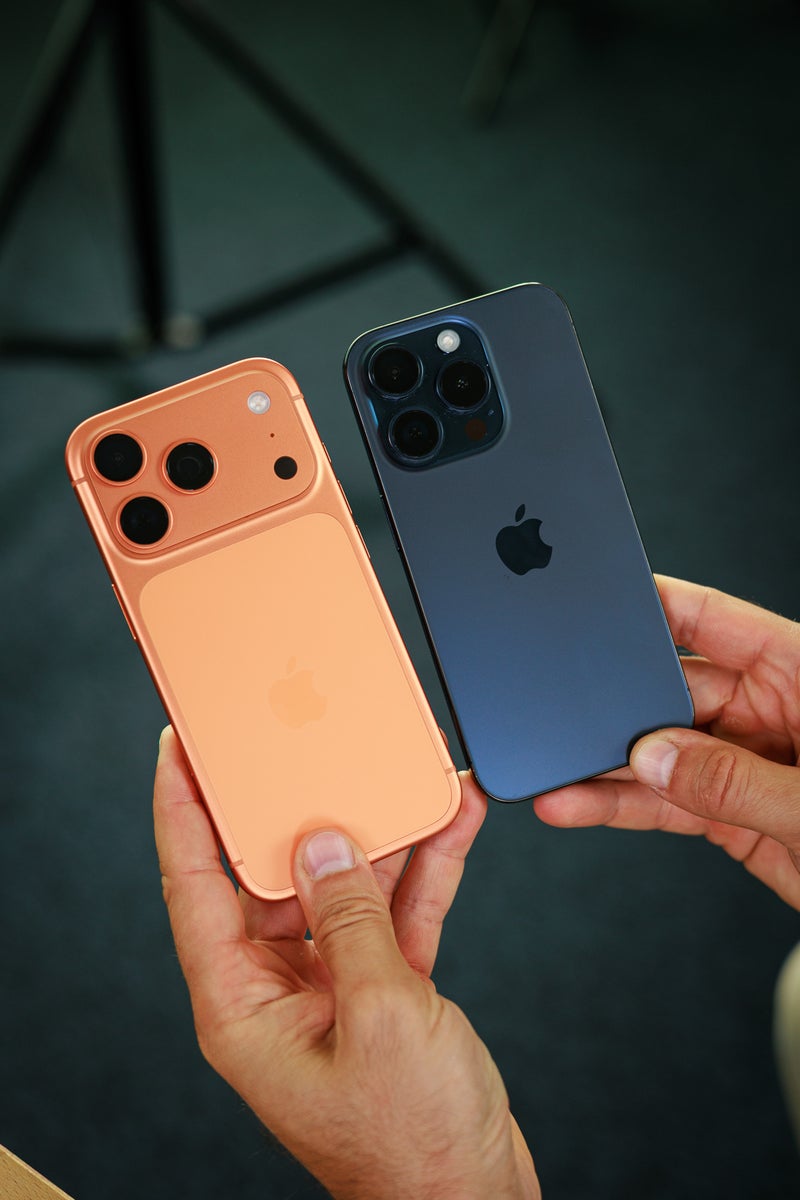
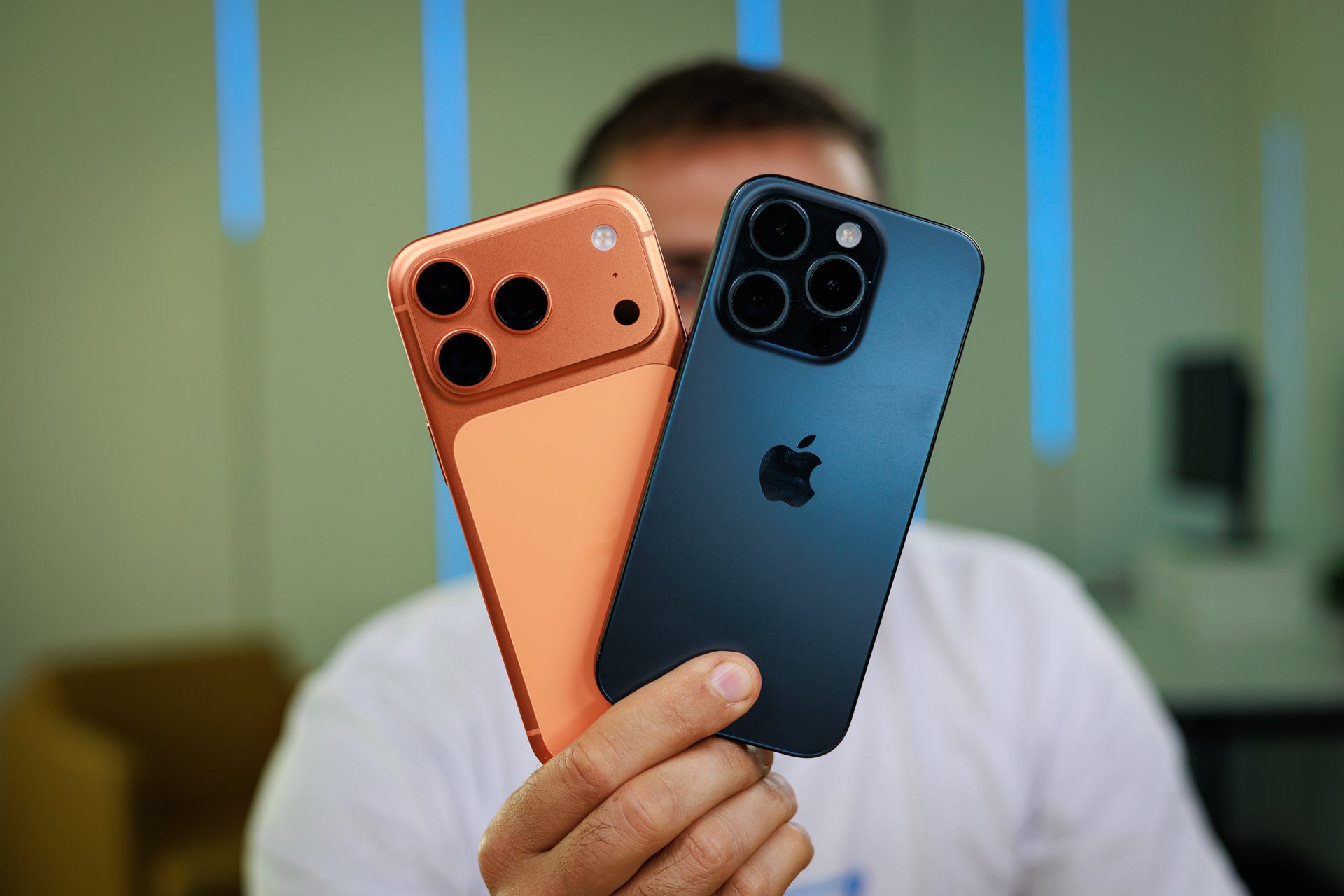
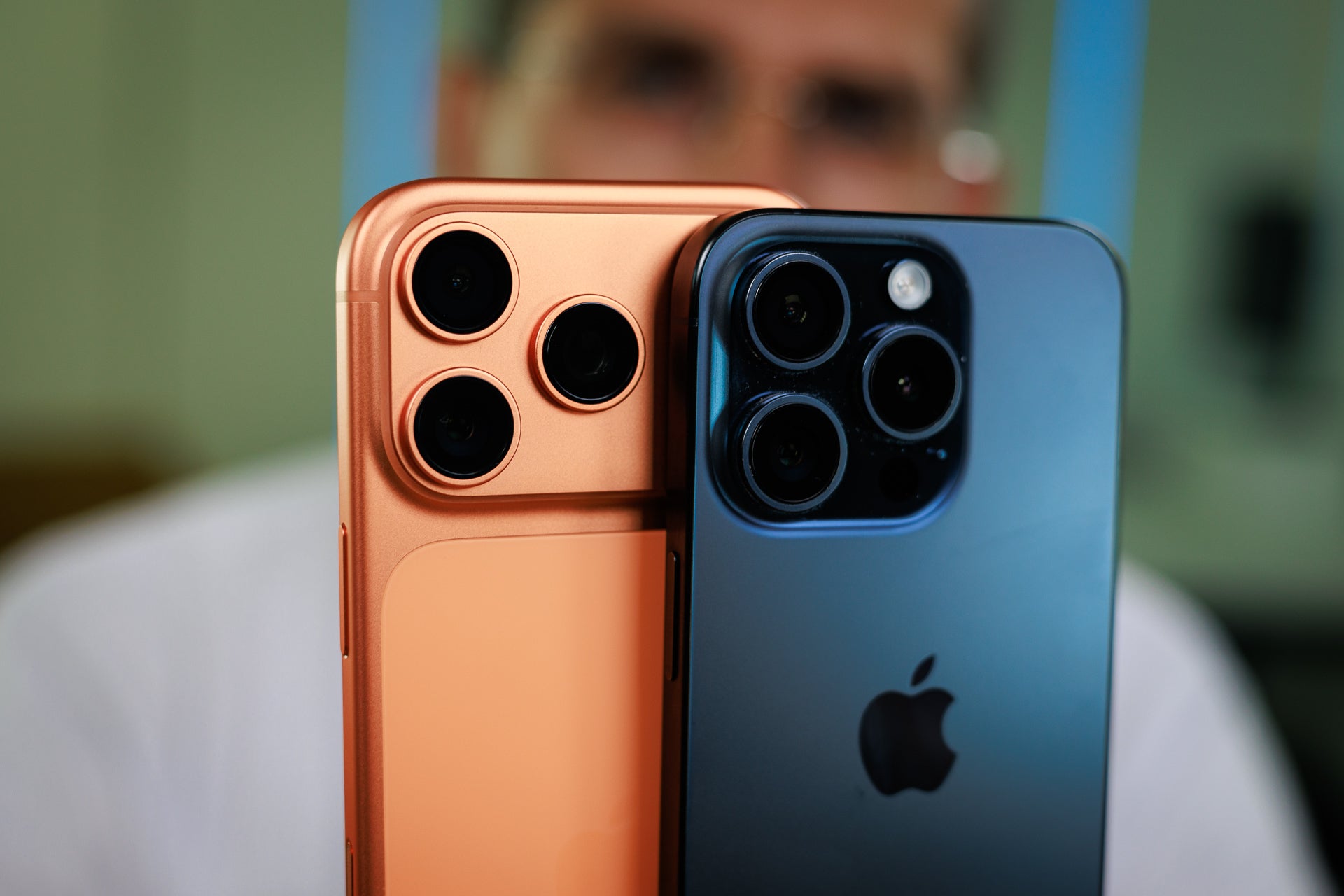
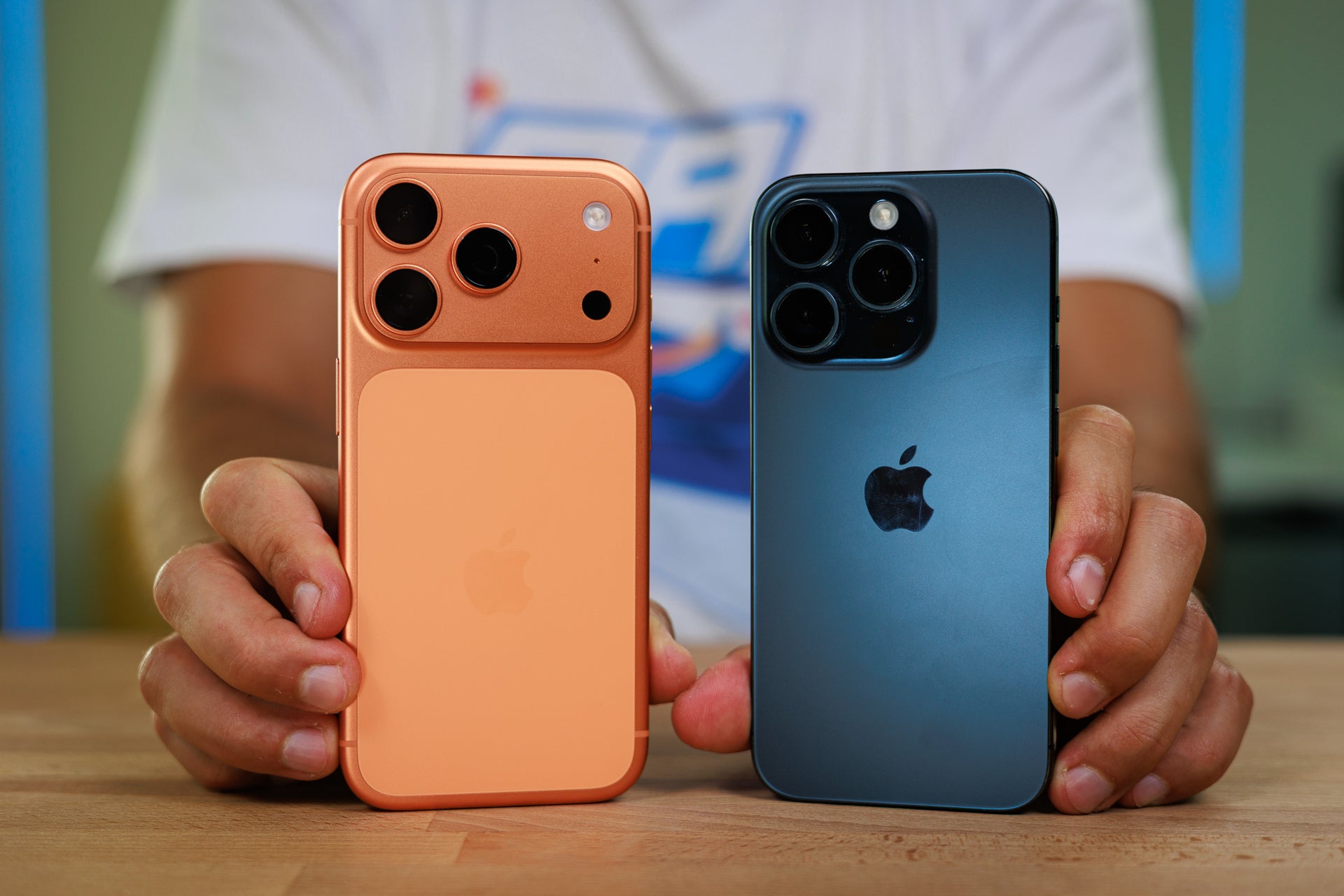
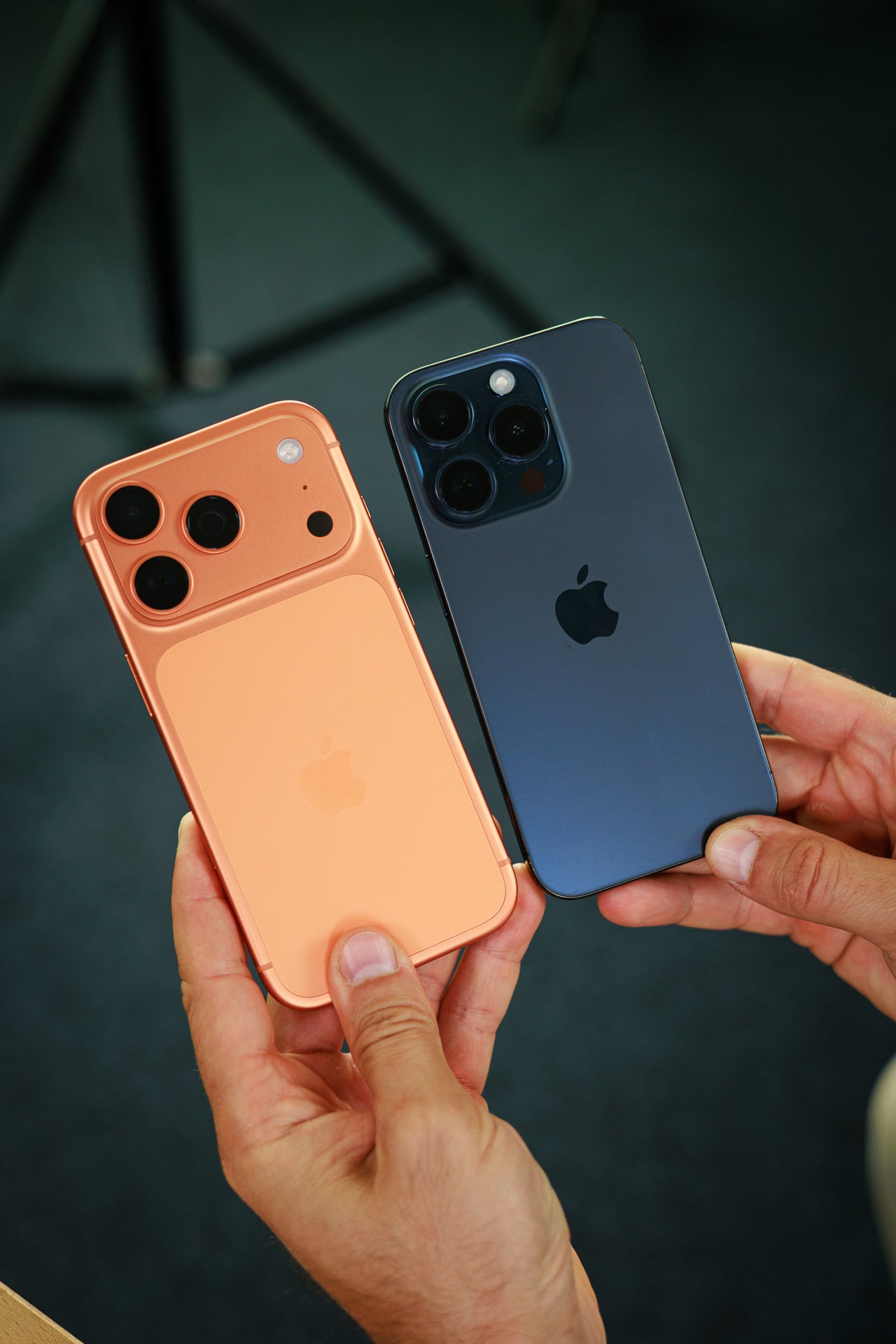
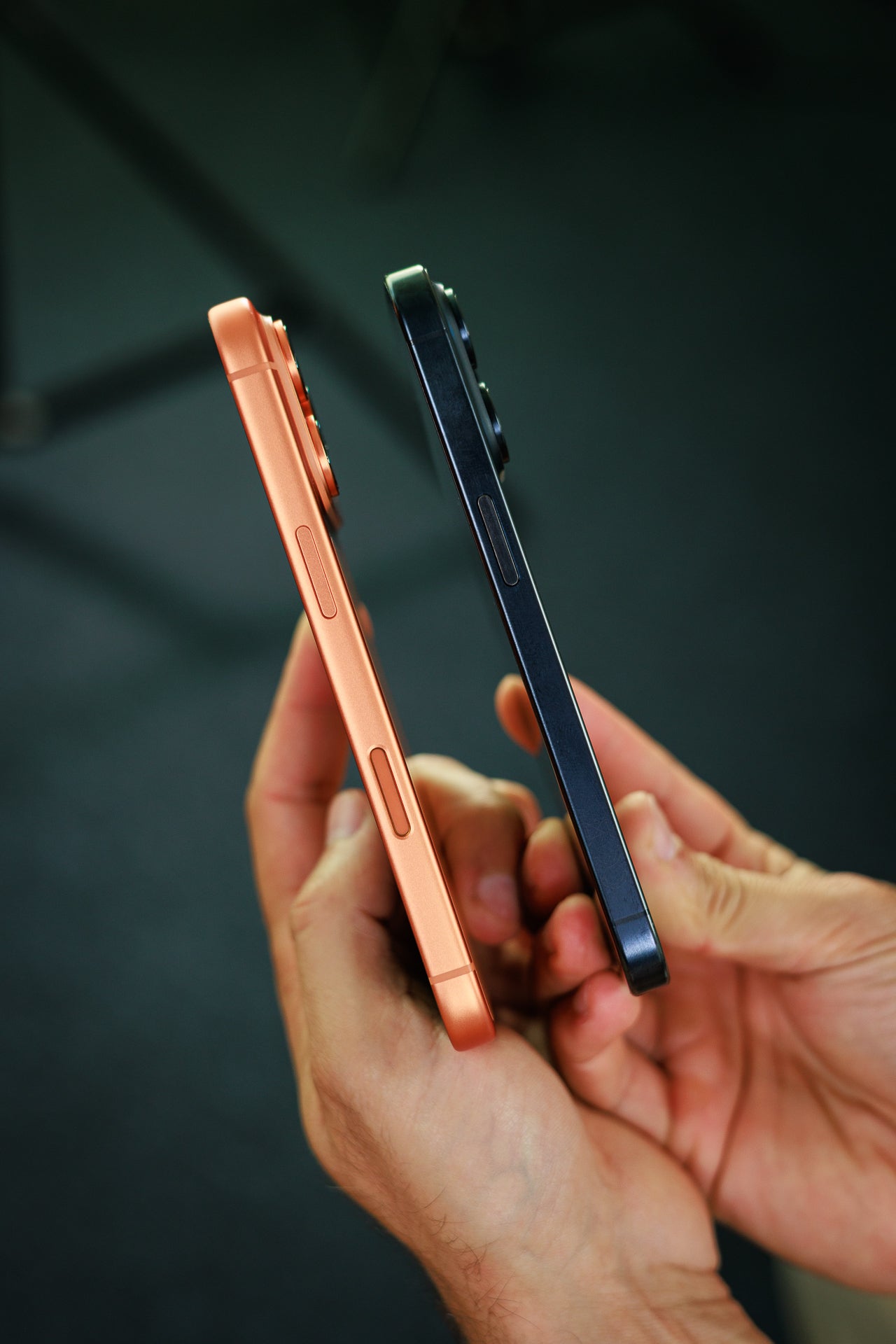
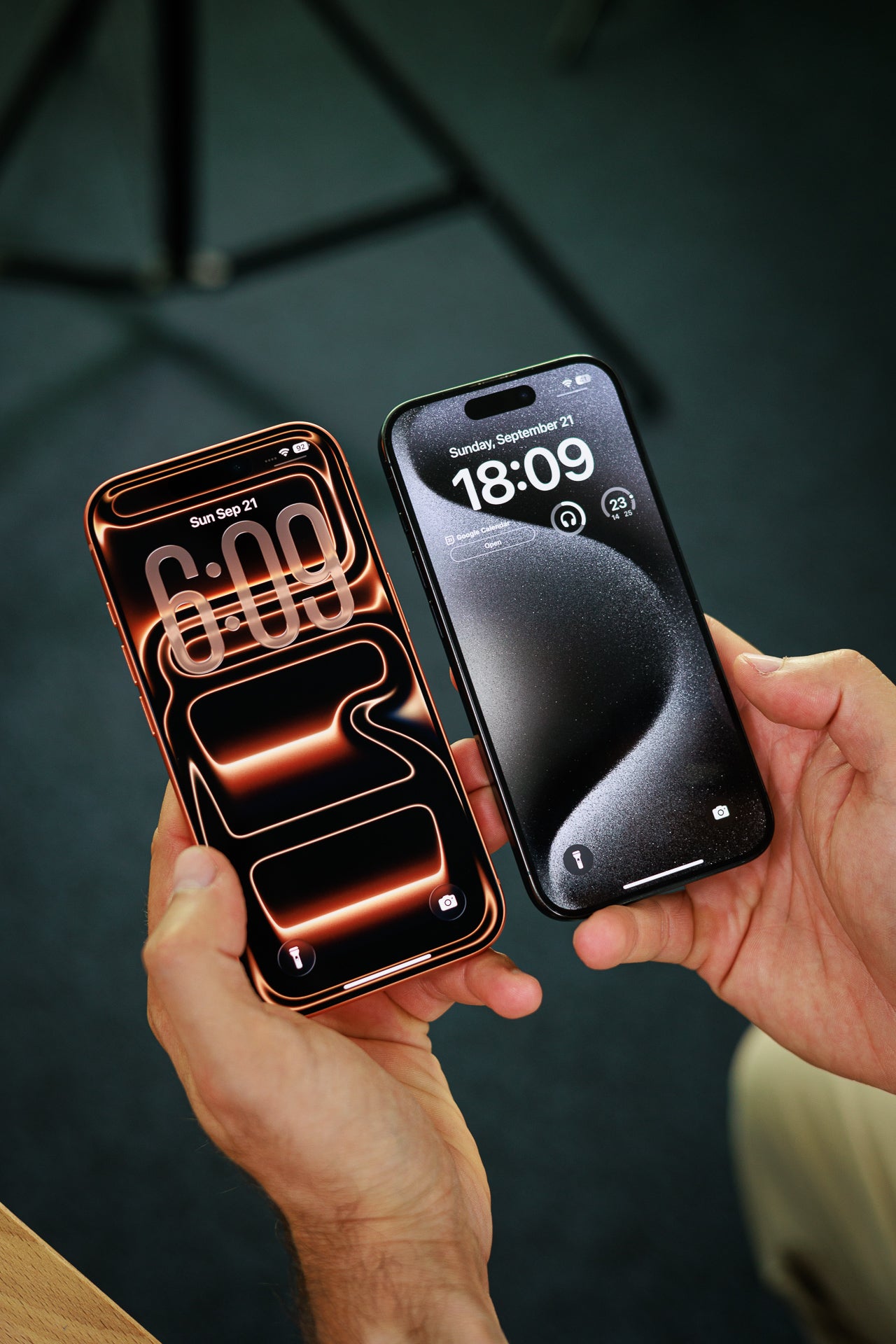
When it comes to design, Apple is normally pretty conservative with the changes. Not this time. The company brought the biggest design change in years—the back of the iPhone 17 Pro looks rather different from the iPhone 15 Pro.
The main difference is the new camera housing on the back of the iPhone 17 Pro, which stretches from side to side and looks reminiscent of the Pixel's latest design. Apple calls this huge bump "extended plateau." The iPhone 15 Pro relies on the old square camera bump design.
iPhone 17 Pro
iPhone 15 Pro
Thickness 8.8 mm
Thickness 8.3 mm
Weight 206 grams
Weight 187 grams
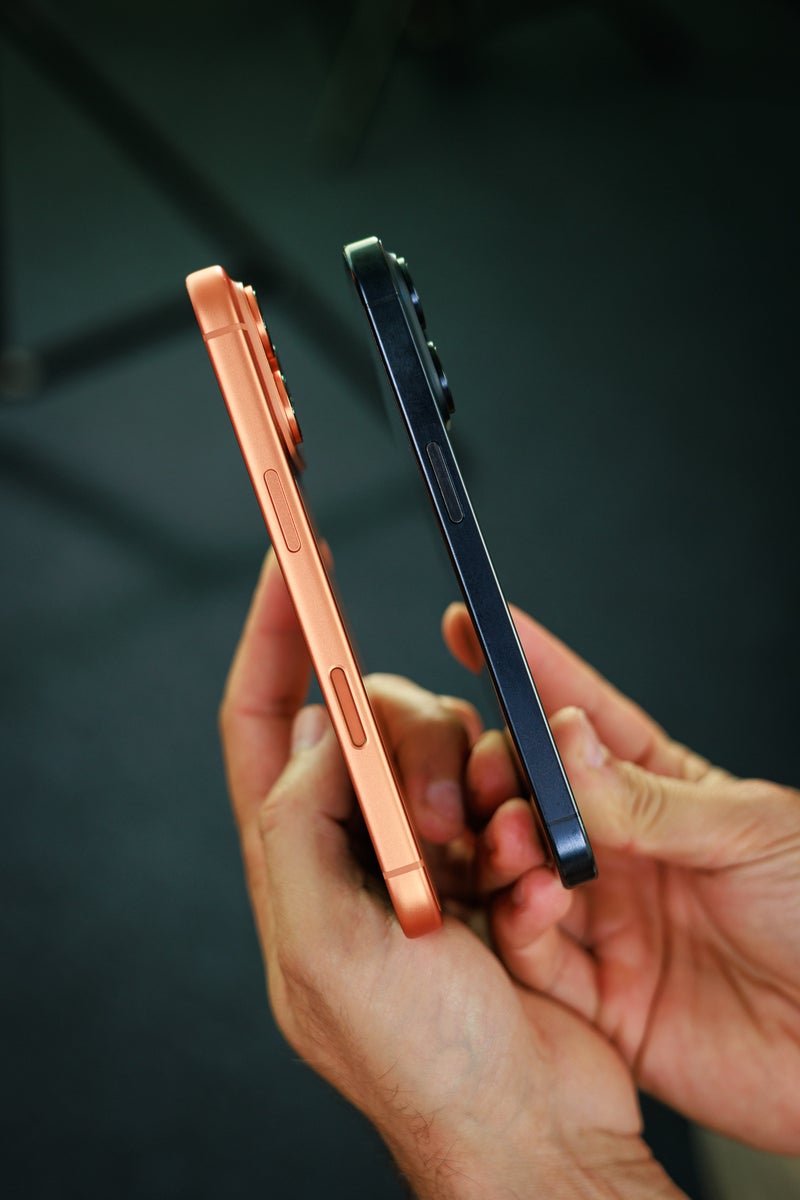
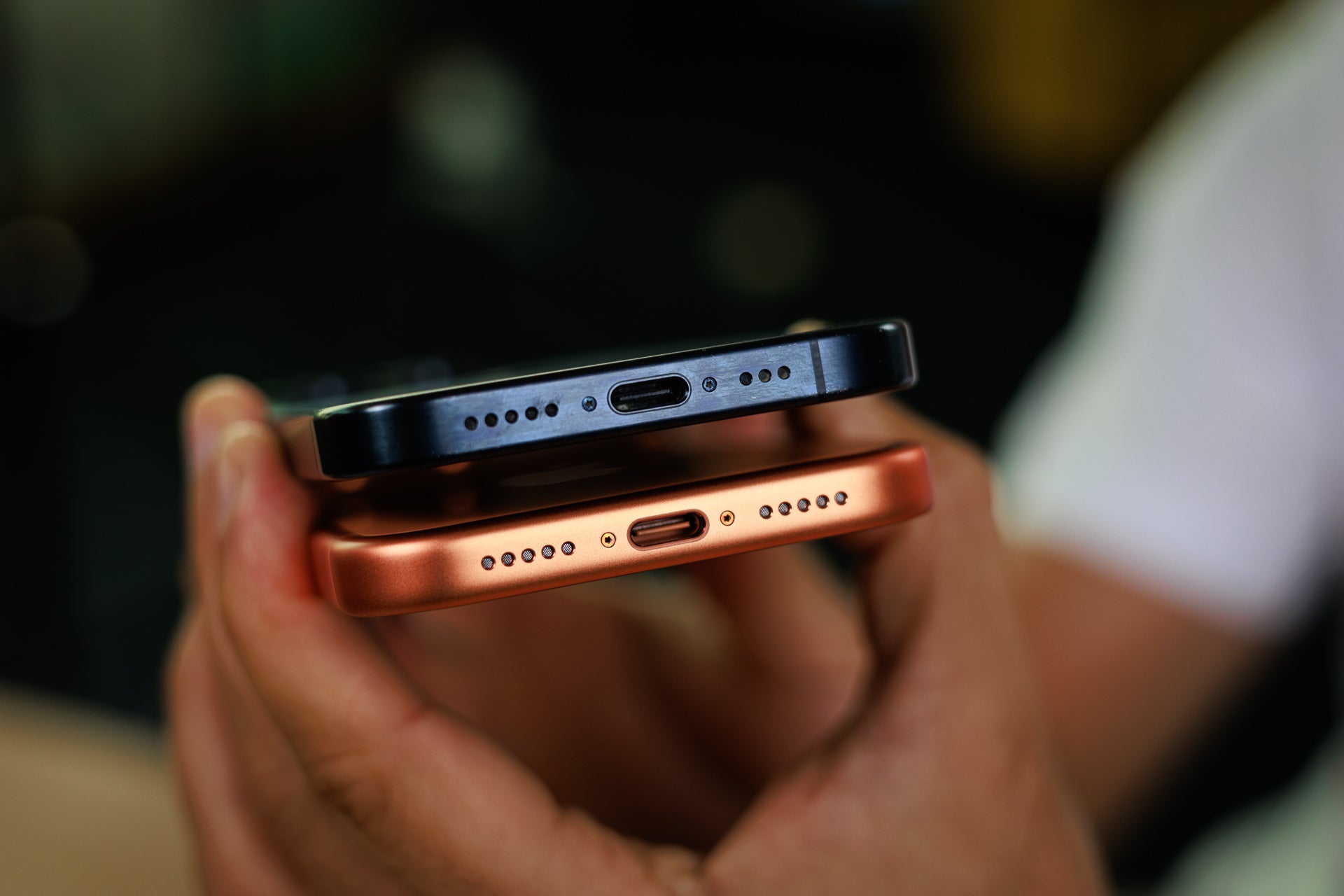
When it comes to size and weight, the iPhone 17 Pro brings some additional thickness and also weighs more. You should be able to feel the 20 grams or so, and the size difference is also not that small, so you probably will be able to notice it while holding both phones in hand.
There's a difference in building materials—the iPhone 15 Pro was the first iPhone to feature grade 5 titanium, and Apple has reverted to aluminum with the iPhone 17 Pro. Granted, it's a new aluminum unibody with Ceramic Shield 2 on the front and back, but still, titanium is titanium.
Let's quickly list the color variants for the iPhone 17 Pro versus what we have available on the iPhone 15 Pro.
iPhone 17 Pro colors
iPhone 15 Pro colors
Cosmic Orange
Black Titanium
Deep Blue
White Titanium
Silver
Natural Titanium
-
Blue Titanium
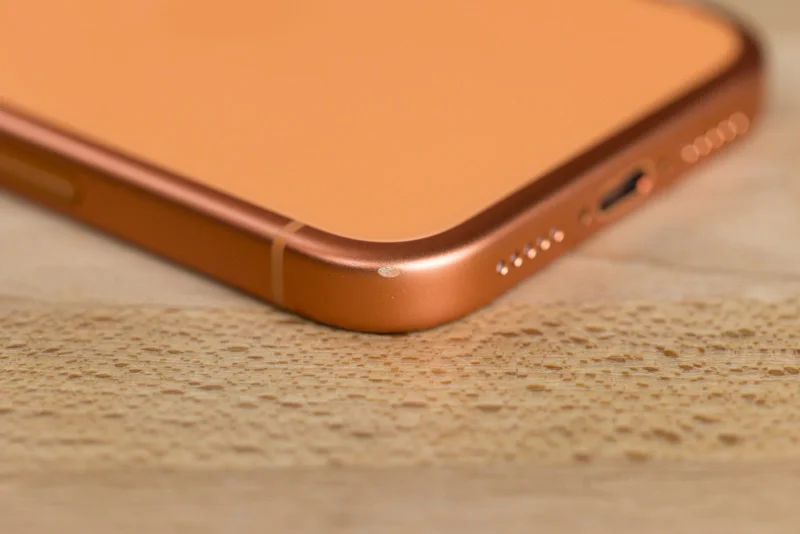
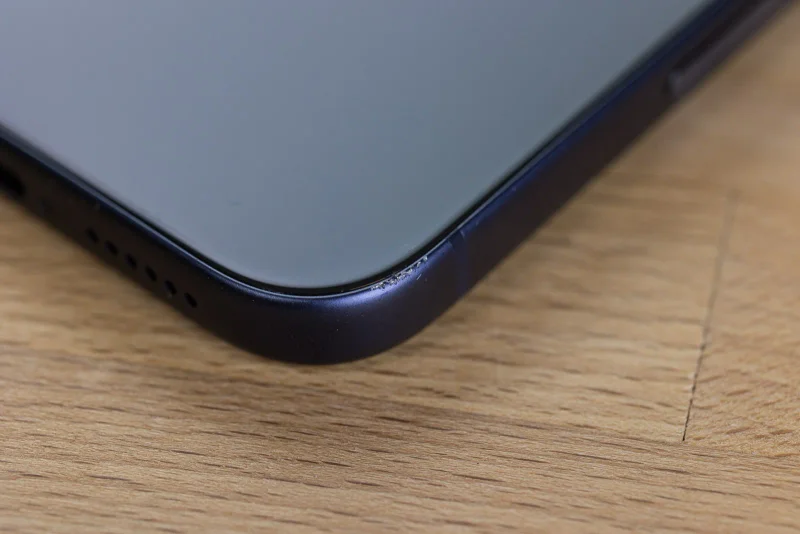
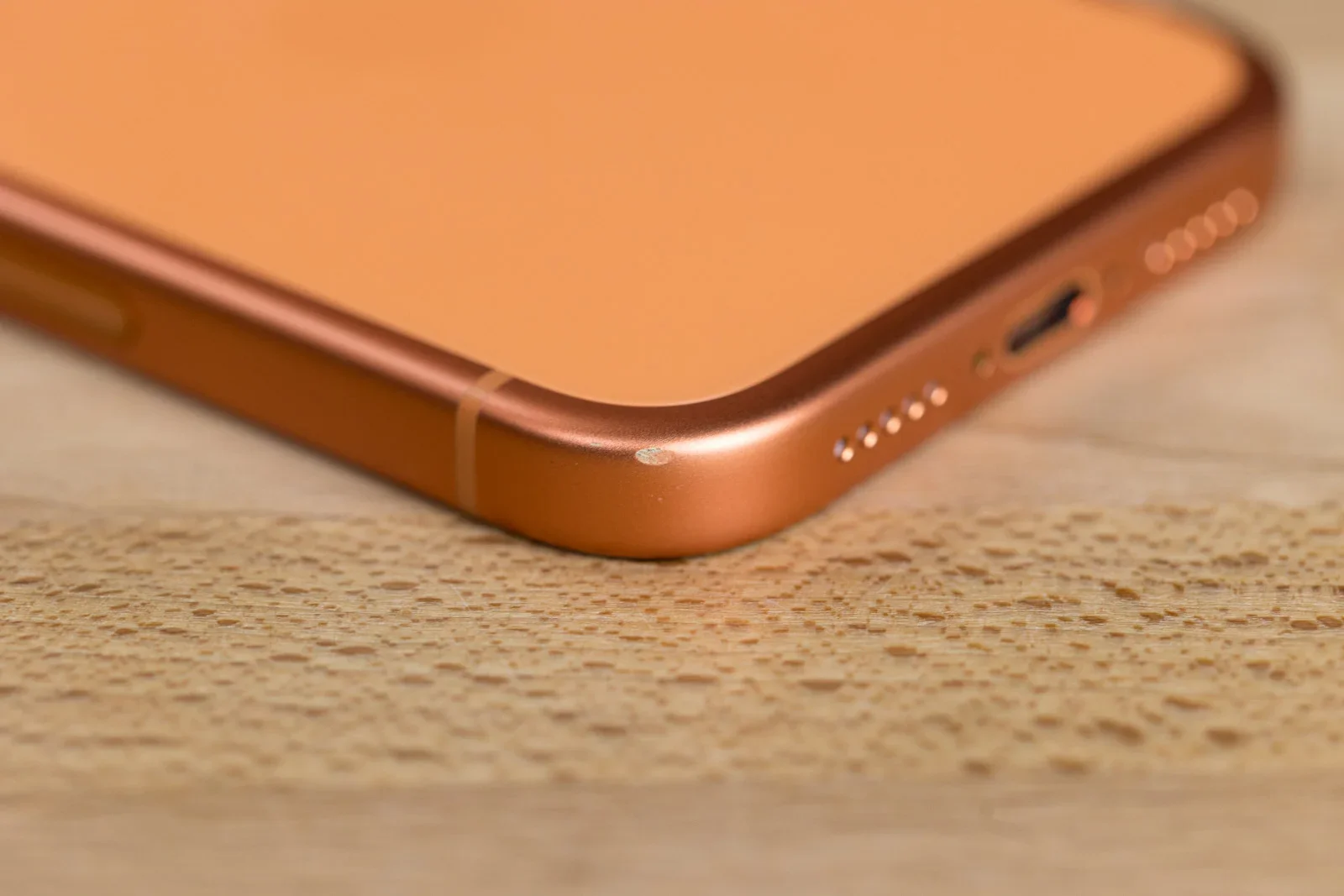
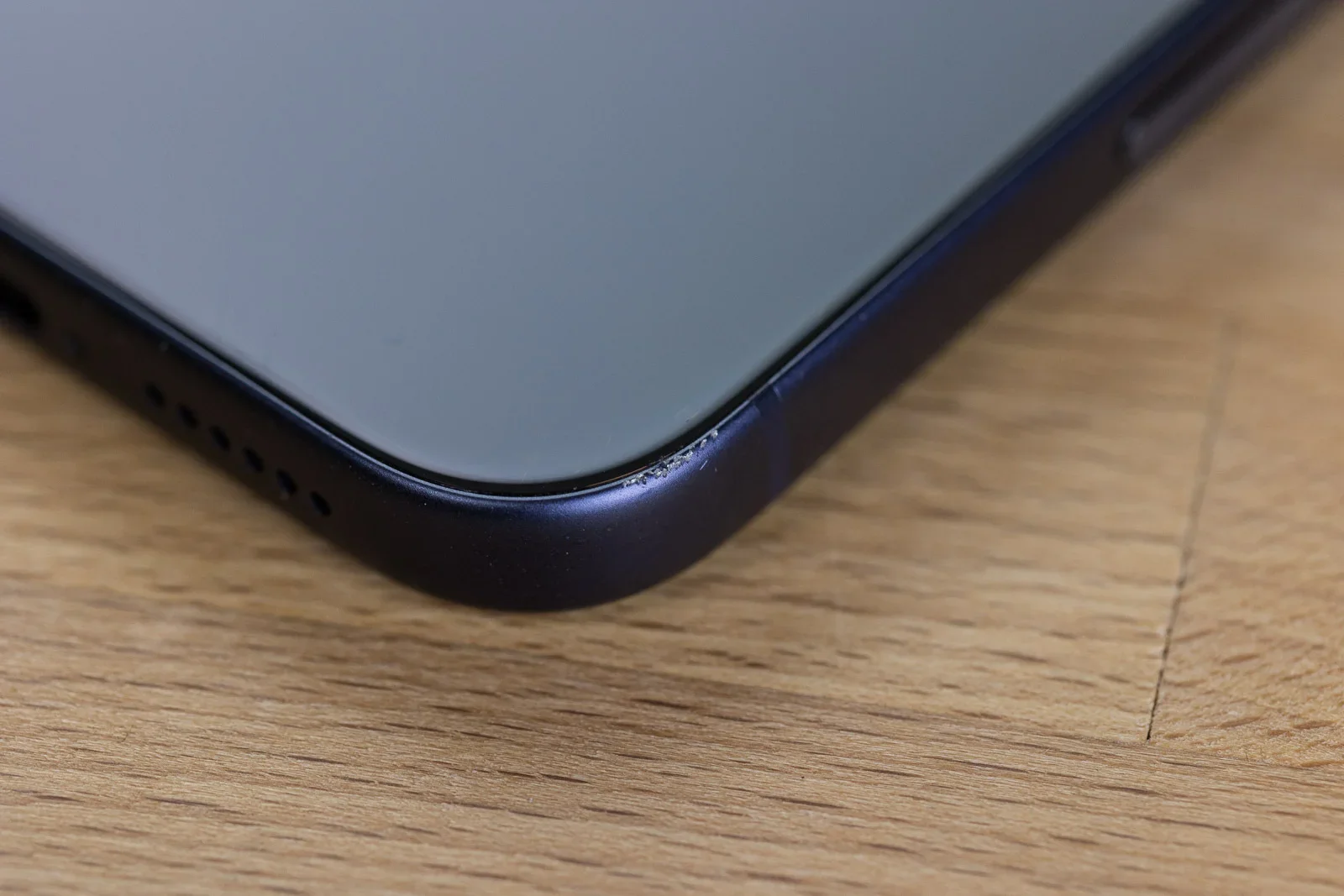
Before we move on, there's an issue we should address. There were some reports about the new iPhone 17 Pro models being prone to scratches and dents. We did some testing, and we can confirm that the aluminum is quite soft and dents easily. You can see on the images above the level of damage both Pro models sustained.
Display Differences
Bigger but more efficient
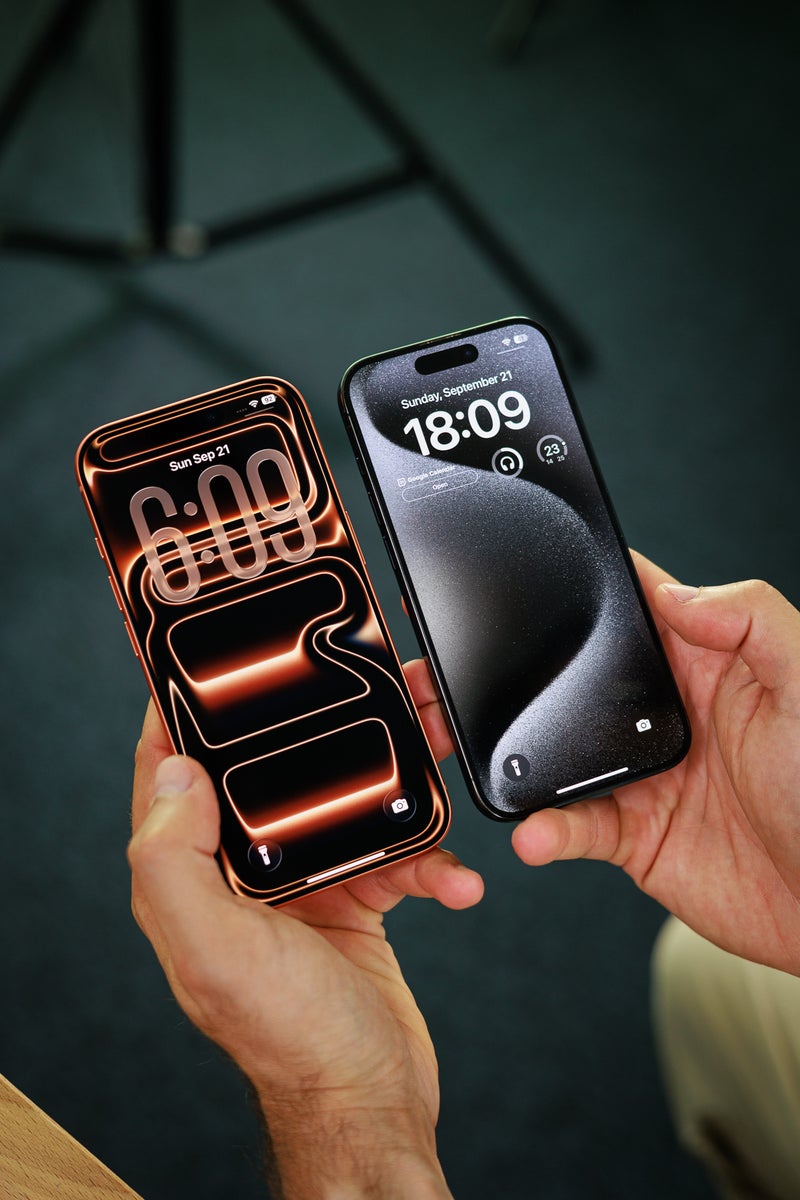
The display of the iPhone 17 Pro follows in the footsteps of the previous model, which means that it has the same 6.3-inch diagonal and the same ProMotion technology as the one on the iPhone 16 Pro. The iPhone 15 Pro, on the other hand, was the last "Pro" with a 6.1-inch display, featuring a slightly different resolution but landing at the same pixel density at around 460 PPI.
iPhone 17 Pro
iPhone 15 Pro
Size 6.3"
Size 6.1"
Brightness 1600 nits (typ) 3000 nits (peak)
Brightness 1000 nits (typ) 2000 nits (peak)
The iPhone 17 Pro bumps up the brightness, Apple cites 3,000 nits peak which might be due to the new M14 material being used on the iPhone 17 Pro's display. Let's see how these two perform on the benchmark table.
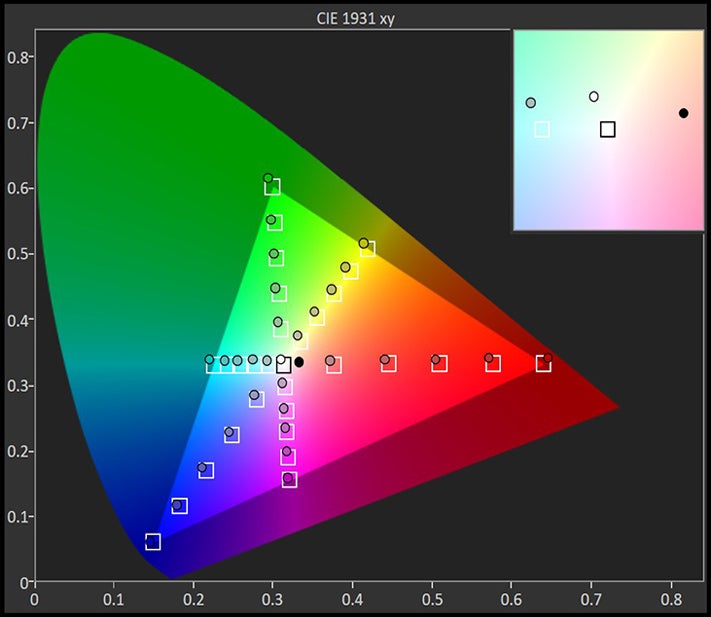
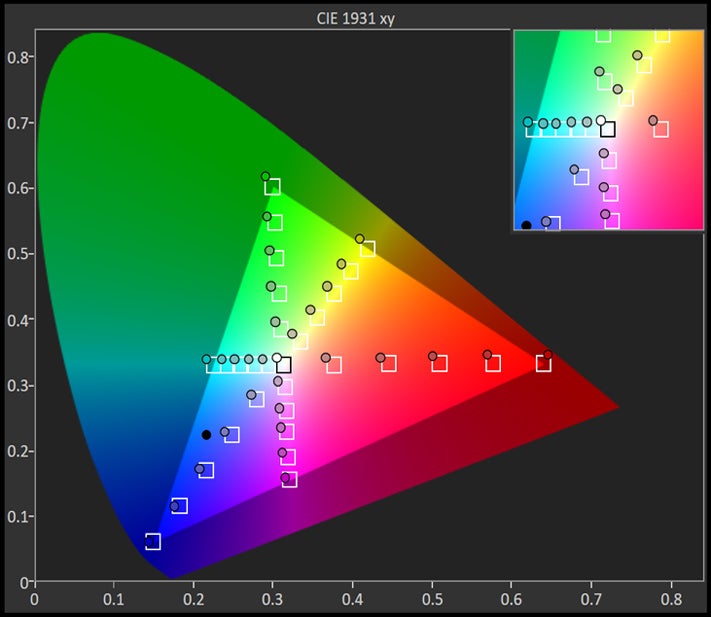
The CIE 1931 xy color gamut chart represents the set(area)of colors that a display can reproduce,with the sRGB colorspace(the highlighted triangle)serving as reference.The chart also provides a visual representation of a display's color accuracy. The small squares across the boundaries of the triangle are the reference points for the various colors, while the small dots are the actual measurements. Ideally, each dot should be positioned on top of its respective square. The 'x:CIE31' and 'y:CIE31' values in the table below the chart indicate the position of each measurement on the chart. 'Y' shows the luminance (in nits) of each measured color, while 'Target Y' is the desired luminance level for that color. Finally, 'ΔE 2000' is the Delta E value of the measured color. Delta E values of below 2 are ideal.
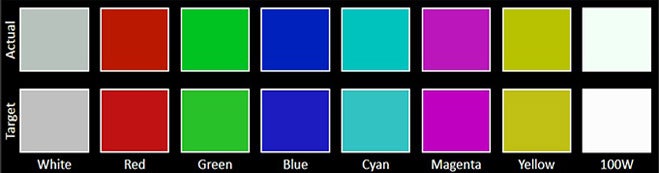
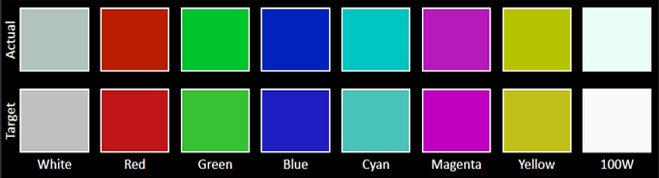
The Color accuracy chart gives an idea of how close a display's measured colors are to their referential values. The first line holds the measured (actual) colors, while the second line holds the reference (target) colors. The closer the actual colors are to the target ones, the better.
The Grayscale accuracy chart shows whether a display has a correct white balance(balance between red,green and blue)across different levels of grey(from dark to bright).The closer the Actual colors are to the Target ones,the better.
The iPhone 17 Pro is indeed brighter than the iPhone 15 Pro (by about 500 nits in our test), and it can also go lower in minimum brightness (under 1 nit). The new model also has better color accuracy and the color temperature is better calibrated from the factory.
Performance and Software
A19 Pro for the win
Unsurprisingly, the iPhone 17 Pro comes equipped with the new Apple A19 Pro chip. It's the best silicon in a smartphone, according to Apple, and we tend to agree, although we will test this with some benchmarks soon. The company cites 40% more performance compared to the previous generation, and the gap to the two-year old iPhone 15 Pro should be even bigger.
The iPhone 15 Pro comes with the A17 Pro, which is made on a 3nm node, and still offers plenty of raw power to tackle all day-to-day tasks, and even the most power-intense applications. The iPhone 17 Pro also features a vapor chamber cooling system, so sustained performance should be better as well.
There's an upgrade in the RAM department- the iPhone 17 Pro features 12GB of RAM, and this upgrade might have something to do with Apple Intelligence and on-device AI computations. In comparison, the iPhone 15 Pro comes with 8GB of RAM.
iPhone 17 Pro
iPhone 15 Pro
Chip Apple A19 Pro
Chip Apple A17 Pro
Process 3nm
Process 3nm
RAM 12GB
RAM 8GB
CPU Performance:
Geekbench 6 Single Higher is better
Apple iPhone 17 Pro3668
Apple iPhone 15 Pro2920
Geekbench 6 MultiHigher is better
Apple iPhone 17 Pro9498
Apple iPhone 15 Pro7447
Geekbench 6: A high single-core score is what makes your phone feel snappy during everyday tasks like opening apps, typing and browsing. The multi-core score matters most when doing heavier work like video editing or gaming.
Wild Life Extreme is a heavy graphics workload used to measure a device's sustained GPU performance and thermal throttling. It uses older mobile rendering techniques and is friendly to older or lower-end mobile devices.
The performance difference you see about is absolutely expected, but what's not expected is that the iPhone 15 Pro has better stability under load, despite the lack of vapor chamber. The lowest score of the 17 Pro almost equals the best run the iPhone 15 Pro was able to do in 3DMark. Let's move to the software.
Just as my thumbs have finally learned the muscle memory for the last set of changes, Apple has announced iOS 26.
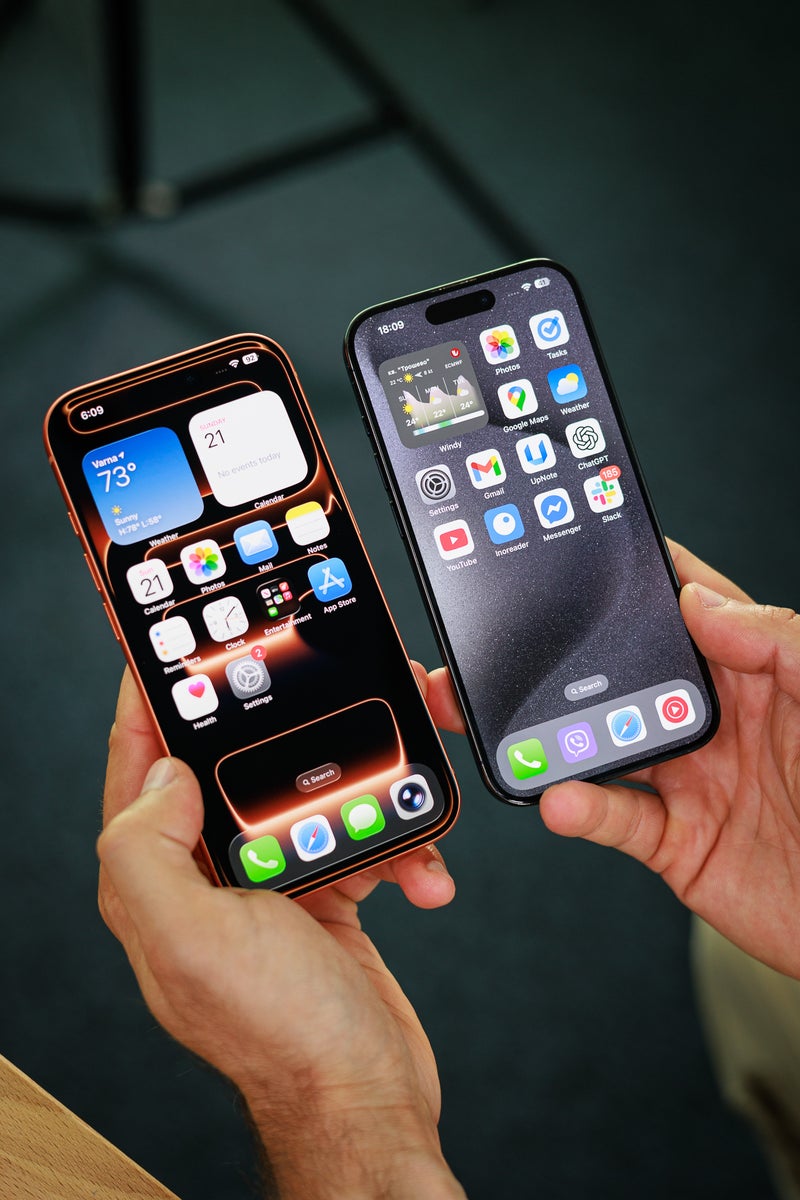
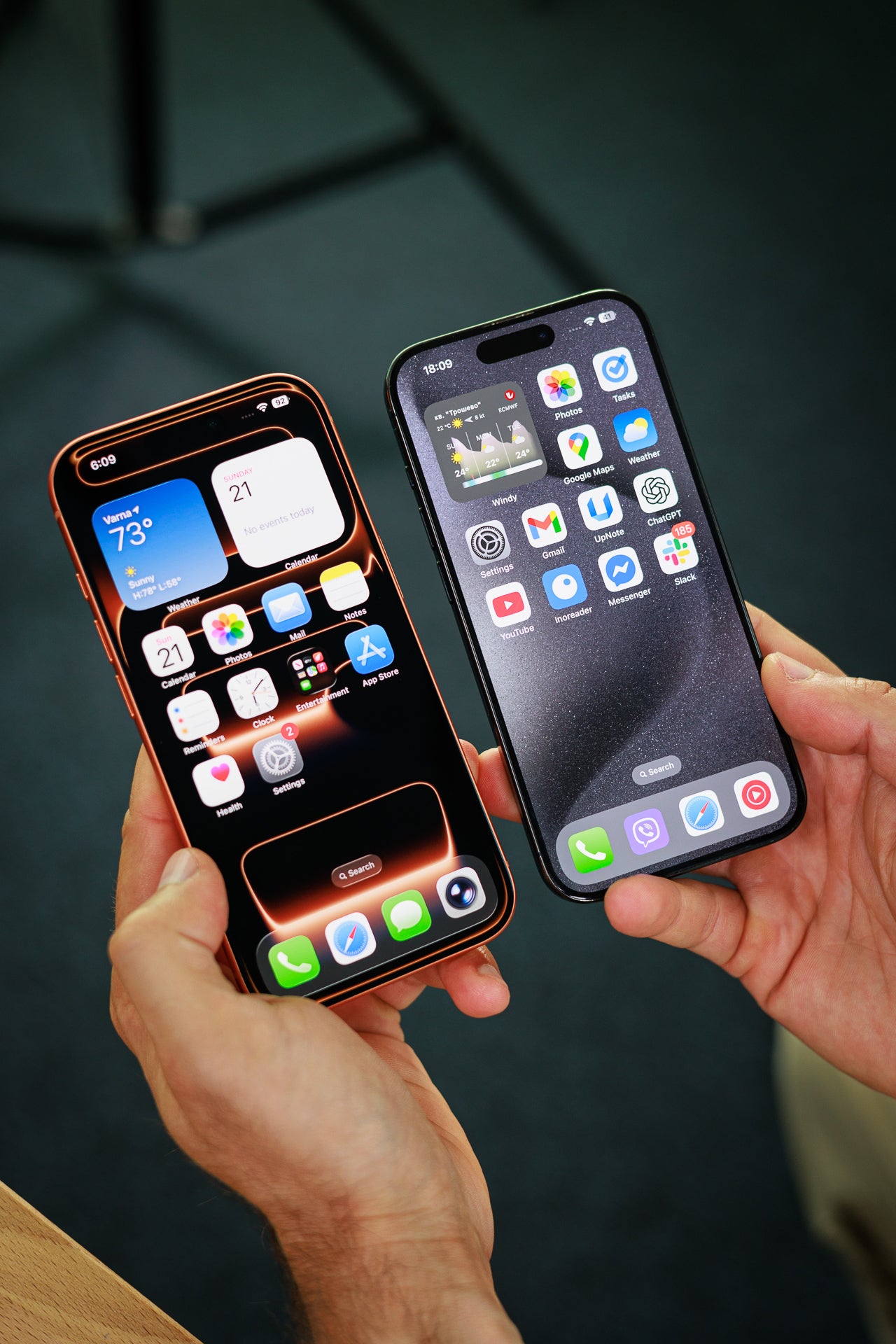
The big feature is a visual overhaul called "Liquid Glass." The main event is an optional "Clear Look" that makes the whole screen transparent. I'd say it's very reminiscent of Windows Vista, but just typing this immediately makes my back ache. I suspect all that transparency might be a bit too much for some, it occasionally looks like trying to read a newspaper through a frosted bathroom window.
On the bright side, some changes come for those of us who yearn for simplicity. The Camera app is being decluttered, hiding all the fancy modes by default. This is a blessed relief for anyone who grew up with cameras that had precisely one button.
Apple also re-organize the Photos app, bringing order into the chaos it itself created last year. Great, search is now within easier reach and I can finally find my albums.
The best news, however, is the new Call Screening feature to fend off telemarketers. A magnificent invention, even if Pixel phones have had this for a few years. Far more sophisticated than my old method, which was to simply not answer any calls.
There’s also Live Translate for calls, which sounds great in demos, but I have serious doubts might create a lot more confusion than help. Let's see.
There are other new tricks, like adding polls to group chats, which seems a very complex way to achieve what used to be accomplished by one person just making a decision. Snark aside, these are all cool and useful features that many people will appreciate. Just don't go overboard with the glass look.
Camera
Telephoto changes
PhoneArena Camera Score:
Photo
Video
Phone
Camera Score
Photo Score
Main (wide)
Ultra Wide
Selfie
Zoom
Apple iPhone 17 Pro
156
162
84
24
28
26
Apple iPhone 15 Pro
153
156
82
23
27
23
Phone
Camera Score
Video Score
Main (wide)
Ultra Wide
Selfie
Zoom
Apple iPhone 17 Pro
156
150
77
23
26
24
Apple iPhone 15 Pro
153
149
78
23
27
22
Find out more details about photo and video scores for all phones we have tested on our PhoneArena Camera Score page
Apple went through some changes in the telephoto department of the iPhone Pro models in the past couple of generations. The iPhone 15 Pro comes with a 3x telephoto camera. Then last year Apple upgraded that to the same tetraprism optics found on the Pro Max model, featuring 5x zoom.
iPhone 17 Pro
iPhone 15 Pro
Main 48 MP f/1.8 24mm (wide) 1/1.28"
Main 48 MP f/1.8 24mm (wide) 1/1.28"
Ultrawide 48 MP f/2.2 13mm (ultrawide) 1/2.55"
Ultrawide 12 MP f/2.2 13mm (ultrawide) 1/2.55"
Telephoto 48 MP 100mm 4x optical zoom
Telephoto 12 MP f/2.8, 77mm 3x optical zoom
With the iPhone 17 Pro, however, we are in for another change—the telephoto camera has received a boost in megapixel count—to 48MP. The same tetraprism system, but the optical zoom is down to 4x. The ultrawide camera was upgraded to a 48MP sensor last year, and the iPhone 17 Pro carries this one over, meaning it has an advantage over the old 12MP ultrawide on the iPhone 15 Pro.
The front camera has been upgraded as well. The iPhone 15 Pro comes equipped with a 12MP selfie camera, while the iPhone 17 Pro features a unique square sensor that allows it to take horizontal and vertical photos without the need to rotate the phone, and the resulting images are 18MP.
Our camera rating widget shows a clear advantage for the iPhone 17 Pro with slight upgrades and better scores across all tests. But let's check out some real-life samples as well.
You can check out the video recording capabilities above. We've used the Pro Max version of each generation but since the cameras are the same, the comparison is relevant to the iPhone 17 Pro and the iPhone 15 Pro comparison as well.
Apple is also adding Dual Capture video, offering simultaneous feeds from the front and rear camera. This feature is not entirely new, though. We've seen similar functionalities on Android phones from the 2015s (such as the Xperia Z5 and XZ), as well as some Chinese phones as well. Still, it's a nice addition.
Battery Life and Charging
Bigger batteries?
Thanks to the inevitable teardowns, we now know the exact battery capacity (or should we say capacities) of the iPhone 17 Pro. The phone comes in two flavors - the US model skips the physical SIM slot and opens up more space for a bigger battery (4252 mAh), while the EU version comes with a SIM slot and a smaller (3988 mAh) battery. According to the specs the new phone can do 33 hours of video playback, while the iPhone 15 Pro is rated at 23 hours. Let's run some tests.
iPhone 17 Pro
iPhone 15 Pro
Battery capacity 3988 mAh (physical SIM) 4252 mAh (eSIM only)
The iPhone 17 Pro gets one full hour over its distant predecessor, and there are gains in all departments. You can browse much longer on the new phone, watch videos and play games as well.
In terms of charging, an area that has long been a source of frustration for Apple fans, the iPhone 17 Pro comes with a slight upgrade, according to the official specs sheet. Apple lists 50% charge in just 20 minutes, which is faster than the 30 minutes listed for the iPhone 15 Pro.
If you're tired of your iPhone 15 Pro and looking for an upgrade, the iPhone 17 Pro may provide enough improvements to justify the purchase. It comes with new camera technology—the telephoto has a 48MP sensor under the lens, and the ultrawide is better than the one on the iPhone 15 Pro, offering some quality of life improvements as well.
The battery is larger, allowing the iPhone 17 Pro to last longer, and the design has also changed, for better or for worse. Add the new A19 Pro silicon and quicker charging, and there are plenty of reasons to upgrade.
It's not all roses and butterflies in the iPhone 17 series land, though. The switch to aluminum has brought some issues, making the new Pro models prone to dents and scratches, so if you want a more durable phone, the titanium-frame iPhone 15 Pro might have an advantage.
The other big issue is that this year's iPhone 17 Pro starts at $1,099, although the basic model now offers 256GB of storage. If you're prepared to deal with these slight compromises, the iPhone 17 Pro might be a decent upgrade.
Why you can trust PhoneArena
25+Years of Experience
4234Product Reviews
Every product we review or recommend is thoroughly tested by our in-house experts in real-world conditions, following our
review methodology
and
ethics statement
to ensure honest, independent, and data-driven results.
Mariyan, a tech enthusiast with a background in Nuclear Physics and Journalism, brings a unique perspective to PhoneArena. His childhood curiosity for gadgets evolved into a professional passion for technology, leading him to the role of Editor-in-Chief at PCWorld Bulgaria before joining PhoneArena. Mariyan's interests range from mainstream Android and iPhone debates to fringe technologies like graphene batteries and nanotechnology. Off-duty, he enjoys playing his electric guitar, practicing Japanese, and revisiting his love for video games and Haruki Murakami's works.
A discussion is a place, where people can voice their opinion, no matter if it
is positive, neutral or negative. However, when posting, one must stay true to the topic, and not just share some
random thoughts, which are not directly related to the matter.
Things that are NOT allowed:
Off-topic talk - you must stick to the subject of discussion
Offensive, hate speech - if you want to say something, say it politely
Spam/Advertisements - these posts are deleted
Multiple accounts - one person can have only one account
Impersonations and offensive nicknames - these accounts get banned
To help keep our community safe and free from spam, we apply temporary limits to newly created accounts:
New accounts created within the last 24 hours may experience restrictions on how frequently they can
post or comment.
These limits are in place as a precaution and will automatically lift.
Moderation is done by humans. We try to be as objective as possible and moderate with zero bias. If you think a
post should be moderated - please, report it.
Have a question about the rules or why you have been moderated/limited/banned? Please,
contact us.


























Things that are NOT allowed:
To help keep our community safe and free from spam, we apply temporary limits to newly created accounts: