Choosing between T-Mobile and Verizon isn't as simple as comparing who has the fastest 5G anymore. Both carriers have evolved beyond just selling cell service – they now bundle streaming perks, device deals, and coverage promises into complex ecosystems designed to lock you in.
This guide discusses how the two compare in plan costs, phone options, and real-world coverage to help you figure out which one would be the best for your specific needs.
The two carriers are close to each other in terms of number of subscribers. In early 2026, T-Mobile has a little over 140 million subscribers, and Verizon has around 146 million.
Image by PhoneArena
T-Mobile:
Blazing 5G performance
Most affordable unlimited option
Generous built-in perks
T-Satellite direct-to-cell on some plans
No customizable family plans
Limited mobile hotspot data
Image by PhoneArena
Verizon:
Strong 4G LTE coverage
Flexible perks
Customizable family plans
Higher overall prices
Extra charge for streaming benefits
Recommended For You
Both T-Mobile and Verizon offer excellent service in terms of coverage and connectivity in reality. It's down to the small details when you pick between the two.
Pricing and plans comparison
Verizon and T-Mobile each offer three main unlimited plans, but they take different approaches when it comes to pricing, perks, and data options.
Verizon: from $55 to $80
Verizon's plans are structured as Unlimited Welcome, Unlimited Plus, and Unlimited Ultimate, ranging from $55 to $80 per month for one line. The plans get cheaper for a line if you pick more than one, which is a standard practice.
The cheapest option (Unlimited Welcome) gives you basic 5G and standard phone upgrades, while the pricier tiers unlock 5G Ultra Wideband access with Enhanced Video Calling and Streaming, unlimited mobile hotspot data, and extras like international calling and global roaming. Also, the Unlimited Ultimate subscribers get the best phone offers.
Verizon also includes a three-year price lock on all its plans – a rare stability perk in today's market.
T-Mobile: from $60 to $100
T-Mobile retired the Go5G moniker last year. Now, T-Mobile's lineup includes Essentials, Experience More, and Experience Beyond, starting at $60 per month and climbing to $100 for one line before discounts. All three come with unlimited talk, text, and data, but the higher tiers stand out for their added value.
Experience More and Beyond include perks like Netflix, Apple TV+, and Hulu, plus generous mobile hotspot allowances, in-flight Wi-Fi, and high-speed international data plus T-Satellite. The carrier also offers a five-year price guarantee, upgrade flexibility, and a free third line for new accounts, making its plans more benefit-heavy but slightly pricier at the top.
The plan and pricing overview:
Feature
Verizon Unlimited Welcome
Verizon Unlimited Plus
Verizon Unlimited Ultimate
T-Mobile Essentials
T-Mobile Experience More
T-Mobile Experience Beyond
Monthly Price (1 line)
$55
$70
$80
$60
$85
$100
Price Lock
3 years
3 years
3 years
5 years
5 years
5 years
5G Access
Standard 5G
5G Ultra Wideband
5G Ultra Wideband + Enhanced Streaming
Premium 5G
Premium 5G
Premium 5G
Mobile Hotspot Data
None listed
30 GB
Unlimited
50 GB
60 GB
Unlimited
Streaming Perks
None
Optional add-ons
None
None
Netflix + Apple TV+
Netflix + Apple TV+ + Hulu
International Use
Not included
Some travel data
Full global data and calling
Text + data in 215+ countries
More data in 215+ countries
More data + in-flight Wi-Fi
Phone Upgrades
Standard
Plus Upgrade
Ultimate Upgrade
Every 2 years
Every 2 years
Every year
Extra Perks
Basic plan only
50% off 1 data plan (tablet/watch)
50% off 2 data plans (tablet/watch)
Free 3rd line promo
Free 3rd line promo
Free 3rd line promo + T-Satellite access
Overall, Verizon's plans focus more on network quality, coverage, reliability, and international options, while T-Mobile's are focused on entertainment and have loads of bonuses and lifestyle extras.
Coverage comparison
Having fast and cheap 5G is great, but it's of no use if you have no reliable network coverage. Both Verizon and T-Mobile deliver top-tier 4G LTE and 5G performance, but the best choice ultimately depends on which network gives you stronger coverage where you live and work.
Image by Verizon
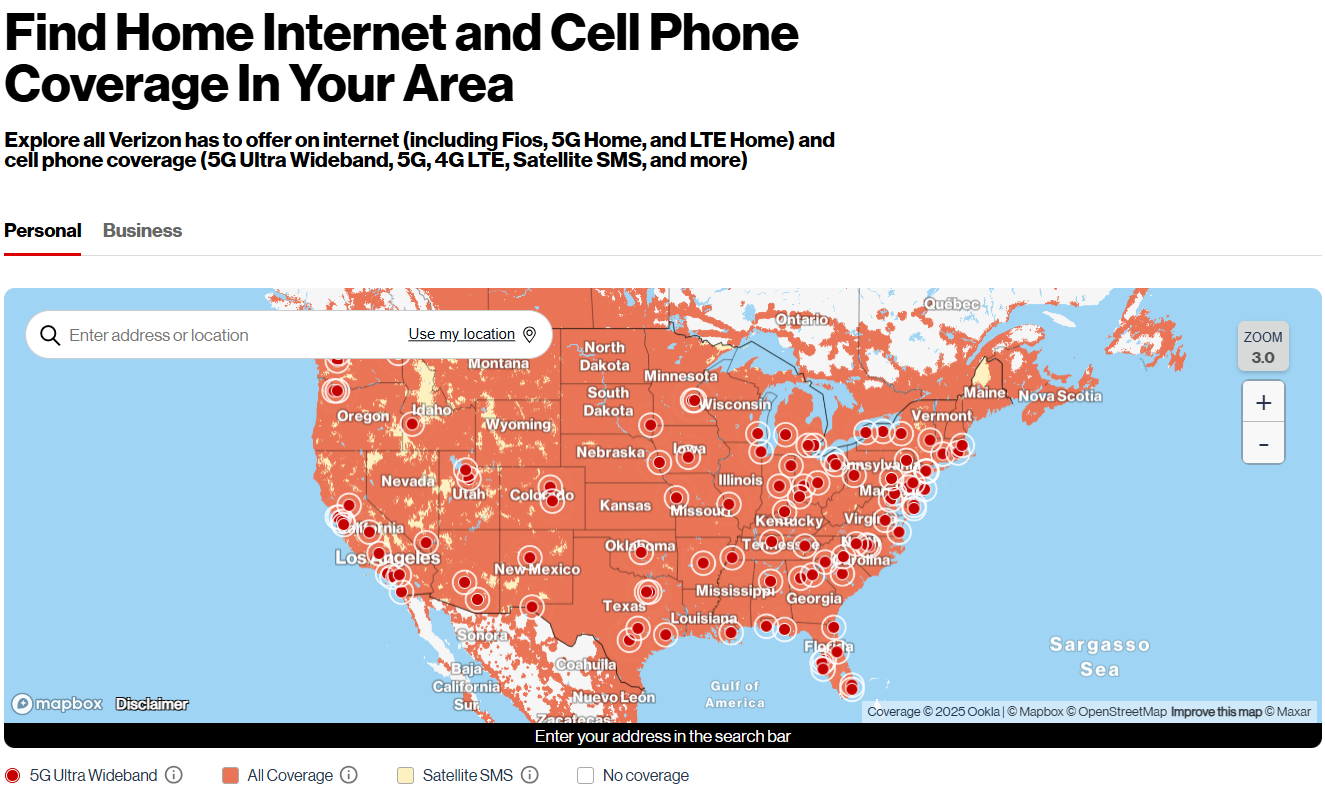
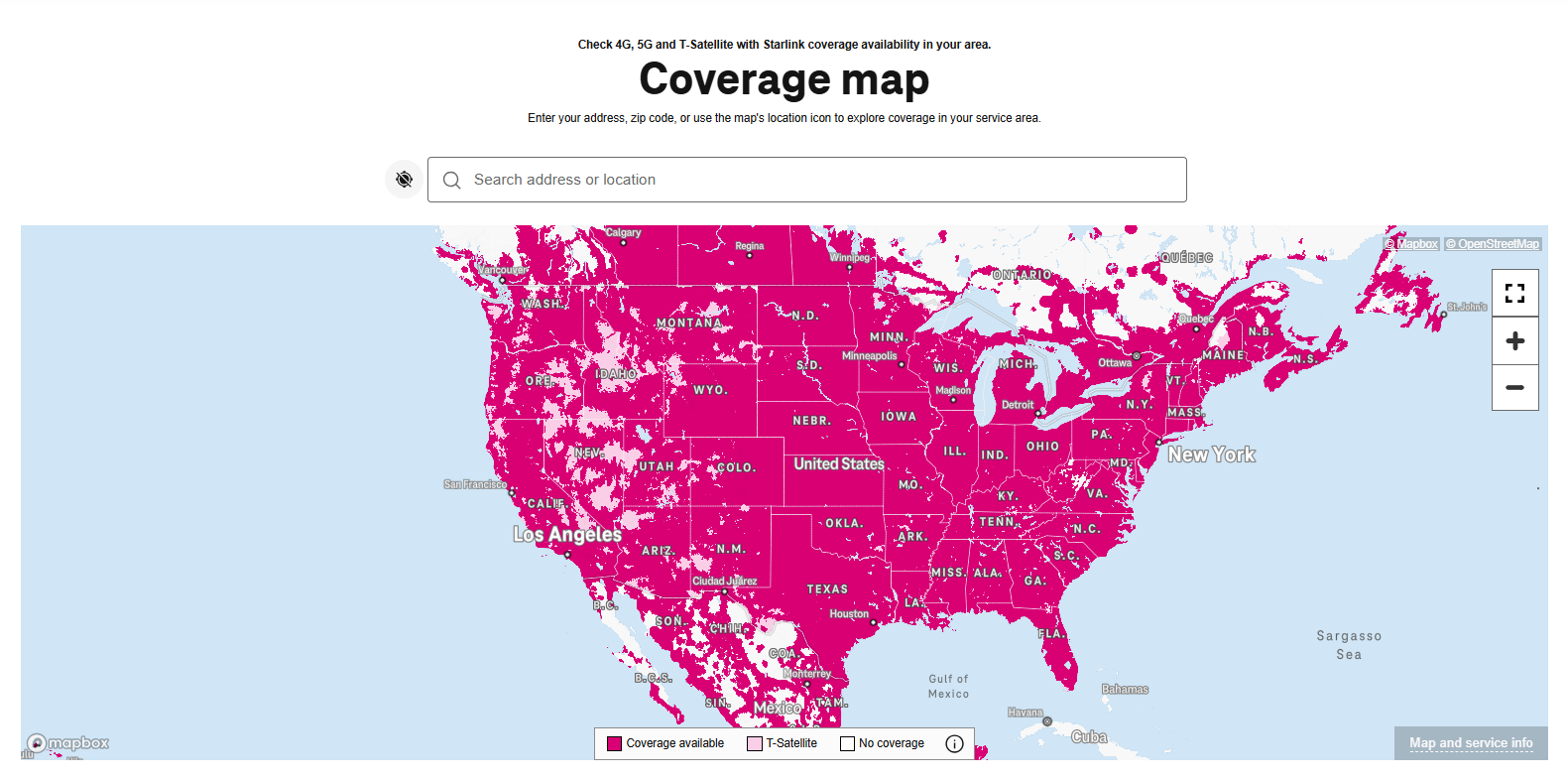
It's generally accepted that Verizon leads the nation in 4G LTE coverage, reaching about 70% of the country. It tends to provide more reliable service in rural regions and for frequent travelers. T-Mobile's 4G LTE network covers around 62% of the US – solid overall, but still a step behind Verizon in reach.
Image by Verizon
T-Mobile currently leads the 5G race, with its network covering about 53% of the US – far ahead of Verizon's ~13%. For those in cities or suburban areas with strong T-Mobile service, it's the best choice for consistent high-speed connections. Verizon, on the other hand, relies heavily on high-band millimeter wave (mmWave) 5G, which delivers blazing-fast speeds but with limited range and availability.
Ultimately, the right choice depends on where you live and work. T-Mobile shines where its 5G network is strong, while Verizon remains the more reliable choice in rural regions.
A good practice here is to ask people living in your area about how their experience with the coverage has been. Keep in mind that coverage changes frequently and carriers are constantly working to expand their reach.
Network performance
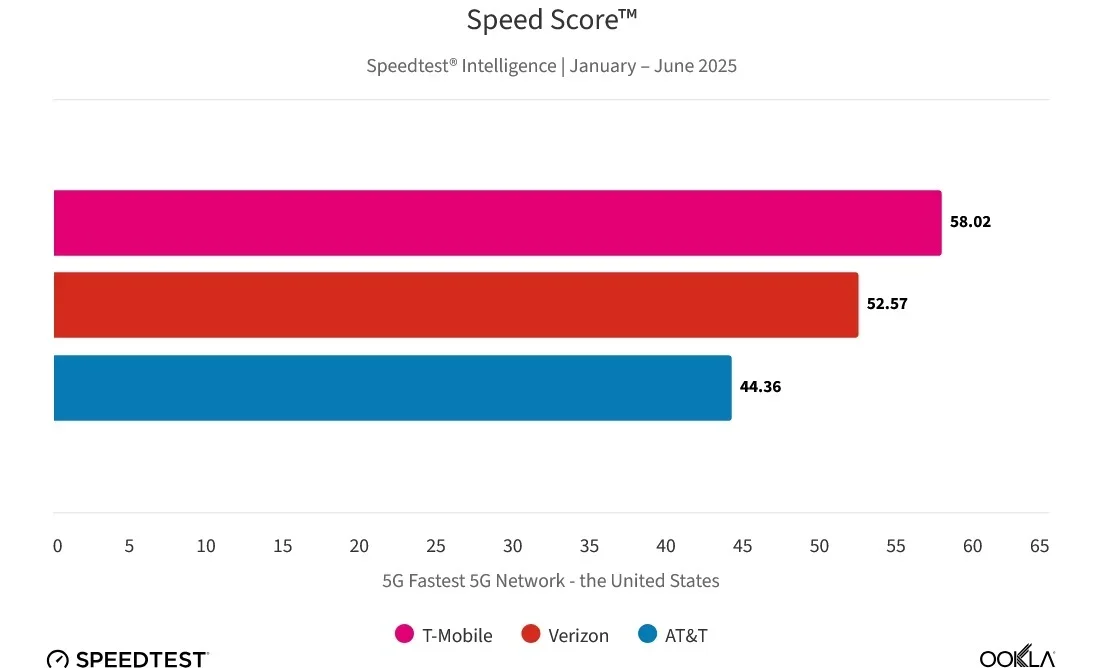
T-Mobile offered the fastest 5G wireless speeds in the US in H1 2025. | Image by Ookla
Currently, T-Mobile dominates mobile network performance in the US, pulling ahead of Verizon in nearly every speed and consistency metric, according to Ookla's Speedtest Connectivity Report for the first half of 2025. The same situation has basically remained for the second half of 2025's report. T-Mobile Achieved a media download speed of 259.48 Mbps and the fastest median 5G download speed of 309.41 Mbps.
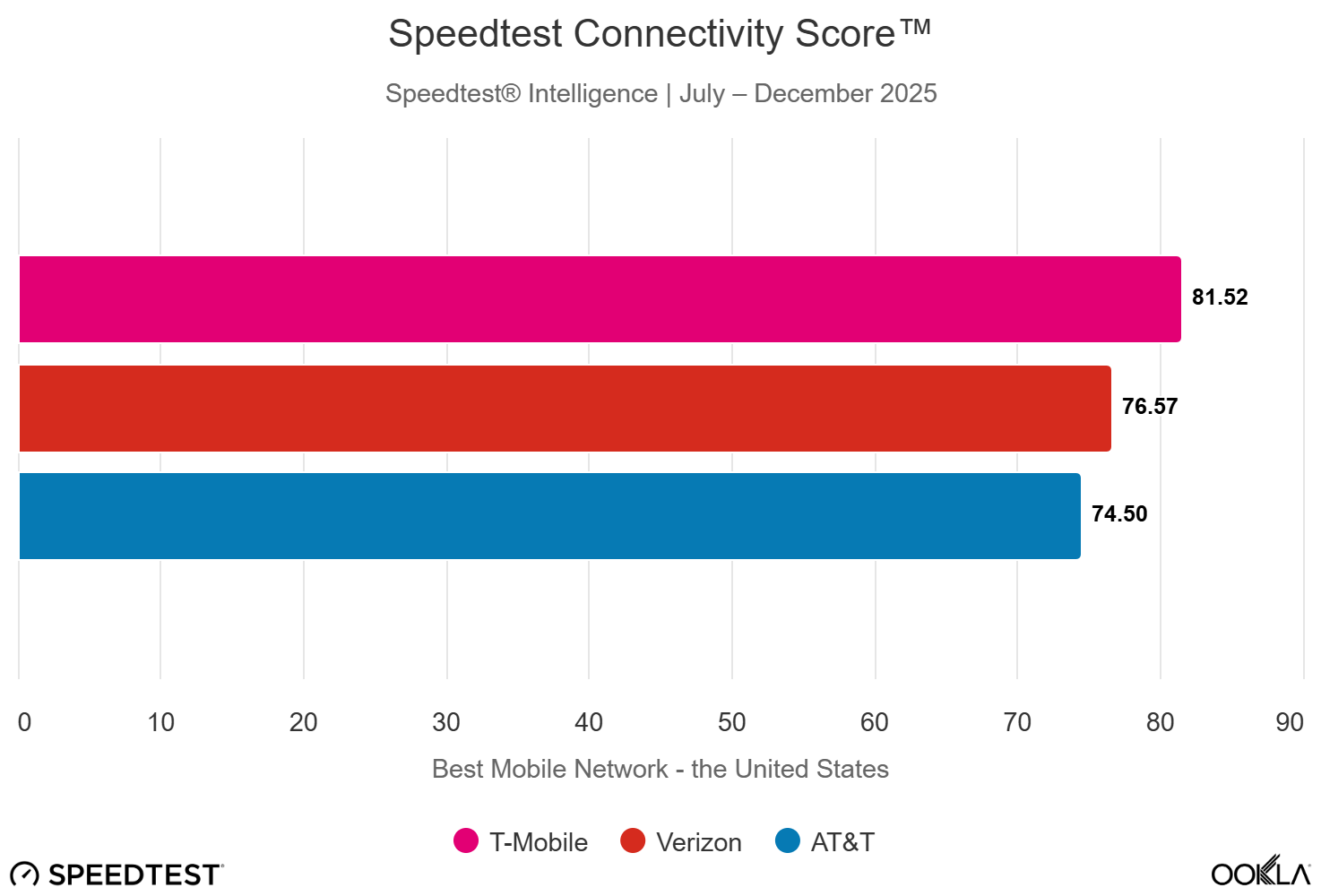
In overall connectivity, T-Mobile also took the crown in July – December 2025 and reached a score of 81.52, while Verizon came in second with a score of 76.57.
Results for H2 of 2025. | Image by Ookla
T-Mobile was also king when it came to 5G network speed for Q3-Q4 2025, and it won the Speedtest Award with a speed score of 57.67 (Verizon was second again with 51.39).
It's worth pointing out again that Verizon still shines in coverage and streaming. It posted the best overall coverage score at 29.9%, maintaining its long-standing edge in rural and remote areas where T-Mobile's signal can still be spotty. Verizon also scored slightly higher in video streaming quality, with a 76.53 average compared to T-Mobile's close 76.38. When it comes to 5G video performance, Verizon widened that lead with an 82.57 score against T-Mobile's 79.95.
T-Mobile, however, claimed a decisive win among gamers, earning an 86.61 score for general gaming and 87.31 for 5G gaming – both a tad higher than Verizon's 84.10 and 86.33. Consistency also favored T-Mobile, which maintained reliable speeds 87.6% of the time, compared to Verizon's 84.7%.
Taken together, the data shows that T-Mobile offers the fastest and most consistent experience for most users, while Verizon remains the better pick for those who prioritize wide rural coverage and top-tier streaming performance.
Phone selection
Image by PhoneArena
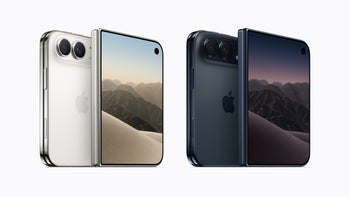
Both T-Mobile and Verizon offer a big selection of phones to choose from. Both are offering the newest iPhone, Galaxy, and Pixel models. Often, T-Mobile and Verizon also offer budget and mid-range devices from brands like Motorola, OnePlus, and TCS.
It's important to keep in mind that most of these devices are carrier-locked. This means they're tied to the network until you've paid off the balance or met the contract requirements. This is a standard practice with US carriers.
Both T-Mobile and Verizon also offer trade-in programs, installment plans, and frequent limited-time promotions – such as bill credits or discounts when adding new lines – making it easier to upgrade to the latest devices.
Buying directly from a carrier can be convenient, especially if you prefer monthly payments or want to take advantage of bundle deals.
If we look at the iPhone 17 Pro Max (256 GB) - Apple's latest and greatest flagship - one could get it from T-Mobile with a plan for $8.33/month (for 24 months), which means $1,000 of the $1,200 regular price are off. Similarly, Verizon offer the iPhone 17 Pro Max for $5/month (for 36 months) more on your mobile bill.
If we look at the best Android phones the two carriers offer, the Galaxy S26 Ultra (256 GB) is first in line: the $1,300 phone could be obtained for free at the time of writing (March, 2026) at both carriers. Of course, these deals require conditions and specific plans, so check out the carriers' websites for more information.
Features and perks
Image by PhoneArena
T-Mobile is heavily leaning into the idea that everyone enjoys a few extras. Basically, T-Mobile's mid- and top-tier plans are almost like entertainment packages.
For example, the Experience More plan includes Apple TV+ and Netflix Basic when you have two or more lines, while the Experience Beyond plan adds even more value with Apple TV+, Netflix Standard, and Hulu.
These built-in streaming perks make T-Mobile's plans feel more like bundled lifestyle subscriptions than simple phone service.
Verizon takes a slightly different approach – it lets you choose your perks. Instead of bundling perks automatically, Verizon offers a system where users can add their preferred extras for $10 each per month.
The available options include popular services such as Netflix and Max with ads, the Disney Bundle (which includes Hulu, Disney Plus, and ESPN Select), Apple One, Apple Music Family, YouTube Premium, Walmart+ membership, and even 100 GB of extra mobile hotspot data. This way, Verizon gives more control over what users pay for, though it can add up quickly depending on how many perks are selected.
Customer service
Customer service is not a strong suit for either Verizon or T-Mobile. Despite offering several ways to get assistance, including online chat, phone support, and in-store visits, both companies continue to receive low ratings from customers on platforms such as Trustpilot.
Verizon's digital support tools often prove unhelpful, though users tend to have better experiences once they connect with a live representative. T-Mobile's customer care follows a similar pattern – reaching a real person can take time, but most users report friendlier and more responsive service once they do.
The T-Life drama
T-Mobile is making its T-Life app even more central to how customers manage their accounts. Starting October 30, 2025, anyone needing to set up a payment arrangement for a past-due bill will have to do it exclusively through T-Life. The move marks another step in T-Mobile's push toward full digital transformation, replacing calls and in-store visits with self-service options.
The carrier says this shift helps reduce friction and costs, but not everyone is happy about it. Some customers and employees have voiced frustration over being forced to use the app, though T-Mobile insists adoption is growing fast, with most upgrades and pre-orders now happening digitally.
Verizon's AI push
Meanwhile, Verizon is facing backlash from both customers and employees over its growing reliance on AI-driven support and cost-cutting measures. Users complain that the new automated system makes resolving issues harder, often trapping them in endless bot loops instead of connecting them to real agents.
Inside the company, staff members have voiced frustration over heavy performance targets, limited tools, and a shift toward outsourcing that sidelines in-house teams. At the same time, Verizon's removal of long-standing loyalty discounts has angered many longtime customers, pushing some to consider switching carriers.
T-Mobile vs Verizon: which carrier to choose?
Choosing between T-Mobile and Verizon comes down to which one better fits your habits and priorities. T-Mobile appeals to users who want lower prices without sacrificing speed or features. Its plans are generous with data, and its top tiers include streaming extras like Apple TV+ and Netflix, adding good value for those who use entertainment services often.
Verizon caters more to people who want the strongest possible coverage and consistently high performance, even in rural areas. Its network is dependable, and the option to add specific perks for an extra fee gives users more control over what they pay for, though the total cost can add up quickly.
In short, T-Mobile is best for those chasing affordability and 5G performance in cities and suburbs, while Verizon is the safer bet for travelers or anyone who relies on coverage above all else.
Free Galaxy A17 5G with Straight Talk
Get a free Galaxy A17 with Straight Talk. To claim this deal, you need to pair the phone with activation on a Silver Unlimited Plan or higher. This tier costs $45 per month. Offer valid through 01/10/27 while supplies last online.
Sebastian is one of PhoneArena’s senior opinionators. A veteran news writer with almost 20 years of experience in media and technology, he not only covers all the hot news about Galaxies and iPhones, but often provides hot takes on industry trends. He’s fascinated with camera-focused flagships from the likes of Oppo and Vivo, as well as foldable phones.
A discussion is a place, where people can voice their opinion, no matter if it
is positive, neutral or negative. However, when posting, one must stay true to the topic, and not just share some
random thoughts, which are not directly related to the matter.
Things that are NOT allowed:
Off-topic talk - you must stick to the subject of discussion
Offensive, hate speech - if you want to say something, say it politely
Spam/Advertisements - these posts are deleted
Multiple accounts - one person can have only one account
Impersonations and offensive nicknames - these accounts get banned
To help keep our community safe and free from spam, we apply temporary limits to newly created accounts:
New accounts created within the last 24 hours may experience restrictions on how frequently they can
post or comment.
These limits are in place as a precaution and will automatically lift.
Moderation is done by humans. We try to be as objective as possible and moderate with zero bias. If you think a
post should be moderated - please, report it.
Have a question about the rules or why you have been moderated/limited/banned? Please,
contact us.









Things that are NOT allowed:
To help keep our community safe and free from spam, we apply temporary limits to newly created accounts: