Samsung Galaxy S6 Review

You can now read:
Introduction
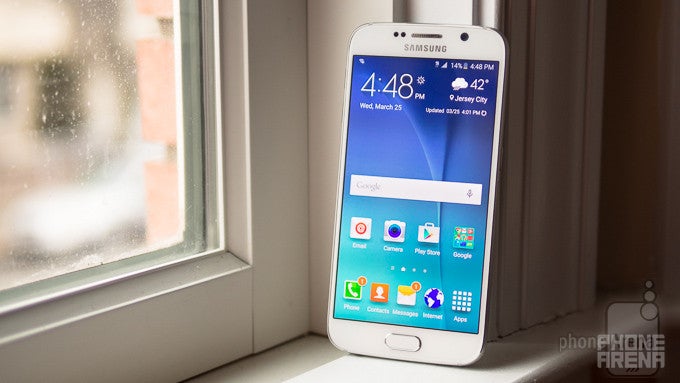
Almost hard to imagine it, the first-generation Samsung Galaxy S came into light back in the summer of 2010. Back then, the competition in the smartphone market was largely dominated by the iPhone. Over in the Android space, there were a few notable Android devices making some noise as well, such as the HTC EVO 4G, Sony Xperia X10, and Motorola DROID to name a few, but for Sammy, the launch of the original Galaxy S ushered in a new era for the Korean company – one that eventually spurred on iterative devices that proved to be more and more impressive.
Surprise came during Mobile World Congress 2015, when Samsung officially unveiled its latest flagship smartphone – the totally redesigned Samsung Galaxy S6. Looking at what’s been happening in the mobile space the last year, you can say that tough competition from Apple and the various Chinese companies have whittled away at Sammy’s bottom line. Well, the Samsung Galaxy S6 aims to squash those concerns, since it’s probably the biggest shakeup in the series. Already, Samsung has been able to stir up plenty of attention with its flagship – giving rise to notion that it’s going recapture the top spot once again!
- Samsung Galaxy S6
- Wall charger
- microUSB cable
- Stereo headphones
- Start Guide
- Health & Safety and Warranty Guide
- SIM removal tool
Design
A stark change, the new Galaxy S6 impresses on so many levels with its premium design.
What a departure! For a long time there, the Galaxy S line has always been tepid in terms of design – so it wasn’t really known for that. Of course, the decision to go with plastic constructed devices has its benefits, such as contributing to a lighter frame, but generally speaking, it lacks the premium qualities we’d want to find in a flagship smartphone. Well folks, Samsung goes 180-degrees, opting to grace the Galaxy S6 with a significantly improved design – one that finally brings in some high-quality components to give it a true high-end look and feel!
As much as we would like to say that the design is an original one, there are characteristics that draw comparisons to the iPhone 6’s design. From a profile view, the metal trim bezel, along with the arrangement of some of its ports and buttons, closely matches the styling of the iPhone 6. So it begs the question: does this new design draw inspiration from Apple’s pride and joy? That’s questionable, of course, but at the end of the day, we can agree that this is the best-designed smartphone Samsung has produced.
In terms of its feel and comfort, the Galaxy S6 is narrower, skinnier, and lighter than its predecessor – going to show that they’re able to chip away at some things to continue making it compact. Its metal frame not only adds strength to the phone’s construction, the subtle rounded cut of it makes it feel pretty good in the hand, though it is a bit top heavy. Now, as much as we adore the premium feel of the phone, it’s just a fingerprint magnet for smudges and fingerprints. Trust us, it’s tough keeping it clean looking. Available in an assortment of colors, it’s mesmerizing how light bounces off its surfaces. Out of all the colors, the white version manages to maintain a cleaner look, just because fingerprints and smudges are less noticeable.
Fingerprint sensor
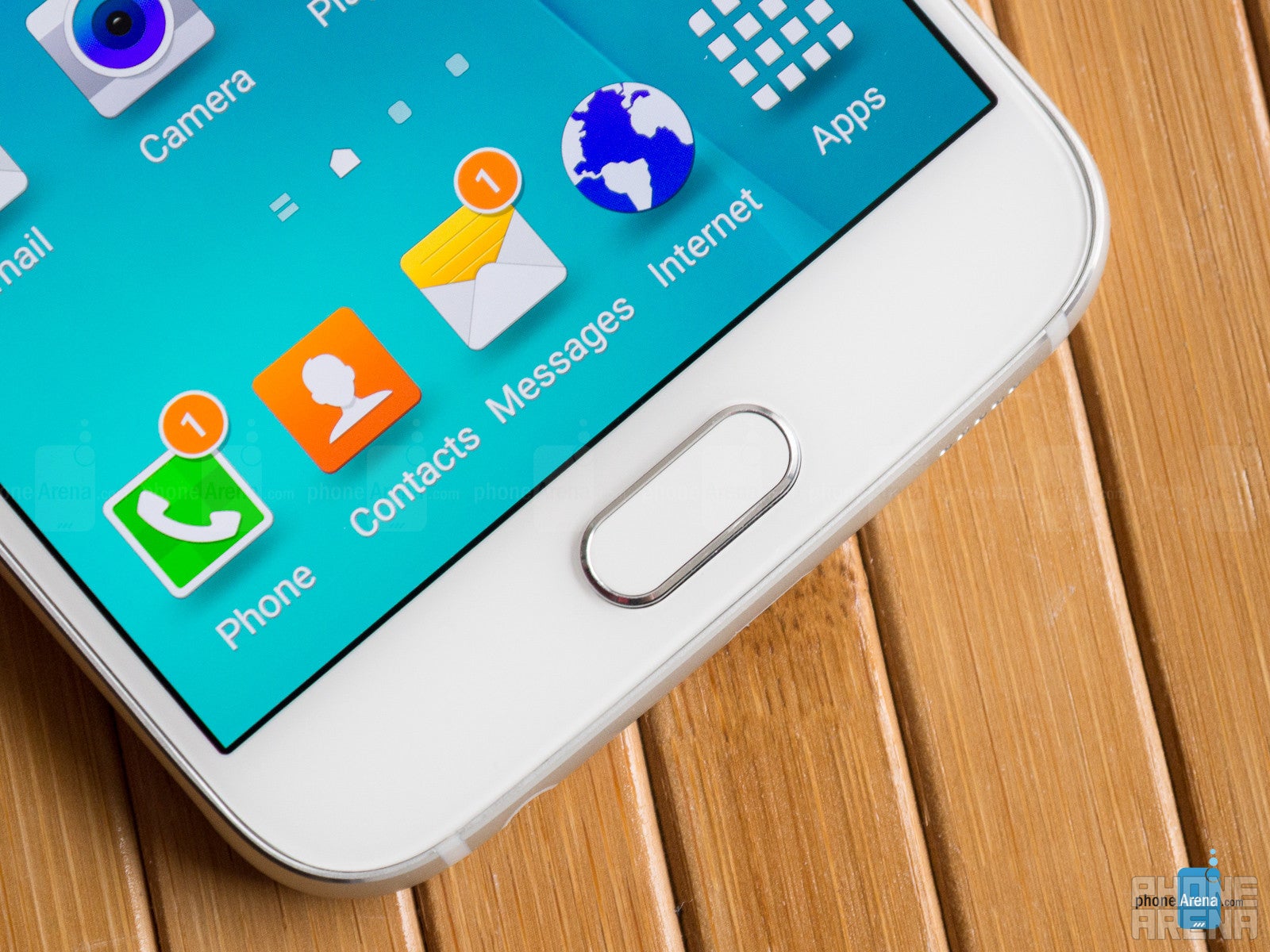
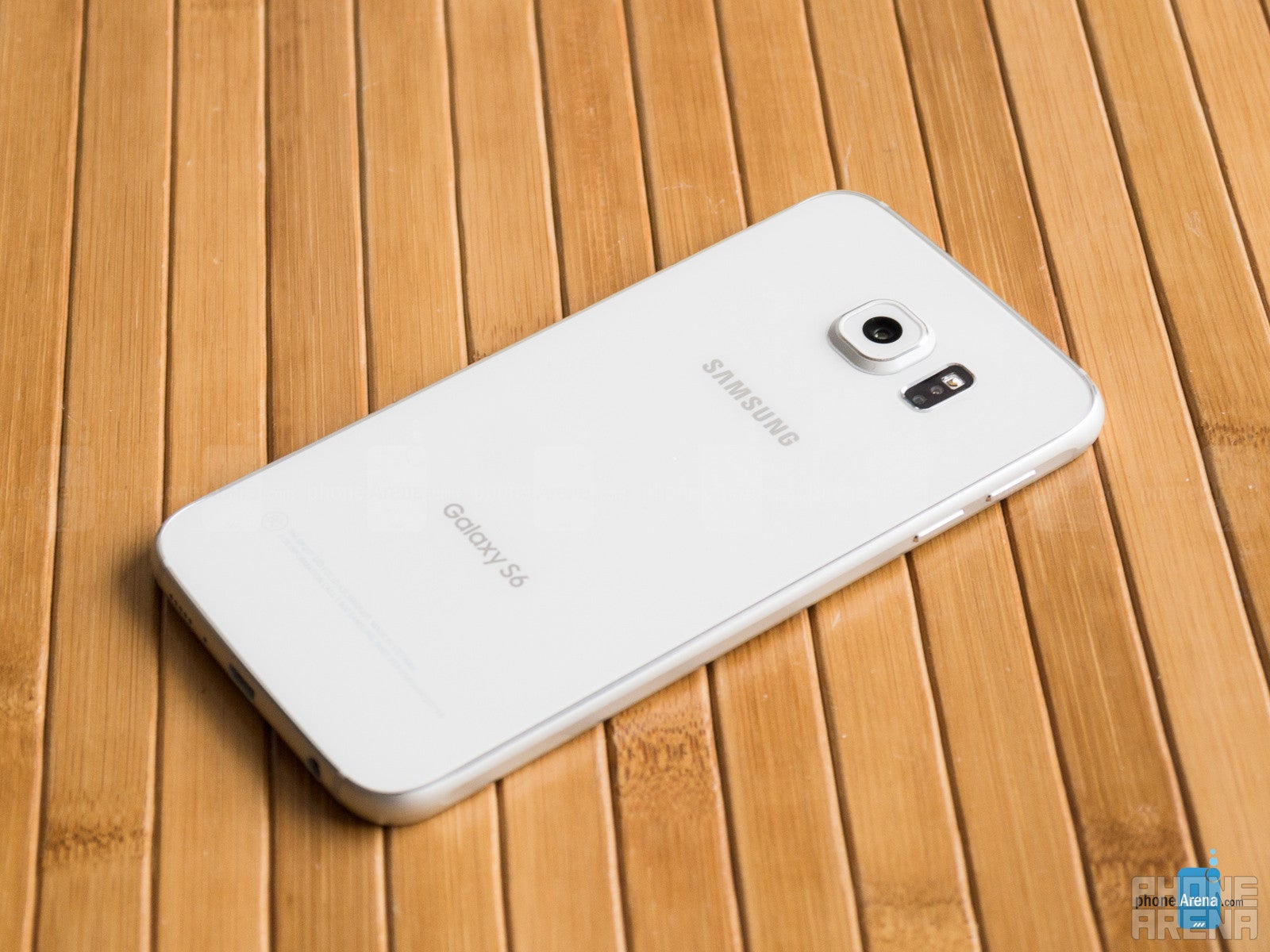
Rounding things out, the Galaxy S6 is armed with a new 16-megapixel rear camera, which is the only thing in the back that juts out from the rest of the surrounding area – causing it to come in contact with surfaces when it’s laid down. This presents an issue - one that’s exemplified because of the handset’s top-heavy feel, just because if you’re not careful and try to prop the phone against something, there’s still a distant possibility it can fall over and somehow mess with the lens covering the camera. And finally, we find the LED flash and heart rate sensor nearby.

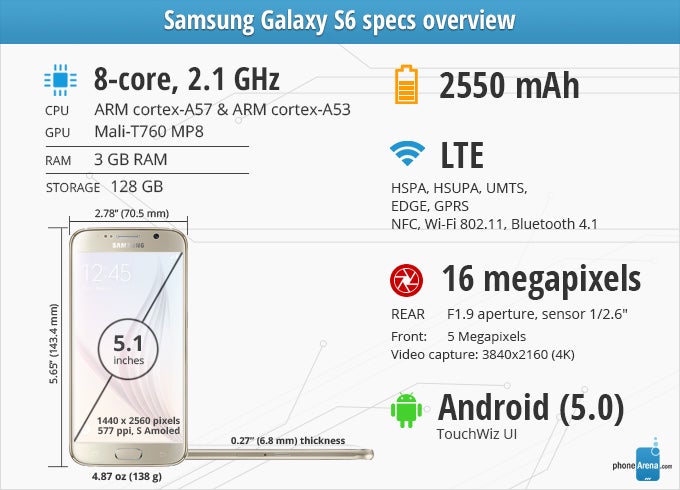
5.65 x 2.78 x 0.27 inches
143.4 x 70.5 x 6.8 mm
4.87 oz (138 g)

5.44 x 2.64 x 0.27 inches
138.1 x 67 x 6.9 mm
4.55 oz (129 g)

5.69 x 2.74 x 0.38 inches
144.6 x 69.7 x 9.61 mm
5.54 oz (157 g)

5.59 x 2.85 x 0.32 inches
142 x 72.5 x 8.1 mm
5.11 oz (145 g)

5.65 x 2.78 x 0.27 inches
143.4 x 70.5 x 6.8 mm
4.87 oz (138 g)

5.44 x 2.64 x 0.27 inches
138.1 x 67 x 6.9 mm
4.55 oz (129 g)

5.69 x 2.74 x 0.38 inches
144.6 x 69.7 x 9.61 mm
5.54 oz (157 g)

5.59 x 2.85 x 0.32 inches
142 x 72.5 x 8.1 mm
5.11 oz (145 g)
Compare these and other phones using our Size Comparison tool.
Display
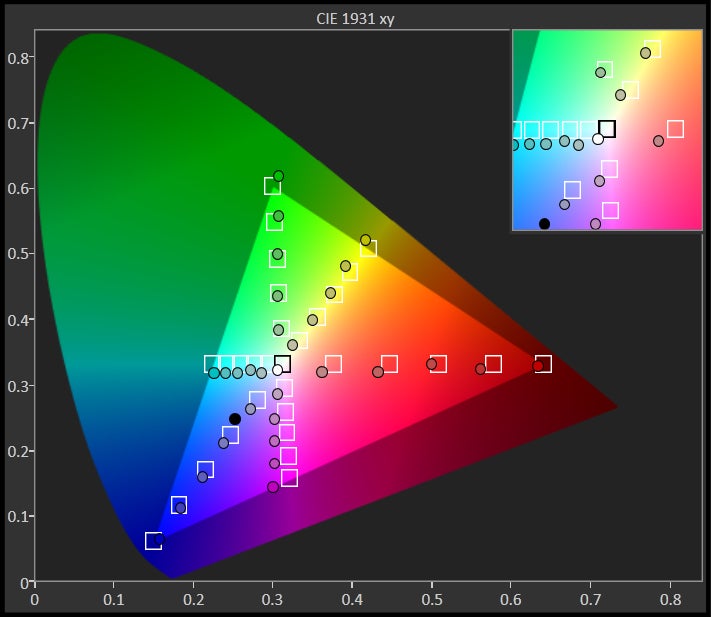
Clearly pushing the envelope, this quad-HD display is not only rich with detail, but it’s the most color accurate AMOLED display to grace a phone to date.
Going with this, you can imagine that this leads to one staggering pixel density, we’re talking about a mark of 577 ppi! That’s mind-blowing to say the least, which leads to a display that’s rich with detail and exceptionally sharp looking. Most folks would be hard-pressed to distinguish how much more detailed this panel is than others with 1080p resolution, especially from a normal distance, but it goes to show that Samsung won’t settle for anything but being class-leading.
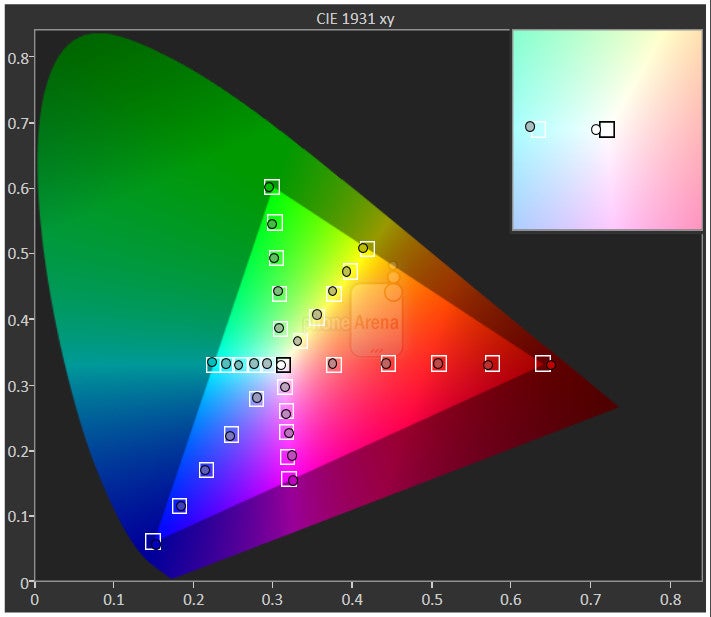
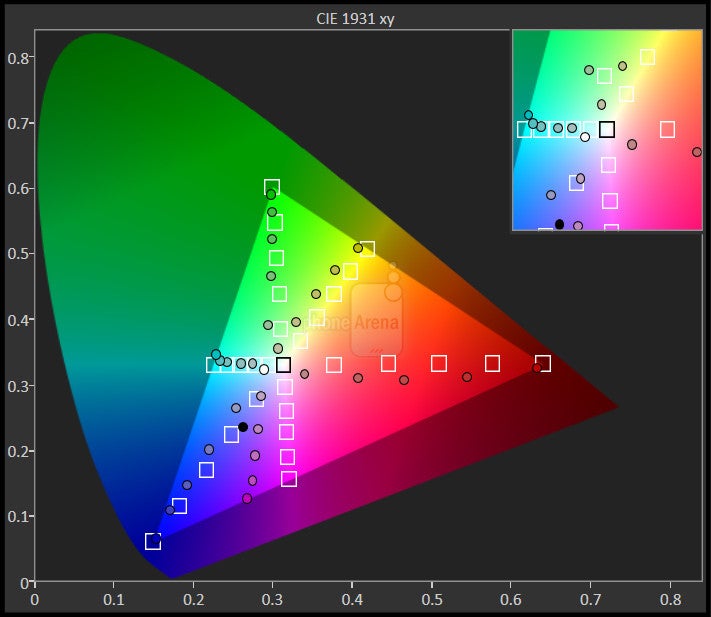
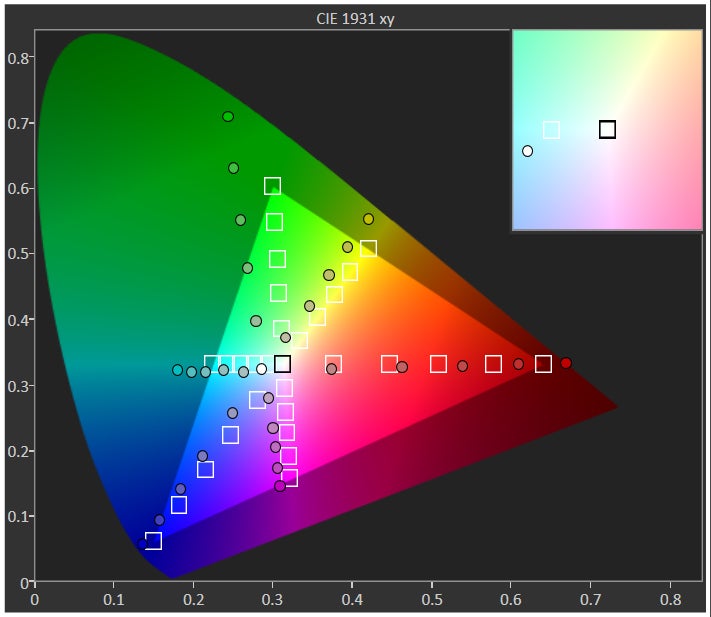
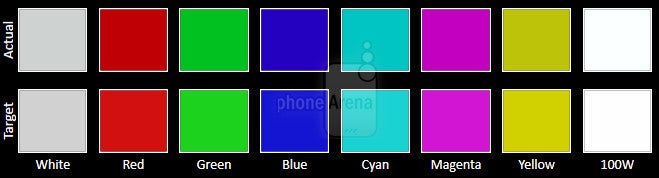
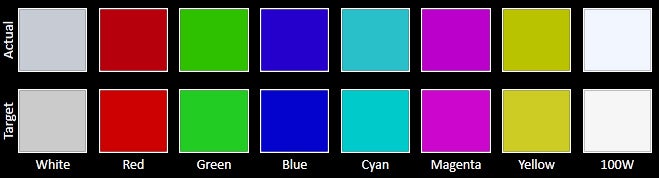
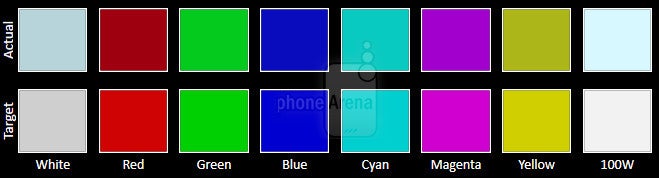
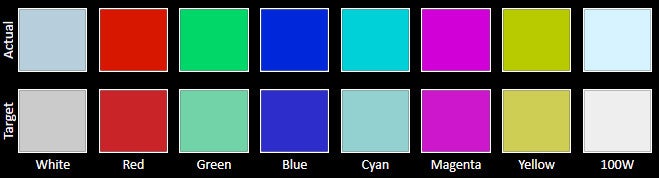
Setting the display to basic mode, as opposed to adaptive, which changes the contrast, color saturation, and other parameters depending on what’s being shown on screen, the Super AMOLED panel is extremely color accurate. It’s revealed through the color gamut chart (seen below), as each color gradient matches the reference points throughout the chart. Blues look blue, reds look red, and greens appear green – so the result here is a display with very high color accuracy.




You can now read:
Interface and Functionality
TouchWiz sheds many of the vast collection of features found in previous iterations, opting instead for a “less is more” approach.
Without question, running on top of Android 5.0.2 Lollipop enhances the experience, not only for the fact that it’s greeted to all the new features that come in tow with Lollipop, like Pinning and Android Smart Lock, but it bears some of the visual design elements of stock Android. In fact, it’s evident in some of the gesture motions of the interface, as in the way the notifications panel springs down with a couple of flicks.
Themes
What’s that you ask? Well, there’s now the ability to download new themes that changes the look of the interface. Going through the Galaxy Apps Store, there are various downloadable themes that not only change the wallpaper, but also other aspects of the interface – such as the color accents, icons, and layout of some core apps. In comparison to what HTC offers with its level of personalization with Sense 7.0, Sammy’s implementation is more superficial – whereas Sense goes the extra step by using stored images/photos for custom themes.
One-handed mode
Enabling one-handed usage has been among the main priorities for Samsung while refining TouchWiz, and we can say that the Galaxy S6 is a top performer in that department. Its compact size, mixed with sizable icons and other user interface elements, make for an experience that facilitates easy and quick usage with just one thumb. Of course, more advanced tasks will still require you to use two hands, but when it comes to simple stuff like checking your email, checking the weather, or calling a contact, using one hand should be sufficient.
Multi Window
So, what can be gather about the new TouchWiz? Basically, it’s more toned down with its approach, but still embodies the design language of the TouchWiz that we all know on the surface. Yeah, the new option to modify the look of the interface with downloadable themes is a logical step forward, but it still lags behind the modern attractiveness we see in other customized Android experiences.
Phonebook
Again, Google’s influence is evident when we look at the Phonebook, since the layout bears the distinctive qualities that encompass Material Design. So essentially, what we have here is dial pad that employs bright colors and a cleaner, overall presentation. Functionally, though, there’s nothing extraordinarily new that we haven’t seen elsewhere.
Organizer
Messaging
Given the choice of using Samsung’s Email app or Gmail, we’d suggest going with the latter mainly because it does a phenomenal job or organizing emails. Not just that, but now that we can setup email accounts other than Gmail, it’s nice that it’s now a hub for all our emailing needs.
Taking a peak at the TouchWiz keyboard, there’s almost no change whatsoever with its layout, size, and function. Just as before, it’s great that there’s a dedicated row strictly for numbers from within the main layout, as opposed to accessing them from a secondary layout, but it would’ve been nice if buttons were a bit wider to fully make use of the space. Nevertheless, we can’t complain about its effectiveness, but other alternatives like SwiftKey are great options if you’re not a fan.
Processor and Memory
In keeping that momentum, this is the fastest phone yet in the series.
Keeping it in-house, Samsung has chosen instead to power the Galaxy S6 exclusively with its very own chip, an octa-core Exynos 7420 processor based on 64-bit architecture. Interestingly, it shares some commonalities with Qualcomm’s Snapdragon 810 SoC, since the two consist of four Cortex-A57 cores running at 2.1GHz, while another four Cortex-A53 cores clock in at 1.5GHz. What’s most profoundly different between the two, is that the Exynos 7420 is manufactured using a 14nm process – whereas the Snapdragon 810 relies on a 20nm process.
One would suspect that employing quad-HD resolution would stall its performance, but that’s hardly the case, seeing that operations are accompanied with buttery and fluid responses. For the hardcore gamer, the S6 is arguably a choice handset to go with, ensuring that it’s unequivocally powerful enough to handle the most demanding gaming titles out there. The Mali-T760 GPU does a commendable job, but in looking at some graphics benchmarks, namely the T-Rex and Manhattan tests of GFX Benchmark, the results lag behind those of the HTC One M9.
In the past, Samsung has focused on the fact that its Galaxy smartphones offered expandable storage via their microSD card slots – a point they’ve kept on harking in its commercials. Sadly, though, they’ve made a complete 180-degree change by choosing instead to strictly stick with internal storage. Some won’t have too much of an issue with this loss, but others will miss the added versatility that the slot offers. Therefore, you’ll need to choose wisely on which model to go with; 32GB, 64GB, or 128GB.
Internet and Connectivity
A new feature brought along with its new finger print sensor, we can now use it to allow us to automatically sign into certain sites Therefore, rather than having to input your user name and password, all that’s necessary now is to use the finger print sensor to sign in. Naturally, it’s there for the convenience, but it’s still nevertheless something we appreciate – though, it works for most web sites, but not all.
Sammy doesn’t disappoint, as the Galaxy S6, being a flagship thing and all, is geared with a healthy arsenal of connectivity features. Being a GSM-enabled smartphone, it benefits from having a high degree of compatibility with an abundance of networks around the world. Throw in its expansive LTE band support, in conjunction with category 6 downlink, this model will deliver theoretical download speeds of 300Mbps.
Beyond that, it shares all of the cutting-edge connectivity that’s the standard fanfare with most of today’s high-end phones – they include aGPS with Glonass, Bluetooth 4.1, dual-band 802.11 a/b/g/n/ac Wi-Fi, NFC, DLNA, MHL, and a microUSB 2.0 port.
Samsung Pay
The Samsung Galaxy S6 will be the first phone to feature Samsung's new Pay service, which, as you might guess, is an alternative to Apple Pay. Right now, Samsung has completed deals with Visa and MasterCard, but it's yet to expand that partnership to other major players, such as American Express, Bank of America, or Chase. However, the company reassures that it's working on it. Easily the most interesting thing about Samsung Pay is the new Magnetic Secure Transmission (MST) proprietary technology, which is said to widen Samsung Pay's compatibility with shopping terminals significantly. In addition to NFC for making contactless payments through terminals that support near field communications, Samsung Pay will also be able to communicate with traditional magnetic stripe terminal, thanks to MST.
Users will be able to use Samsung Pay to buy various goods in a quick and secure way, plus the whole process is promised to happen rather quickly. For example, should you wish to pay for something using Samsung Pay, you'd simply need to swipe of from the bottom bezel in order to bring up the Samsung Pay app (or just tap the icon, we guess), choose the desired card for the payment, authenticate using the fingerprint sensor, and from there, everything should be done in a matter of seconds. Unfortunately, the bad news is that Samsung Pay will not be available to use with the Samsung Galaxy S6's launch, as the service will be enabled sometime during the summer, first in the Unites States and South Korea, followed by Europe and China a bit later.
Camera
When you want to capture the moment, nothing does justice like the S6’s incredible camera.
Always a delightful reputation to have, Samsung has proven time after time that they have an intimate relationship with the cameras on its phones. Quite simply, they really do care about the performance, which has become abundantly clear in our various photo comparisons. Last year’s Galaxy S5 continued the trend, only to be improved by the Note 4 later on, so it’s no surprise that the love is going to be extended here to the Galaxy S6.
On the surface, the S6 boasts the same 16-megapixel Sony IMX240 sensor used by the Note 4’s camera, but it’s been fashioned with an even wider f/1.9 aperture lens. Going with this wider aperture lens, it means that the sensor is able to draw in more light – something that’ll prove most useful for low light photography, naturally. Adding to this, the S6’s camera is paired with optical image stabilization, BSI, LED flash, and a new infrared white balance to perfectly adjust the shot to the present lighting conditions.
In keeping true to its word, Samsung has also retained the same new design principles of the new TouchWiz with its camera interface – one that’s refreshingly clean and minimalist with its layout. In fact, most of the interface is dominated by the viewfinder, only to be flanked on the sides by its on-screen shutter key, mode change, and various settings/effects icons. In selecting a mode, it’s been broken down to auto, selective focus, panorama, slow motion, fast motion, virtual shot, and pro.
The latter, needless to say, is a new one that greatly gives us all of the controls that are necessary to appease enthusiasts. In particular, it’s just a fancy classification for full manual control – allowing us to adjust parameters for ISO, white balance, exposure compensation, and now focus as well. Best of all, you can even save the settings for use later on. Aside from that, there are plenty of downloadable ones through the Galaxy App Store to further offer depth to the camera experience.
Image Quality
Dreamy, that’s the choice word that best describes the incredible, highly polished quality put out by the Samsung Galaxy S6’s new camera. For the general folks out there, its use as a practical point and shoot camera will impress many by its fantastic results from automatic mode. Details has always been a strong point for many of Sammy’s high end phones, so it’s not shocking to find a lot of emphasis here once again, which is further accentuated by its not too overly sharpened composition.
In addition, it handles dynamic range decently – to the point that it casts a neutral exposure with most shots. Although, HDR mode definitely adds a touch to shadows and highlights to further draw out details that would otherwise be lost. Color production is quite natural looking, so it’s neither too warm, nor too cold in the process.
Outdoor settings where lighting is abundant is one thing, but for many phones, their cameras crumble under the intense pressure of low lighting photography. As we’ve detailed already, the S6 aims to squash any of those concerns with its wider f/1.9 aperture lens. Paired with optical image stabilization, the S6 is a beast under low lighting conditions.
Indeed, there’s that certain degree of diminished quality when compared to its performance when lighting is insufficient, but it’s minimalized here with the S6. Details, surprisingly enough, are still defined in its shots, which are further accompanied with a delightful white balance setting. Noise is usually of concern in this scenario, but thankfully enough, the S6 doesn’t exhibit much of it – resulting in nighttime photos with a solid balance.
By itself in automatic mode, the S6 is adept in capturing macro shots or close-ups – giving focus to the subject in the foreground, while softening the background in the process. However, by using its selective focus mode, the bokeh or out of focus effect is subsequently intensified. This, obviously, leads to the ability to have the focus set to the foreground or background post shot. Frankly, the results are quite good.
One new mode that catches our eye and makes its debut with the Galaxy S6, Virtual Shot, offers a new experience in the form of a 360-degree capture. All that’s needed is to move the phone around your object, where it then stitches it all together to produce a 360-degree sample. And from there, we can observe the object because it taps into the phone’s sensors for navigation. Seriously, though, we find it more gimmicky than anything else.
And finally, the panoramic mode of the S6 won’t disappoint either, since the final production is at a very high resolution. Panning in a steady motion to one side, the S6 does an outstanding job in stitching things together for a complete panoramic shot – with minimal distortion or artifacting evident. In fact, the powerful hardware allows the S6 to quickly churn out a final image in a short period of time.
Never one to disappoint, the Galaxy S6’s camera ensures that you’ll be delighted beyond belief by the kind of images it’s able to produce. Impressively enough, the high-quality results provide versatility in the form of cropping photos post-shot, seeing that there are no compromises in its quality. Best of all, it’s a well-rounded camera that handles all sorts of shooting conditions – including the dreaded low light.
Samsung Galaxy S6 sample images
Video Quality
Memorializing a moment with a still shot is one thing, but video earns a higher degree of value. Those favoring video capture above all, the Samsung Galaxy S6 doesn’t disappoint in its abilities to record the moment. Not only is there a wide degree of shooting modes, such a UHD, QHD, 1080p at 60 FPS, 1080p at 30 FPS, and 720p at 120 FPS to name a few, but the results from each are to die for.
If capturing as much detail is utmost importance to you, then you’ll be enthralled by the amount of fine detail captured by the S6’s UHD video mode. There’s such a great deal of detail captured by it, that the digital zoom offered by the camera proves effective enough to an extent. Other agreeable qualities include its smooth auto-focus, minimal artifacting when panning, gradual exposure adjustment, and mostly clear audio recording.
Going with 1080p recording instead, we still can’t complain about the compositions. Naturally, 1080p at 60 FPS gives the entire package that “extra” level of motion, but details tend to be somewhat softer toned. In contrast, the 1080p recording at 30 FPS is better at keeping the visuals sharper looking.
When conditions are ideal, we can’t argue the fact that the Samsung Galaxy S6 is undoubtedly a perfect video recording machine. Under low light conditions, though, there’s that tangible level of diminished quality, but it’s still better equipped at handling the occasion better than most phones. Yes, noise becomes an apparent thing in our recordings, but it’s still usable because of the decent exposure – allowing certain details to manifest.
Samsung Galaxy S6 Sample Videos
Multimedia
The internal speaker might be tepid in comparison to other things, but the S6 is still a multimedia power house fitting for watching videos.
Pounding out 73.7 dB of power through the speaker placed on its bottom edge, it’s undoubtedly strong toned, but it lacks any bite behind its punch – so the entire thing sounds a bit subdued and thin. However, adjusting the settings for Sound Alive, it’s better able to deliver a robust package.
Resorting to listen to music using a pair of headphones, the 3.5mm jack outputs 0.544 V of power. It’s a good level for any Samsung-made smartphone we’ve reviewed, but it still trails the awesome firepower channeled by other phones like the HTC One M9 or iPhone 6.
Editing tools are diverse through the Gallery app, enabling us to do all sorts of editing on the fly with the Galaxy S6. Come to think of it, the selection is what we’d expect from most high-end phones nowadays, but there’s nothing really exclusive or unique about the tools at our disposal. Sure, we have things like cropping, filters, and shaping effects, but the added option of making collages is an added treat – a feature that’s rarely seen through stock Gallery apps.
Nothing can replicate the movie-watching experience we get from an actual movie theater, but for a mobile device, the Galaxy S6 will capture and impress. When the display is set to adaptive mode, it’ll automatically adjust the color saturation of videos to make them even juicier looking through its high-res Super AMOLED display. And just as before, the Pop Up Play option is there to have a video continue playing in its own window – while being able to do other things in the process, like surfing the web.
Call Quality
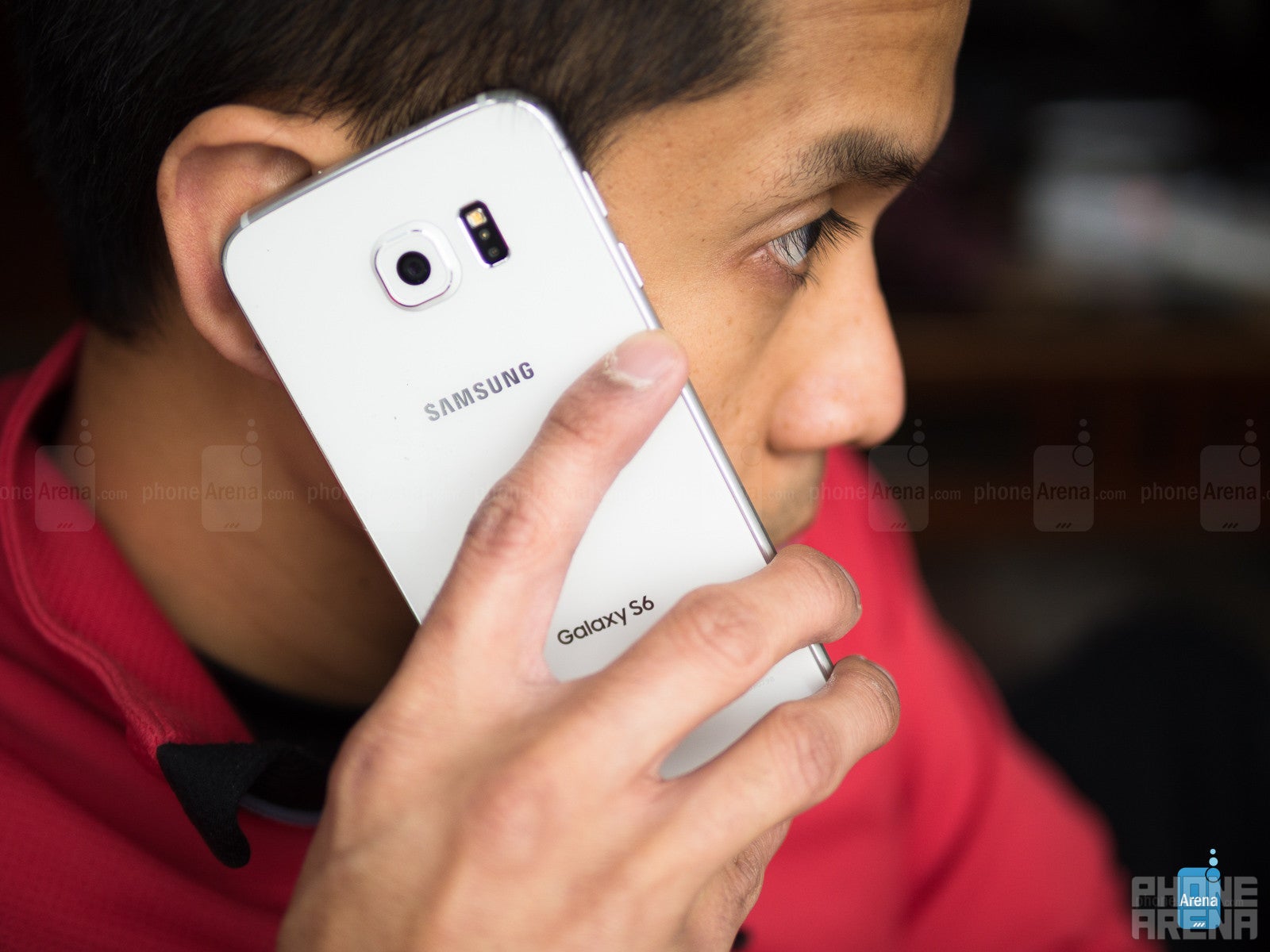
It could be better, but it suffices at least for basic calling needs.
Battery
The battery capacity shrinks, but it still pulls out average results – plus, wireless charging is included!
Regarding the lower capacity battery, it’s something of concern for those who regard themselves as power users – more so when this one is packing a quad-HD screen, which generally requires more juice than its 1080p counterparts. For daily, real-world usage, we don’t find the Galaxy S6 extraordinary with its battery life. Rather, it’s enough to get us through a solid-one day of normal usage, but heavier use will require a recharge at some point. Thankfully, Samsung realizes this potential problem by giving it fast charging. In fact, they mention that 10 minutes of charging with the included rapid charger will provide 4 hours of use. And boy does it charge fast, as quickly as 78 minutes in our testing!
Our custom battery life test returned a result of 7 hours and 14 minutes for the Galaxy S6. That's a decent result, although one that's actually lower than that of its predecessor (which had 7h 38 min). Obviously, the slender profile is taking its toll, but it feels like Samsung has achieved an overall good balance between practicality and eye-candy. To put things into perspective, the HTC One M9 survived for the shorter 6h 25 min, the iPhone 6's run was even shorter, at 5h 22 min, while the Xperia Z3 topped all of these with its result of 9h 29 min.
Conclusion
Being evolutionary is good thing in the industry, but nothing evokes excitement than something gunning for the revolutionary approach. A continued force to be reckoned with, Samsung’s momentum might’ve been weakened recently from the fierce competition in the space, however, they’re seemingly going getting back on track with the arrival of the Samsung Galaxy S6 – a phone that’s undeniably revolutionary for them.
Before we pass our final judgment, we really have to be fair and sum up all that’s new to the phone, different, and missing. First and foremost, it’s probably the biggest redesign to the series in recent memory, one that embodies the qualities that give it a more serious, substantial feel – in comparison to the unflattering feel of plastic. Secondly, it’s a specs demon wherever you look! From the quad-HD Super AMOLED, to the 16-megapixel rear snapper, and its 64-bit based octa-core Exynos chip, this is ensured to be future proof in almost every way imaginable.
The software, too, receives a fair degree of change as well – one that tones down the “in your face” attitude of previous TouchWiz efforts, favoring instead for a “less is more” approach. And finally, it’s a solid-performer in the areas that matter to us. From the phone’s responsiveness with operations, to the quality produced by its camera, and the high qualities exhibited by its Super AMOLED display, Samsung has paid a great deal of attention to everything.
Even though its design receives much acclaim, it should be noted that it no longer offers some of its predecessor’s unique features – such as expandable storage via microSD card slot, user replaceable battery, and a water resistant construction.
In all fairness, the good outweighs the bad with the Samsung Galaxy S6 – we’ll gladly forgo some of those previous offerings in favor of its new, premium design. Here in the US, it’s expected to sell for the usual $200 with a 2-year contract. Change is good, that’s unquestionable. If this is the beginning of a new era for Samsung, we’re encouraged by the prospect of the Galaxy S6’s arrival. All phones should fear, just because the Galaxy S6 is setting the bar really, really high for everyone.

You can now read:

Popular stories

Latest News



Things that are NOT allowed:
To help keep our community safe and free from spam, we apply temporary limits to newly created accounts: