Long running Android-related legal battle will be heard by the Supreme Court

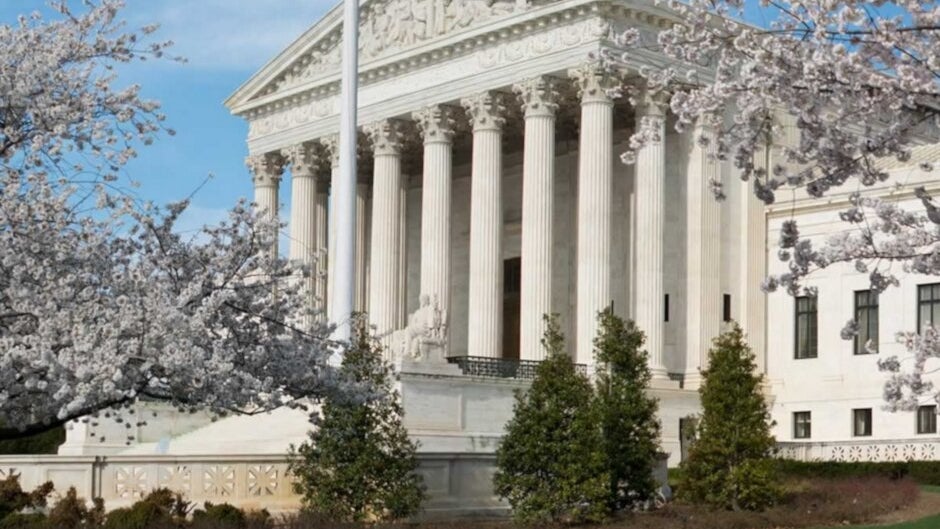
Back in 2011, we told you that Oracle wanted Google to pay it $9.3 billion for using APIs from Java in Android without permission. APIs, or Application programming interfaces, provide developers and others with access to a third-party application or platform. Oracle filed a lawsuit and a jury ruled in favor of Google. But that wasn't the end of the story. Oracle won an appeal and the case went back to court. In 2016, a jury once again ruled in Google's favor and said that the company's use of the Java APIs was covered by the fair use doctrine. But a federal appeals court reversed that decision and remanded the case back to lower court to compute the damages.
Running out of legal options, Google turned to the U.S. Supreme Court hoping that the top court in the land would hear the case. And yesterday, as reported by the New York Times, the Supreme Court said that it would hear what Google calls the "the copyright case of the decade." In a brief that it filed with the Supreme Court, Google pointed out that allowing free access to software interfaces is necessary for innovation to pump up the economy. Google's argument reads, "Without interfaces, your contact list cannot access your email program, which cannot send a message using the operating system, which cannot access your phone in the first place. Each is an island. Countless other examples abound. The information age depends on the reuse of interfaces. Once an interface is written and used, no substitute works, because information must be passed precisely."
The Trump administration has sided with Oracle
In its own brief, Oracle responded by saying that without copyright protection, innovation would not be possible. "Google’s theory is that, having invested all those resources to create a program popular with platform developers and app programmers alike, Oracle should be required to let a competitor copy its code so that it can co-opt the fan base to create its own best-selling sequel," The brief warns how the lack of copyright protection could chill innovation in the country. "The next Oracle will think twice about investing as heavily in a venture like Java if it knows that any competitor could freely copy its work to compete directly against it." Oracle also wrote that it "spent years and hundreds of millions of dollars writing a blockbuster work—a software platform. Google then refused Oracle’s offer of a license and copied the most recognizable portions of that work into a competing platform."
For what it's worth, the Trump administration had tried to get the Supreme Court to reject Google's petition. Solicitor General Noel J. Francisco wrote that Google "copied 11,500 lines of computer code verbatim, as well as the complex structure and organization inherent in that code, in order to help its competing commercial product." Francisco added that by using Java without permission, Google harmed the market for the platform.
Google used APIs from Oracle's Java without permission. But was this a violation of copyright law? Can APIs have such protection?
So now this long-running case is approaching the end and both sides have prevailed at various times. Google says that if the Supreme Court rules against it, innovation could be stifled. Oracle says that if the Supreme Court rules in favor of Google, corporations won't freely spend to develop new technologies that can be used without permission. Whatever the court rules, it is going to have a major effect on copyright laws in the United States. And of course, Google is looking to avoid having to pay the $9.3 billion in damages that Oracle is seeking.
Oracle said that it is "confident the Supreme Court will preserve long-established copyright protections for original software and reject Google’s continuing efforts to avoid responsibility for copying Oracle’s innovations." Google's SVP for Global Affairs, Kent Walker, stated that the company hopes "that the court reaffirms the importance of software interoperability in American competitiveness." Whether Google or Oracle ultimately triumphs, the decision will have lost-lasting implications for the U.S. tech industry.

Popular stories





Latest News





Things that are NOT allowed:
To help keep our community safe and free from spam, we apply temporary limits to newly created accounts: