Xiaomi and Apple were the top two global wearable shippers during the second quarter of 2017
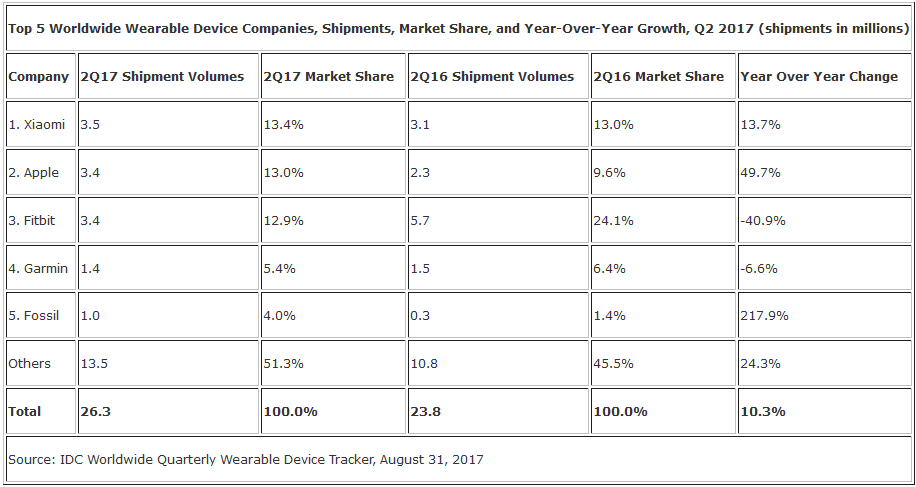
Xiaomi had the largest market share among wearable manufacturers during the second quarter, just edging out Apple
According to analysis firm IDC, worldwide shipments of wearable devices rose 10.3% year-over-year during the second quarter of 2017. For the three-month period from April through June, a total of 26.3 million wearable units shipped. For the first time ever, basic wearable devices (which are those that don't run third party apps) had a year-over-year decline in shipments with an annual growth rate of -.9%. On the other hand (no pun intended), smartwatch shipments rose at an annual rate of 60.9% in the second quarter.
For the second quarter of 2017, the top wearable shipper was Xiaomi, with its 3.5 million units shipped edging out Apple's 3.4 million for the period. The company's main wearable product is the $20 Xiaomi Mi Band fitness tracker. The latter carries a 20-day battery life and an IP67 certification rating. The wearable is equipped with a fitness, heart-rate and sleep monitor. Shipments grew 13.7% year-over-year to give the company a leading 13.4% of the wearable market.
"The transition towards more intelligent and feature-filled wearables is in full swing. For years, rudimentary fitness trackers have acted as a gateway to smartwatches and now we're at a point where brands and consumers are graduating to a more sophisticated device. Previous niche features such as GPS and additional health tracking capabilities are quickly becoming staples of the modern smartwatch. Just a year ago only 24.5% of all wearables had embedded GPS while today that number has reached almost 41.7%. Equally important to device features will be the algorithms tracking workouts and providing health insights. There is growing interest from the medical industry to adopt wearables and consumer expectations are also on the rise. This is where companies like Apple and Fitibit have the potential to maintain their lead as their investments in the tracking and perhaps diagnosing of diseases will be a clear differentiator from low-cost rivals."-Jitesh Ubrani, senior research analyst, IDC Mobile Device Trackers
source: IDC


Popular stories



Latest News
Things that are NOT allowed:
To help keep our community safe and free from spam, we apply temporary limits to newly created accounts: