Samsung Galaxy Note 8 vs. HTC U11: a comparison

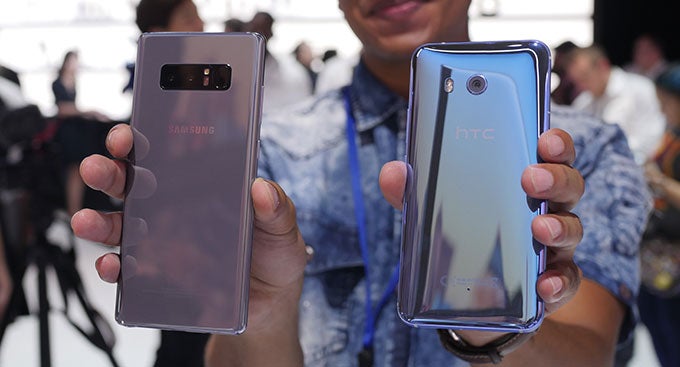
It's a big world out there, and for a lot of smartphone users, they're looking for a big phone to match. For stylus fans who look forward every year to Samsung's latest Galaxy Note, they're getting a special treat in 2017 as the Note 8 brings the biggest screen yet to the popular flagship family. With that new 6.3-inch display, is the Note 8 at risk of being too big for its own good? Or has Samsung's manufacturing techniques allowed it to craft a big-screen phone that somehow manages to feel more compact than its smaller-screened competition?
Design
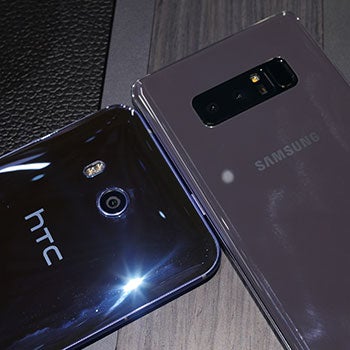
We already saw this new look come to the 5.8-inch Galaxy S8 and 6.2-inch Galaxy S8+, and now Samsung's back with more of the same for the 6.3-inch Galaxy Note 8. As a result, the Note 8 is very, very similar in layout to the S8+ in particular, coming in just a couple millimeters taller and wider. The Note 8's also a thicker phone, but now by much; even with the S Pen stylus lurking within, the handset's body is just 8.6mm thick.
While these two handsets may look and feel quite different, both still manage to offer water resistance – and though that's by-and-large become the norm these days, not every phone approaches that feature in the same way. Here, Samsung's level of protection is just a little bit more robust, rated at IP68 to the U11's IP67, meaning the Note 8 can withstand deeper depths and longer immersion without damage.
Display
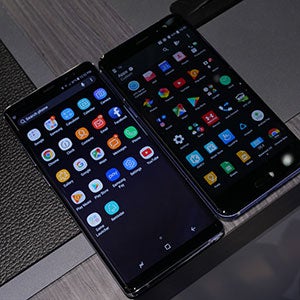
The tech behind these displays is different, too, and while HTC goes the Super LCD route, Samsung returns with another Super AMOLED panel. And just like the Galaxy S8, the screen on the Note 8 features rounded corners, while the U11 has a classic right-angle design.
Interface and Functionality
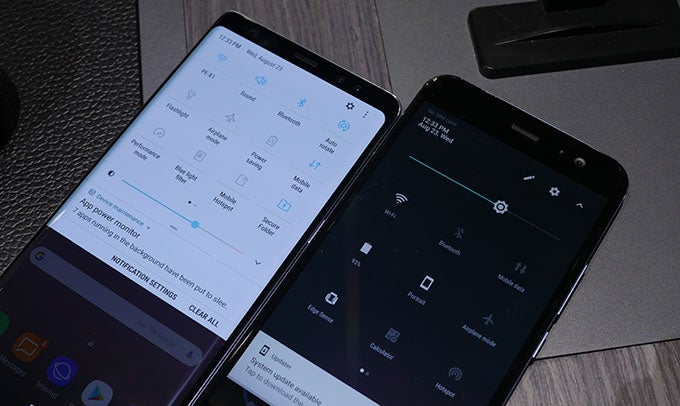
HTC and Samsung each give their phones a custom take on Android thanks to these manufacturers' own interface tweaks, but the experiences the U11 and Note 8 go beyond just some fancy menus.
Each phone can connect you to the power of the voice-controlled Google Assistant, sure, but they also both go beyond that: the U11, with its dual-hotword support offering tight integration with Amazon Alexa, and the Note 8 with Samsung's own Bixby – including the return of a dedicated hardware button to access the service.
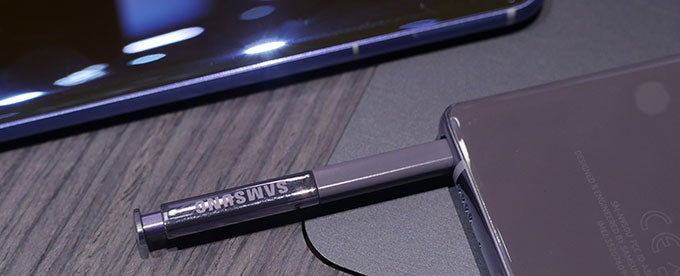
They're both useful in their own ways, but while we appreciate how we can customize Edge Sense to trigger any number of apps or change system settings, it's ultimately just a means to access shortcuts, while the S Pen feel much more fleshed out, and eager to be used all across the Note 8's interface.
Performance
In terms of raw silicon, the Note 8 and U11 are on pretty even footing, with both running Snapdragon 835 chips (the Note 8 will alternately get the Exynos 8895 in international markets). But while the U11 gets a very respectable 4GB of RAM in its most common configuration, the Note 8 adds 50% to that with its 6GB.
So far, we haven't seen the presence of extra RAM past this 4GB point spell a lot of difference in the performance of Android devices, so we're not about to crown the Note 8 the obvious winner here – though we can't deny that the phone's better equipped to handle really, really serious multitasking.
Both phones arrive with the same 64GB base storage level, and support augmenting that via microSD.
Camera
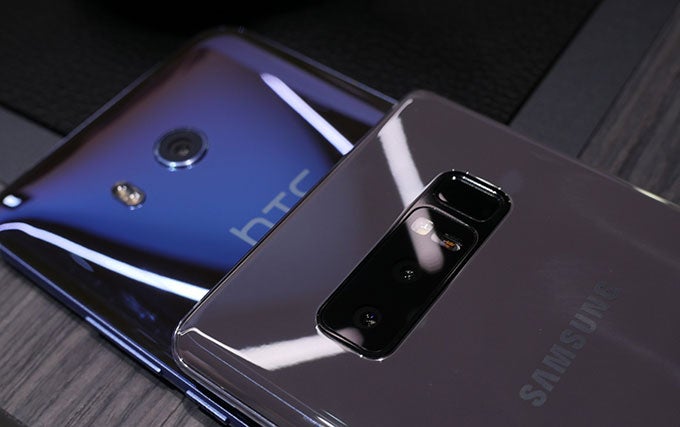
Maybe the biggest advancement Samsung's making with the Note 8 is joining the dual-camera club, as the phone shows off a pair of 12MP sensors – the U11's also got a 12MP camera, but just the one. And while plenty of other manufacturers have similarly gone the dual-camera route, Samsung makes a name for itself by giving both of those cameras real optical image stabilization – not restricting the feature to just one of the two cameras.
The HTC U11 also has OIS, and shares the same wide f/1.7 aperture with the Note 8's telephoto camera, but it's impossible to ignore the extra versatility users get to enjoy thanks to presence of a dedicated wide-angle camera. Beyond just offering more choice when it comes to scene composition, Samsung brings us a familiar bokeh-effect portrait mode. Sure, that seems like something every dual-camera phone can do, but it's just a little ironic to see a Samsung phone delivering that functionality while an HTC phone doesn't – especially as HTC helped popularize the feature.
Conclusion
Some users might not see the point of comparing the HTC U11 to the Samsung Galaxy Note 8, as beyond both being 2017 flagships, they don't necessarily feel like they're going after shoppers with the same priorities. But as we start looking at the two models a little more closely, it's easier and easier to see how they're both operating in the same circles.
That said, for everything the U11 does, the Note 8 feels like it does most of that – and then some. The U11 does give us a thing or two the Note 8 doesn't, but more often than not it's the Note 8 that's going above and beyond HTC's phone.
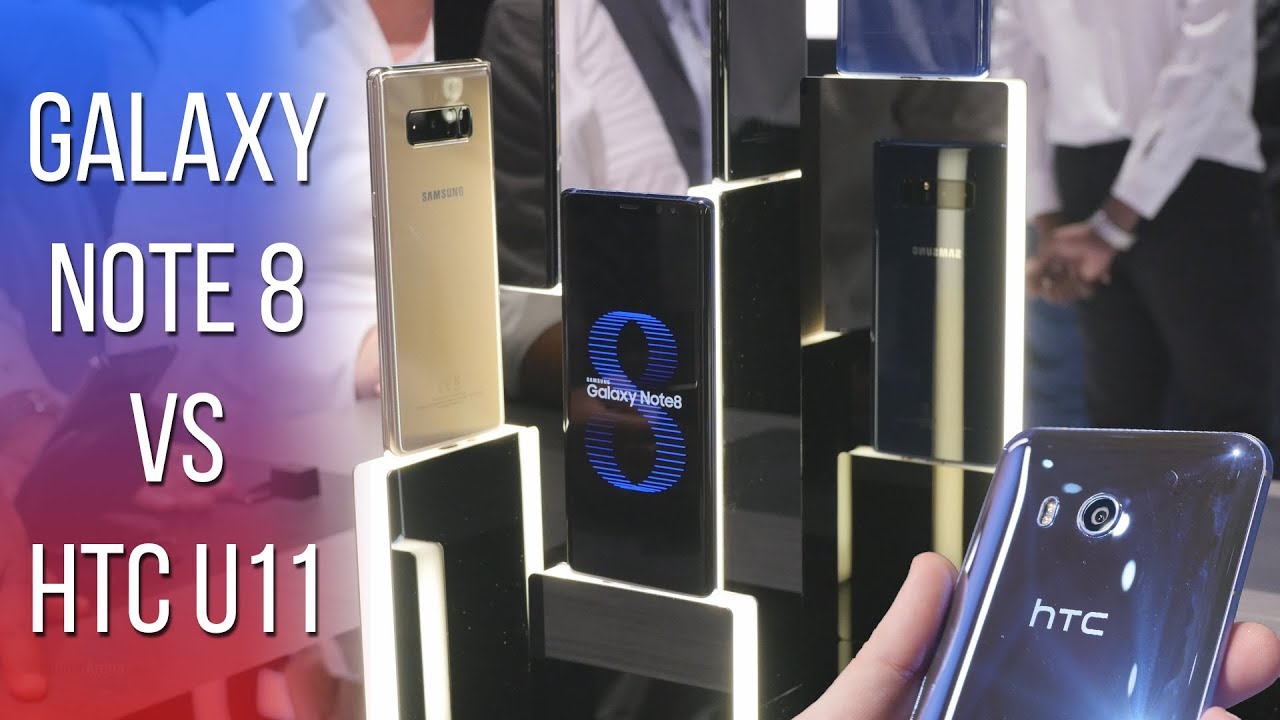
We'll be breaking down the value of the Galaxy Note 8 in much finer details as we start putting the phone through its full review paces. For now, check out our video comparison of the Note 8 and HTC U11.

Samsung Galaxy Note 8 vs. HTC U11

Popular stories


Latest News

Things that are NOT allowed:
To help keep our community safe and free from spam, we apply temporary limits to newly created accounts: