After that Stephen Elop happened to Nokia and that meant the end of MeeGo, and the full transition to Windows Phone as the company’s main platform. We are yet to see how that plays out and so far it’s been a bumpy road for the Finns. Now, as thousands working on MeeGo have been laid off, 10 anonymous Nokia employees tell the story of MeeGo, Nokia’s partnership with Intel that resulted in a single phone, the Nokia N9, and became ashes after that.
Check out the slideshow below to see when it all started and why and when it was scrapped, but also don’t hesitate to hit the original source for the full story.
source: Taskumuro
image
There were only a couple of dozen of developers, which made development quick. However the small team had a small budget, and that meant cutting cost everywhere - from the materials to the chips, and relying more on software optimizations.
The problem was that Nokia used too many subcontractors and the quality of the resulting product just wasn’t good enough. Outsourcing work further on translated in poor communication with Nokia stuff and contractors from countries like India and China.
The Nokia 800 followed making a bigger splash in 2007
image
By 2007 and the time that the beatiful Nokia N810 has arrived, the small group behind Maemo had grown larger. Bureacracy grew, development slowed down, improvement suggestions were never heard.
Internal competition was on the rise. The seemingly brilliant idea for swiping gestures was shot down initially, but the developer persisted and managed to get it as default in the finaly N810 device. But this political divide resulted in the device losing its core phone function, a decision that would erode its sales.
The reason? Symbian managers were afraid the product was too good and would get in the way of Symbian devices. At the time, staff at Nokia already knew Symbian was outdated and saw it would be extremely hard to adapt the platform to the new touchscreen reality. At that time, it was all bad politics - the iPhone wasn’t out yet, and Nokia took the wrong decision.
Internal competition was on the rise. The seemingly brilliant idea for swiping gestures was shot down initially, but the developer persisted and managed to get it as default in the finaly N810 device. But this political divide resulted in the device losing its core phone function, a decision that would erode its sales.
The reason? Symbian managers were afraid the product was too good and would get in the way of Symbian devices. At the time, staff at Nokia already knew Symbian was outdated and saw it would be extremely hard to adapt the platform to the new touchscreen reality. At that time, it was all bad politics - the iPhone wasn’t out yet, and Nokia took the wrong decision.
2007 and Nokia N810: leaving the phone function out was a political decision
image
It was then that Nokia started serious work on developing its Maemo smartphone, the Nokia N900. Resources grew, but inside tension only increased as it was widely believed that Symbian managers were putting the breaks on Maemo only to keep their jobs.
The N900 was built like previous devices - with subcontractors, part by part and with little clarity about the time of launch. It used Maemo 5 Freemantle, but in parallel the more modern MeeGo Harmattan development had started. The UI was fully written in Qt, the coding platform that was built to scale to all Nokia devices, from low to high end.
Nokia N900: Maemo starts looking like Nokia’s future
image
The collaborations set out to achieve big goals and planned to have the first MeeGo phone by the end of 2010. The two companies however couldn’t effectively collaborate on development, and more confusion led to the project slowing down even further.
In 2010, MeeGo was finally born. Intel and Nokia partnered and merged Maemo with the Moblin platform.
image
What followed was a ton of problems with UI and some with Qt. In October 2009, Nokia showed the concept for a Maemo 6 UI, with widgets support. Multitouch was also in the works. At the time, the iPhone and Android have already started taking the world by a storm.
Maemo 6 UI concepts appeared
image
Things started to get out of control in the user interface department when what was planned as only a couple of widgets became a forest of tiny little widgets stacked on the home panel that made the whole thing look like a slightly revamped Symbian. It was all too complicated and chaotic, deviating from the original idea of simplicity.
First Harmattan UI
image
All of this led to a change in top management for the interface of MeeGo. The new managers couldn’t understand Harmattan, scrapped the project and began work on a new Simple Dali UI. It dealt away with the last remnants of the original idea.
Interface was made to look like what the competition already had. It was supposed to be reay mid 2010, but suspicions arose that it’s not on par with what’s on the market, and it was further delayed.
New simple Dali user interface
image
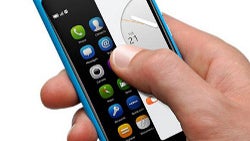
The design crysis came to an end with the Seattle UI, or Swipe UI. That’s what you see on the Nokia N9.
Interestingly enough, it was developed by designer firm 80/20, a place home to a couple of former Apple and Adobe employees.
The company knew it had finally nailed it and started preparing to release the Nokia N9. The first and only MeeGo device. After that? It was Windows Phone, and the rest you know all too well. MeeGo was disassembled and is now only developed by Jolla, a group of former Nokia workers.
Interestingly enough, it was developed by designer firm 80/20, a place home to a couple of former Apple and Adobe employees.
The company knew it had finally nailed it and started preparing to release the Nokia N9. The first and only MeeGo device. After that? It was Windows Phone, and the rest you know all too well. MeeGo was disassembled and is now only developed by Jolla, a group of former Nokia workers.
Lankku, or the Nokia N9
The story of Nokia MeeGo
MeeGo started in 2005, with the open source software operations (OSSO) development team. OSSO was an ambitious project aiming no less than to change the world and to do that it worked on a mobile version of Linux. Later, that division would become the Maemo team.
In 2005, Nokia worked on a very tight budget to release the first device running on the new platform, the Nokia 770.


In 2005, Nokia worked on a very tight budget to release the first device running on the new platform, the Nokia 770.