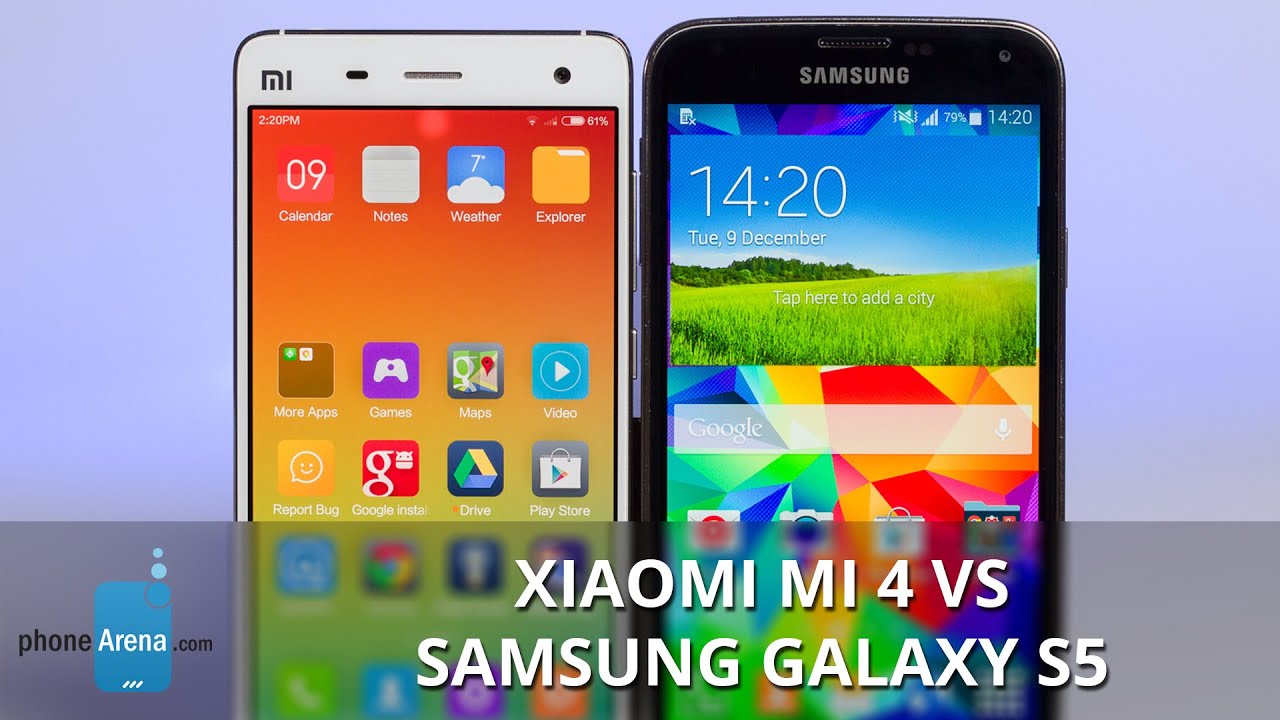
Xiaomi Mi 4 vs Samsung Galaxy S5
Introduction
The Chinese miracle.
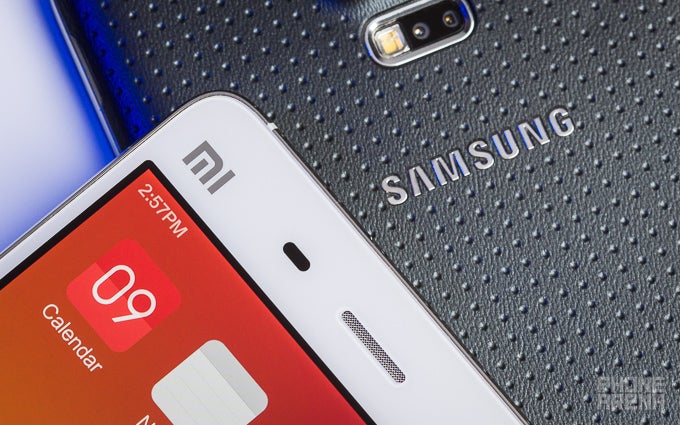
Those are the words often used when speaking about the boom of the Chinese economy in the last few decades, but they could well apply to the largest smartphone maker out of the People’s Republic - Xiaomi (pronounced ‘shaw-me’). The company has recently made strides and reached the top 3 of the world’s largest phone makers, and it has built dominant positions in Asia. We now have its flagship, the Xiaomi Mi 4 (or just Mi 4) in our hands, and it’s time to take a look at how it compares against the mainstream Android flagship of 2014 - the Samsung Galaxy S5.
First, let’s make it clear - the Mi 4 is a flagship-grade smartphone sold at nearly half the price of a flagship. It’s a great value for the money, and that is by design - while many call Xiaomi the Apple of China, its business model with its own app store and merchandise is a lot more like that of Amazon. That is, it is selling devices at low margins, and makes money from the ecosystem, not solely the device.
With this in mind, we can outline the battle of the Mi 4 versus the Galaxy S5. Both being 5-inch-ish 1080p devices with Snapdragon 801 under the hood, it boils down to differences in design, the MIUI (pronounced ‘Me You I’) skin vs Samsung’s TouchWiz, the camera experience, and a few other peculiarities. Let’s explore them in more depth!
Design
The Mi 4 is a compact 5-incher that features a sturdy metallic frame, with only the glossy plastic back spoiling the premium experience, while the Galaxy S5 is an all-plasticky affair.
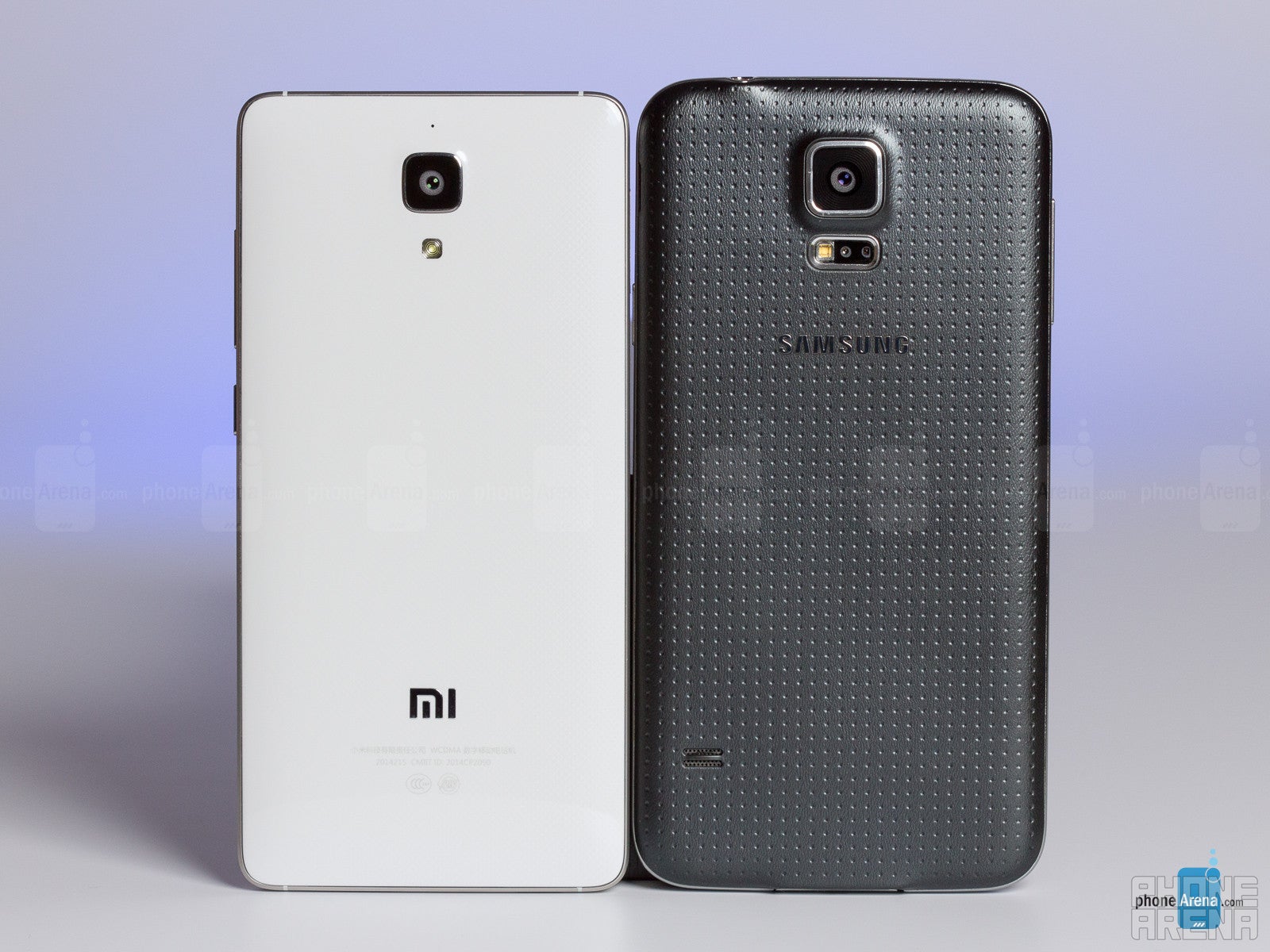
The Xiaomi Mi 4 breaks the traditional perception of ‘cheap plastic Chinese phones’, as it comes with a sturdy stainless steel frame that gives it a lot of character. The back of the phone is still made from uninspiring glossy plastic that might be practical, but is still a fingerprint magnet. Still, the phone is reassuringly solidly put together. The Galaxy S5, on the other hand, feels much less rigid, and its all-plastic body does not exude any feeling of premium quality as one would expect from a flagship device. The back cover of the S5 features a dot-pattern and we actually do prefer its softer finish over the glossy plastic of the Mi 4, though it's mostly a question of personal preference.
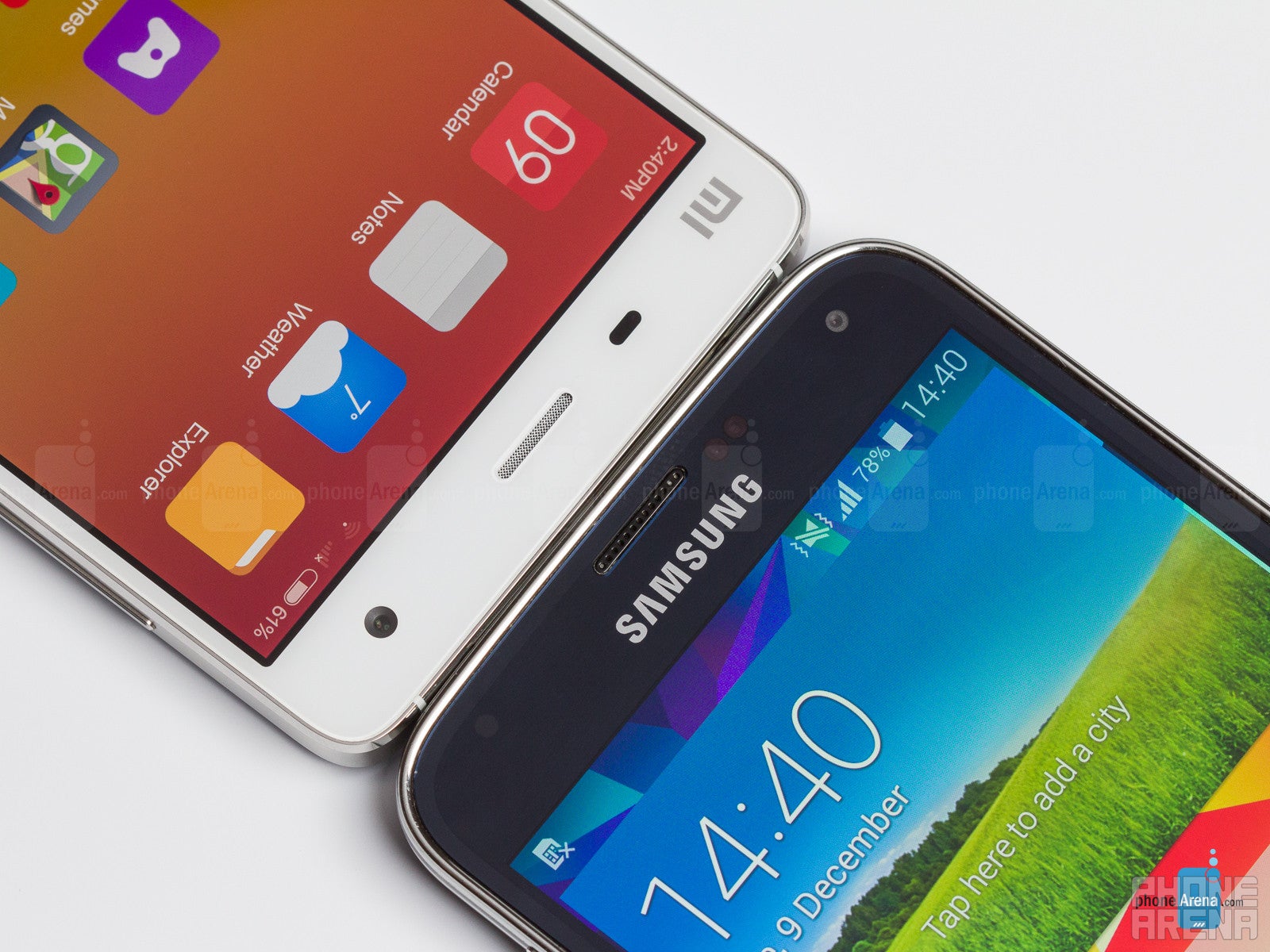
There is also a fairly tangible difference in the size of the Mi 4 and the S5 that one cannot just explain with the tiny variance in screen size (5” on the Mi 4, and 5.1” on the S5). It is rather mostly due to the very thin bezel on the Mi 4, while the S5’s display is surrounded by a much thicker bezer. This makes the Mi 4 easier to operate with a single hand as it is the narrower device - 2.7” wide versus 2.85” for the S5. The S5 is just a tad bit thinner and less tall, though.
In terms of buttons, Xiaomi uses virtual, on-screen navigation keys, while the Galaxy S5 is equipped with a large, physical home key with a fingerprint scanner inside, in addition to two virtual keys on its sides. All else is physical buttons. Those are crafted beautifully on the Mi 4 - they are all on the right hand side, made of aluminum, and are quite clicky. The S5 has its lock key on the right, and volume rocker on the left, and while not terrible, they do not feel as responsive.
The Xiaomi Mi 4, however, cannot brag about any water and dust protection capabilities, while the Galaxy S5 is fully sealed and proudly carries an IP68 rating, meaning that it is completely sealed from dust and can survive immersion in up to 3 feet (1 meter) deep fresh water, for up to about 30 minutes.

5.48 x 2.7 x 0.35 inches
139.2 x 68.5 x 8.9 mm
5.26 oz (149 g)

5.59 x 2.85 x 0.32 inches
142 x 72.5 x 8.1 mm
5.11 oz (145 g)

5.48 x 2.7 x 0.35 inches
139.2 x 68.5 x 8.9 mm
5.26 oz (149 g)

5.59 x 2.85 x 0.32 inches
142 x 72.5 x 8.1 mm
5.11 oz (145 g)
See the full Xiaomi Mi 4 vs Samsung Galaxy S5 size comparison or compare them to other phones using our Size Comparison tool.
Display
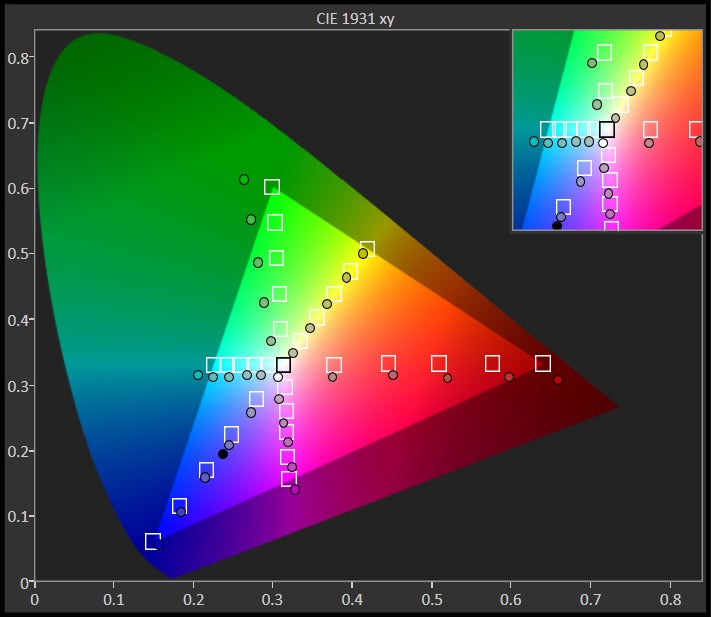
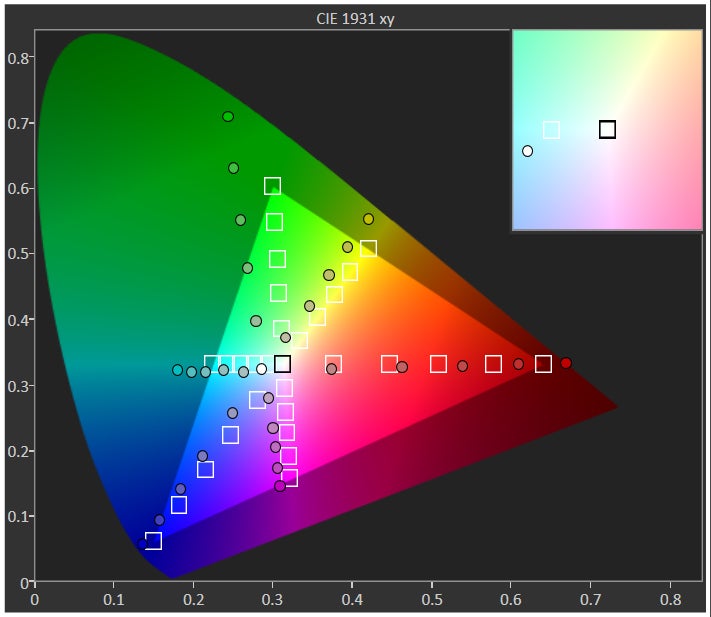
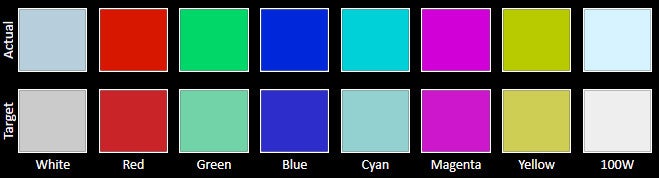
The 5-inch 1080p display of the Xiaomi Mi 4 is a bit off with a slight bluish tint, but it is sharp and offers calibration settings to please different tastes, while the S5’s slightly larger 5.1” 1080p display comes with a noticeable greenish tint.
The Xiaomi Mi 4 comes with a 5-inch IPS LCD display with a resolution of 1080 x 1920-pixels (Full HD), while the Samsung Galaxy S5 features a tad larger, 5.1-inch screen using a different, Super AMOLED panel, but the same 1080p resolution. Both appear practically equally sharp, with no pixelization noticeable as pixel density on the two is very high: 441ppi on Mi 4 and 432ppi on the S5.
The bigger difference comes in color reproduction. We were disappointed with the lack of proper calibration on Samsung’s Galaxy S5, as it has a very noticeable greenish tint that spoils the experience. You can pick between different screen modes on the S5, but the issue persists even in the better ones.
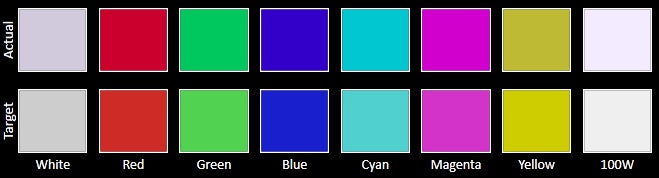
The Xiaomi Mi 4, on the other hand, also offers control over the colors: you can pick between warm (~7400K), standard (~8400K), and cool (~9500K) for the color temperature, and for each of these options you can also pick between ‘standard’ and ‘brilliant’ color saturation. Color purists will be happiest with the warm setting for color temperature as it is closest to the reference 6500K value, and ‘standard’ saturation mode where there is no artificial overblowing of colors. This is also the option where gamma sits at exactly 2.2, which is the reference value and this indicates balanced brightness levels throughout. In terms of colors, the Mi 4 display adheres to the sRGB color gamut, but the slight blue tint drives colors off their targets, and overall calibration could be better.
We should also mention that the Mi 4 display is laminated, resulting in very low screen reflectance and great viewing angles. AMOLED screens like the one on the Galaxy S5 have also proven to have outstanding viewing angles.
For outdoor viewing, both do a very good job. The Mi 4 and S5 have a very similar peak brightness of around 440 nits, and both filter out reflections nicely, so you can read the screen easier outdoors.


Interface and Functionality
Xiaomi’s MIUI 6 custom user interface runs shockingly smoothly and comes with sleek, modern applications. TouchWiz on the Galaxy S5, on the other hand, is often stuttery and less visually cohesive.
With the Android 5.0 Lollipop update still to come for both the Mi 4 and the Galaxy S5, we’re dealing with Android 4.4 KitKat on both devices. It’s far from the same interface, though - Xiaomi uses its MIUI skin, a deep overhaul of the Android interface, while Samsung goes with its TouchWiz UI, a skin with its distinct flavor, but not so far from the roots of stock Android.
The Xiaomi MIUI custom UI has a long history - first as a launcher, then as a Xiaomi skin, and it has received its last major overhaul just a few months ago in version 6.0. If we had to summarize the MIUI v6 experience, we’d say that it is an adaptation of iOS 7/8 for Android with all of the essential Apple platform features: no app drawer, translucent menus, similar universal search bar, and more. This striking similarity might be worrying to some, but there is one thing that no one could argue with - the MIUI skin runs in a surprisingly fluid manner.
Xiaomi Mi 4 user interface
We have long been frustrated with the all-too-obvious stutter on even state-of-the-art Android devices. It’s gotten better with time, but is still a persistent and noticeable issue. What many first-tier phone makers (Samsung included) could not do for so long, Xiaomi does very well with its MIUI skin - that occasional stutter is almost completely eliminated in it.
The stock apps in MIUI v6 are also very sleek with a clean, modern look and zippy animations. Still, some of them, like the calendar, seem like too close of a copy of Apple apps, but many have some original and very clever features that you can check out in our screenshots.
The Galaxy S5’s UI is a traditional TouchWiz affair - topped up with features, coming with cartoony icons, and a mixture of Tizen elements with Android aesthetics. It also holds the downside of having some features like Air Gestures that often seem gimmicky rather than genuinely useful.
UI of the Samsung Galaxy S5
On a positive note, we should mention signature Samsung touches like the multi-window multitasking solution, and the S Health application that acts as a health hub.
The fingerprint scanner is another feature supported by the S5 and missing on the Mi 4, and even though we are not keen fans of the swipe-based fingerprint method, it is better having this one than none at all.
Processor and Memory
With a quad-core Snapdragon 801 on board and 1080p screens on both phones, we have a parity in terms of performance.
The Xiaomi Mi 4 and the Samsung Galaxy S5 both come with a 2.5GHz quad-core Snapdragon 801 system chip, and with no differences in the number of pixels they have to push, performance is on par with these two - on paper and for games at least: for all else, we’ve already told you that the Mi 4 feels faster and smoother in daily operations.
A few words about the Snapdragon 801 are still due: it’s been replaced by the Snapdragon 805 in the latest flagships, but the 801 is still plenty capable. It is a 28nm 32-bit chip with good multi-core performance and graphics, so that you will have no issues running the most demanding games. Take a look at our benchmark test results - you can see for yourself that the differences in performance potential between the Mi 4 and the S5 are minimal.
The Xiaomi Mi 4 comes in a 16GB and 64GB models, and there is no option to expand this memory (there’s no microSD card slot). Samsung, on the other hand, practically offers a 16GB model of the S5 only, but it does have expandable storage via a microSD card slot supporting up to 128GB cards.
Internet and Connectivity
Currently sold Xiaomi Mi 4 models do not support 4G LTE outside of China, while the Galaxy S5 rocks fast LTE speeds of up to 150Mbps for downloads.
Surfing the web happens on a custom browser solution on the Mi 4. The MIUI browser is fast and works smoothly when scrolling and zooming around. The Galaxy S5, on the other hand, comes with a choice of the Samsung custom browser solution and mobile Chrome. It does well with both, and is equally fast with surfing. Of course, you can also get Chrome on the Mi 4.
One of the few downsides of buying a smartphone like the Xiaomi Mi 4 from China is the uncertainty over its connectivity. The Mi 4, in particular, does NOT support 4G LTE outside of China. A version with support for global LTE (FDD-LTE, rather than the Chinese TDD-LTE standard), however, is expected in the last days of 2014. Until then, the maximum you can squeeze out of the Mi 4 is 3G connectivity.
The Samsung Galaxy S5 - as a privileged member of a truly global brand - has no such issues. It supports a category 4 LTE modem, with peak speeds of up to 150Mbps for downloads.
Other connectivity options include the standard dual-channel Wi-Fi on both, Bluetooth 4.0, and A-GPS. NFC, however, is missing on the Mi 4, while the S5 supports it. Also, both handsets come with an infra-red (IR) beamer that you can use with a companion app, turning your smartphone in a remote control for your TV and other electronics.
Camera
The Mi 4 sports a 13-megapixel camera with lots of shooting options, but still image quality is not perfect. The Galaxy S5 has a 16-megapixel main cam that captures more detailed images.
The Xiaomi Mi 4 comes with a 13-megapixel main camera, while the Galaxy S5 sports a 16-megapixel shooter, both coming with a single LED flash. Up front, the Mi 4 has a bigger than usual, 8-megapixel camera, while the S5 makes do with a 2-megapixel selfie cam.
The Mi 4’s average-sized, 1/3.06” 13-megapixel Sony IMX214 sensor comes with a 4:3 native ratio, while the Galaxy S5 sports a larger, 1/2.6” 16-megapixel Samsung-made sensor with a 16:9 native aspect ratio. These sensor sizes result in a pixel pitch of the quite tiny 1.1 micron on both cameras. In terms of optics, the Mi 4 comes with a very fast, f/1.8 29mm lens, while the lens on the S5 is a slower, f/2.2 one with 31mm focal length.
The Mi 4 camera looks a bit similar to that of the iPhone, but it also has a lot of hidden menus and settings. Swipe from left to right on the viewfinder, and you get to see all sorts of options, giving you control over many aspects. The Galaxy S5 camera allows a similar, deep level of control over most settings.
Camera interfaces
When it comes to image quality, the Mi 4 is a good performer that has some issues holding it back from being truly outstanding. On the positive side, images have a decent amount of detail (especially in the center), and colors are mostly nice and true-to-life. On the downside, detail in the corners is often blurred, and the handset tends to prefer higher ISOs resulting in noisier images. Also, white balance is occasionally misjudged, but those are rather the exception than the rule. The Galaxy S5, in comparison, captures images that are more rich in detail and have consistently great colors, overall a step above the photographs of the Mi 4.
Indoors, the Mi 4 camera does well - noise is definitely noticeable here, but it looks natural, and most importantly, color reproduction remains fairly accurate. The Galaxy S5, in comparison, when used in its default settings, struggles under lower light with noise being very noticeable, but things get better when you turn picture stabilization on. Both phones have powerful flashes that unfortunately introduce a nasty cold/greenish tint to images.
Turning to the front camera, selfies on the 8-megapixel front shooter of the Mi 4 turn out better than those on the 2-megapixel S5 front snapper - with way more detail, and nice colors. You can choose to apply a beautify effect that hides away all face imperfections on both devices.
Sample images
Sample Videos
Multimedia
Media is an enjoyable experience, but Xiaomi is obviously crossing some legal borders with its free music service.
The Xiaomi Mi 4 is a great device for media with rich apps and has no problem playing back all sorts of different video encodings, but practically the same can be said about the Galaxy S5.
The music app on the Mi 4, however, is where things get interesting - it offers all the usual options, but in addition to all of the music categorization and playback options, it also serves as a free music streaming service. It’s like having Spotify Premium, without paying any money, and without having to listen to any ads. Is it legal? We doubt that, and probably apps like the music player are part of the reason why Xiaomi handsets are not being officially sold in the Western world. If Xiaomi's handset ever reach Western shores, we highly doubt that its music service will be intact, at least not in its current form.
Music players
In terms of music playback, the loudspeaker on both the Mi 4 and S5 is good but not great. The Mi 4 in particular is not among the loudest, and it lacks in depth. The S5 is a bit louder, but both sound similarly average in terms of clarity of sound.
Call Quality
The Galaxy S5 in comparison performs good, but not great in terms of call quality. It’s sufficiently loud in the earpiece, but it lacks in the clarity department as voices sound a bit muffled. On the other end, volume is decent, but voices do sound sharper than we’re used to hearing, with better represented higher frequencies and lacking in depth.
Battery
The Mi 4 surprises with a long-lasting battery that also recharges quickly, while the Galaxy S5 is a tad behind.
The Mi 4 defaults to a battery efficient mode that caps performance just slightly, but since that seems the one mode that most will use, that’s what we used for our tests.
It’s also worth saying that both are fairly quick to charge back from 0 to 100% - it takes some two hours (2 hours and 6 minutes on the Mi 4 vs 2 hours and 2 minutes on the S5). Not exactly as fast as the record-setting VOOC charge by Chinese Oppo that recharges even larger batteries for less than an hour and a half, but still fast.
Finally, while the Galaxy S5 features an easily user-removable battery. The Mi 4 requires suction cups, so overall, removing the back panel is not something that the average user can do.
Conclusion
The Xiaomi Mi 4 is a surprisingly well made flagship smartphone that can compete on the same level as the Samsung Galaxy S5.
Both feature 5”-ish 1080p displays, but we prefer the colors on the Mi 4; the performance potential with Snapdragon 801 on both is identical, but Xiaomi makes much better use of it with its MIUI skin that is surprisingly well polished and rich in features; and finally, the Mi 4 has a longer-lasting battery.
The Mi 4 is not without its slight issues - the 13-megapixel camera - while good - is a step below the 16-megapixel shooter of the S5. The big drawback in the Mi 4 currently is the lack of 4G LTE support outside of China.
If that does not bother you too much, though, the Mi 4 offers great value for the money - with an off-contract price of just around $370 for the 16GB version, it is a way better deal than the $520 16GB Galaxy S5.
If you’re willing to deal with resellers and wait a couple of weeks for the Mi 4 to ship from overseas, chances are that you won’t be disappointed.


Popular stories





Latest News


Things that are NOT allowed:
To help keep our community safe and free from spam, we apply temporary limits to newly created accounts: