LG G2 vs HTC One
Introduction
The HTC One grabbed our hearts with exquisite aluminum design, amazing front stereo speakers and blazing fast performance, but there’s a new kid on the block that braves to challenge all that. Welcome the LG G2, the contender, a device that revives the old aluminum vs polycarbonate fight, but has a couple more aces up its sleeve.
LG listened and learned, and half a year after the arrival of the HTC One, the G2 brings the latest and most powerful Snapdragon 800 chip, an ambitious 13-megapixel camera with optical image stabilization and a stunning 5.2-inch screen with almost no bezel. All that in an extremely compact and ergonomic body with all its buttons on its back. Weird and brave, the G2 throws a gauntlet in HTC’s way. Let’s see whether it has all it takes to win this fight.
Design
The LG G2 is polycarbonate, the HTC One is aluminum. This should nearly automatically give the HTC One the edge - aluminum feels stiffer with a harder to scratch coating and it has proven to allure a sense of lavishness. Do we have a winner? Not so fast. LG might have gone with polycarbonate (and we’d argue there is not much of a difference between aluminum and polycarbonate in terms of pure durability), but it has done a tremendously good job with ergonomics. Still, build quality is good on both devices, but the HTC One feels monolithic, more trustworthy.
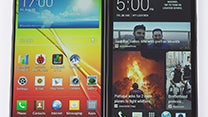
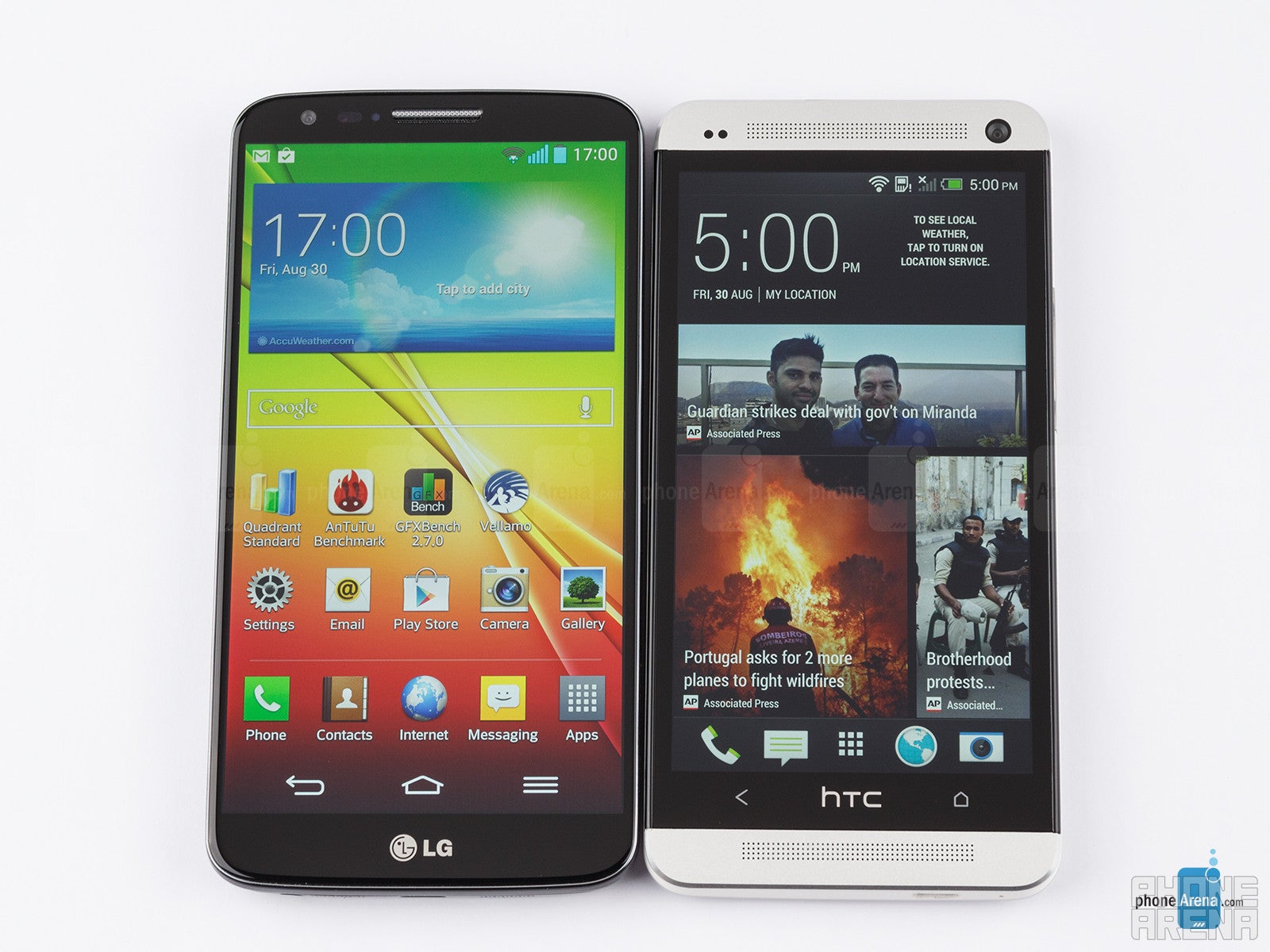
The LG G2 (left) and the HTC One (right)

5.45 x 2.79 x 0.35 inches
138.5 x 70.9 x 8.9 mm
5.04 oz (143 g)

5.41 x 2.69 x 0.37 inches
137.4 x 68.2 x 9.3 mm
5.04 oz (143 g)

5.45 x 2.79 x 0.35 inches
138.5 x 70.9 x 8.9 mm
5.04 oz (143 g)

5.41 x 2.69 x 0.37 inches
137.4 x 68.2 x 9.3 mm
5.04 oz (143 g)
See the full LG G2 vs HTC One size comparison or compare them to other phones using our Size Comparison tool.
Size-wise the two devices are very similar, the HTC One is a bit smaller, but the difference is barely noticeable. In both cases, single-handed operation is quite a stretch.
The sides of the LG G2 (bottom, left) and the HTC One (top, right)
Display
While there might be almost no difference in their sheer size, LG has done wonders with the display bezel and slimmed it down so much that it managed to equip the G2 with a 0.5-inch larger display. That’s right - the LG G2 has a 5.2” screen while the HTC One only features a 4.7” one.
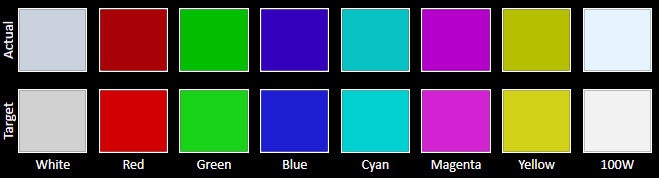
Luckily, the two are among the best we’ve seen in a smartphone. Extremely sharp and crisp at 1080 x 1920 pixel resolution, the HTC One has the slight upper hand in crispness but it’s advantage is barely noticeable.
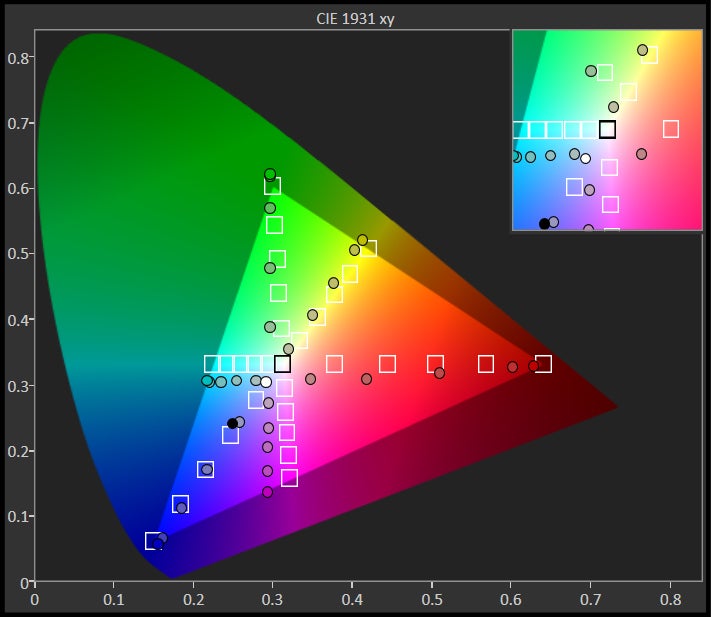
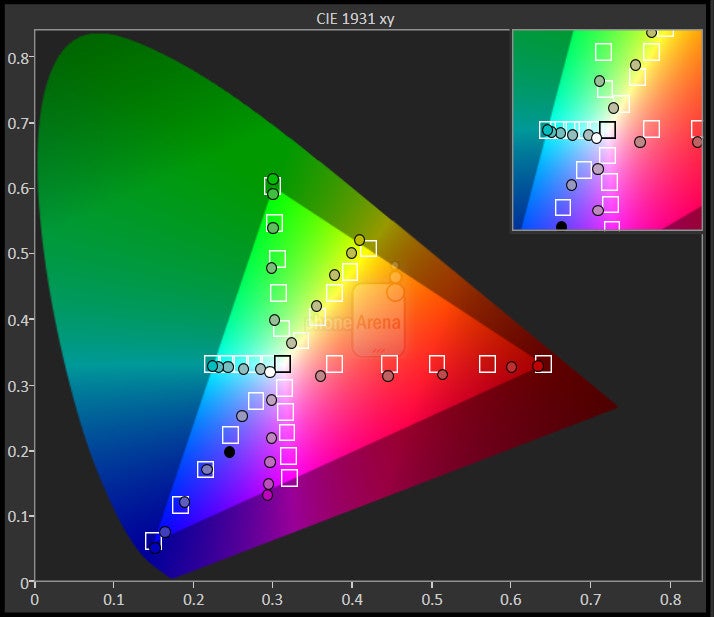
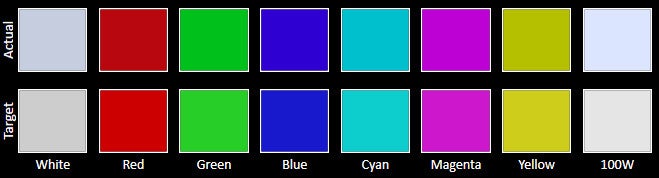
All in all, the screens on the G2 and the One are stunning. It’s a close call, but the One’s more accurate, pleasingly warm colors swing it in HTC’s favor.


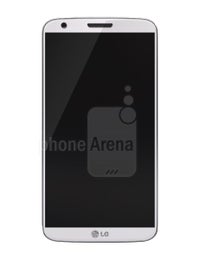
LG G2 360-Degrees View
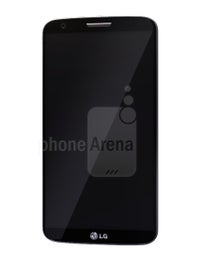
HTC One 360-Degrees View
Interface and Functionality
Android 4.2.2 Jelly Bean is what powers the two handsets, but it looks very different on each of them. The G2 uses LG’s custom skin with colorful, playful, a bit childish visuals where nearly everything is animated, while the HTC One features Sense 5.0 with more streamlined, modern looks.
Overall, LG’s skin feels a bit more practical. Everything is within easy reach (you have all needed toggles in the notification shade, a brightness slider and volume option are also there, the app drawer can display 5-icon grids to fit more content) and you don’t have apps like BlinkFeed forced on you. HTC on the other hand tends to bury oft used functions deep in the menus. Adjusting the brightness for instance is a constant struggle as you have to long look for the option in submenus of menus.
Interface of the LG G2
Interface of the HTC One
Both companies include a ton of applications, some more useful than others. All in all, we feel like LG again scored a win with its QSlide apps, a list of some essential apps that you can start from the notification shade and that will appear on top of what you are already doing so you don’t have to quit it. A great multitasking tool.
The phonebooks on both devices are rich in options and conveniently support swiping between various tabs. Nothing surprising here, but we do like the fact that you can directly call a contact without opening its file in LG’s phonebook.
Phonebooks
Messaging
The two devices also feature infra red (IR) sensors baked in
Processor and Memory
Arriving nearly half a year after the One, the LG G2 has gotten a faster, more powerful system chip than the HTC One.
The Qualcomm Snapdragon 800 chip in the G2 is not a step - it’s a leap ahead the Snapdragon 600 infused HTC One. Both are quad-core chips, but looking further into the details you’d find that the actual processor cores are different. The Snapdragon 800 on the G2 uses the newer and faster Krait 400 clocked at up to 2.2GHz, while the Snapdragon 600 on the HTC One is based on the Krait 300 processor clocked at the slower up to 1.7GHz.
The LG G2 is also the better device for gaming. It comes with the new Adreno 330 graphics chip against Adreno 320 on the One. The benchmarks below are a good demonstration of the bump in performance coming with Snapdragon 800 and Adreno 330.
Internal storage is identical on both devices. The basic models of both come with 32GB of ROM, and both do not support microSD cards, so you cannot expand the existing storage.
All in all, the LG G2 is hands down the winner in terms of performance. It smokes the half a year old HTC One on every level with its new generation silicon.
Internet and Connectivity
There are two browsers on board on both handsets. One is mobile Chrome that comes with great cross-devices syncing and snappy performance. The other one is different on each device. The LG G2 comes with its custom browser that offers all sorts of customizations - from changing the font size to tweaking the zoom level sensitivity. It can also save pages for later offline reading and switch to desktop view. The HTC One custom browser offers all that but also adds a Flash player. We found both browsers quick to load webpages and snappy when scrolling and zooming around, with no hint of lag.
Internet browsers
Both support Bluetooth 4.0, A-GPS and Glonass as well.
Camera
LG G2 camera UI
The G2 features a 13-megapixel main camera with optical image stabilization (OIS) and some unique features like manual focus and multiple focal points. The HTC One has a 4-megapixel camera that also supports OIS, and also has some unique functionality like Zoe and highlight reels.
Camera interface if the HTC One
Good news is that the LG G2 delivers superb image quality. Pictures are incredibly sharp and crisp, with lots of fine detail that you won’t find on the HTC One. Both devices capture lively and true to life colors in most situations, but the G2 is more consistent with its performance.
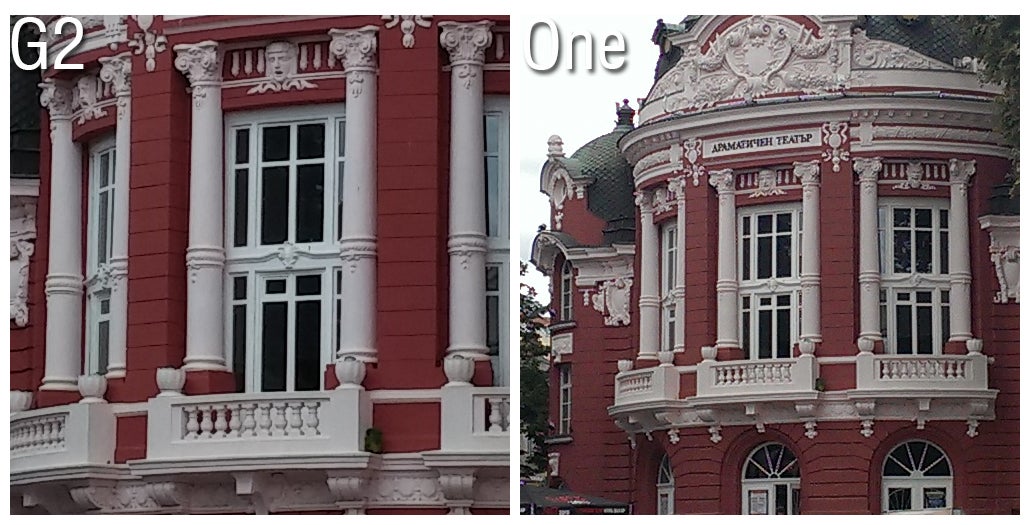
100% crops - detail
Indoors where light gets scarce, the difference between the two grows larger. The LG G2 captures much better images, preserving the life in colors, while the HTC One draws all richness from colors and delivers an unnaturally cold hue. The LG G2 flash light is not perfect (it could light up the scene more evenly), but it is stronger than the one on the HTC One and illuminates the scene better.
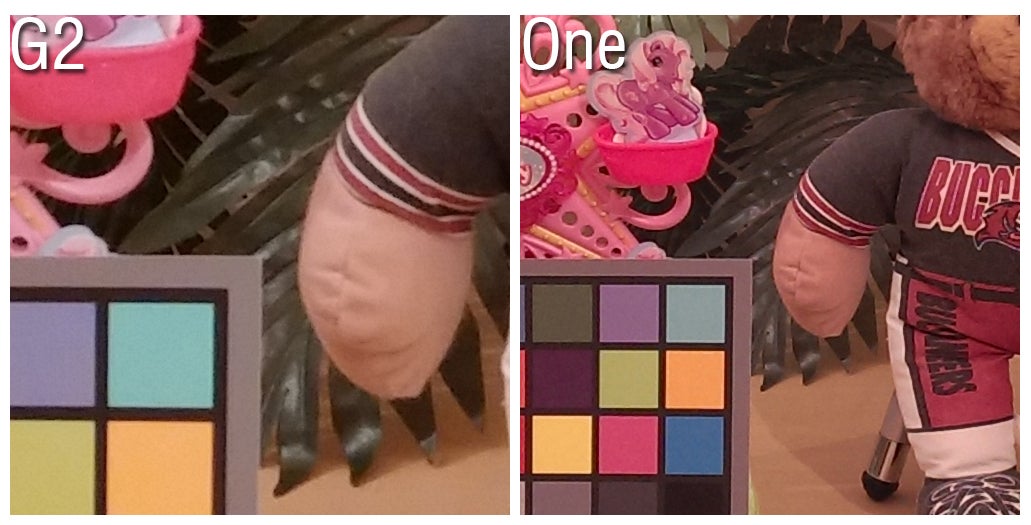
100% crops - color
Video recording is another win for the LG G2. Both devices support 1080p recording, but while the HTC One maxes out at 30fps, the G2 records at up to 60 frames per second. The captured footage is extremely crisp and detailed on the G2, and colors retain their liveliness. Footage from the HTC One in contrast looks dull, washed out.
The G2 is not perfect however and it skips a frame every once in a while and the rolling shutter jello-like effect when quickly moving the camera is more obvious than on the HTC One. Both phones feature optical image stabilization that works great.
The two handsets also feature 2-megapixel front facing cameras capturing 1080p video. Their main use would be for video conferencing.
Multimedia
With amazing displays, the LG G2 and the HTC One are great devices for enjoying videos, images and music on the go.
Video players
Music players
Call Quality
On the other side of the line, our callers reported hearing us loud and clear on the G2. The HTC One is nearly on par here, maybe a bit muffled if we had to pick the nits.
Both devices feature noise cancellation technique that would filter side noises nicely. The HTC One has dual mics, and the LG G2 ups the ante with three microphones.
Battery
One thing we definitely like in the G2 is its large 3000mAh battery. The HTC One in comparison only has a 2300mAh juicer. This gives the G2 an edge as it would easily last you through a day of full use, and into the second, while the HTC One has a bit shorter single-charge longevity.
Conclusion
The HTC One has aged nicely - it still has that elusive for other Android smartphones aluminum unibody, excellent speakers and rock solid overall performance. Moreover, the HTC One has one of the nicest displays out there. Even with all these assets, though, it is no match for the LG G2.
There are a few reasons for that. First and foremost is the fact that LG G2 matches the HTC One in nearly all areas where it excels - the display is larger, sharp and vivid, the plastic unibody feels sturdy and extremely ergonomic, and with nearly zero bezel the plastic design does not feel irritating at all.
But there is more. The LG G2 has one of the best cameras we have ever seen on an Android smartphones, and with the newest powerful Snapdragon 800 system chip it beats the HTC One in both photography and performance. All in all, without ignoring all the great things about the HTC One, the G2 still gets our praise and recommendation.



Related Content

Popular stories

Latest News
Things that are NOT allowed:
To help keep our community safe and free from spam, we apply temporary limits to newly created accounts: