
Editorials
FCC won’t force all of Title II “net neutrality” regulations on carriers, but “we don’t know where things go next”
This article may contain personal views and opinion from the author.
A lot of people and a lot of businesses were cheering the FCC’s predictable 3-to-2 vote to classify the internet as a utility, and thus apply Title II regulations which govern traditional telecommunications services. The dawn of net neutrality is at hand, or so say the proponents.
I can forgive a lot of the younger folks not understanding what Title II enables the FCC to do. These regulations were written and implemented in the 1930s, signed into law as the Communications Act of 1934 when telephones were the leading edge of consumer technology. That was only 81 years ago, surely those provisions will be an easy application to 21st century technology where a lot people do not know what a dial-tone is, or a step-switch, or a twisted pair.
What could possibly go wrong? All data will be equal, that’s good right?
300 pages
I get it, it sounds good, it “feels” good. Joe Q. Public doesn’t have to worry about his YouTube feed or Netflix movies getting buffered or potentially blocked. The problem is that no one knows for sure how it will play out, not even the FCC. I can tell you this though, the internet has been open and unhindered by nearly all regulation in the free world, and it has ushered an unprecedented era of economic growth, technological innovation, generated unheard-of amounts of personal wealth, and unbridled levels communication. It is a shining example of what could be called the ultimate open-source project.
"We don’t know where things go next." - FCC Chair Tom Wheeler
After the vote, FCC Chairman Tom Wheeler said in a press conference that the regulatory body was looking at what he termed as “bright line” issues (more on the non-bright line stuff later) – blocking, throttling, and paid prioritization, “…we know about those issues. But we don’t know where things go next.” (emphasis added)The good and bad from the past
I don’t need to know where “things go next” based on where things have been. Are you familiar with “plain old telephone service?” Otherwise known as POTS, this basic type of service falls under Title II regulations. These rules empower the FCC, and the FCC uses that power with a heavy hand to this day (81 years later), to dictate pricing, availability, and “just and reasonable practices” of this nation’s telephone system.
At the time when Title II was implemented, there was one major phone company, Ma Bell (the old AT&T), and a few regional providers like GTE (General Telephone). In the lead up to, and aftermath of World War II, one of the major priorities was to ensure equal access of service as the country grew, not that there was a lack of demand for service, but in the face of a then-yet undissolved monopoly, the government laid down some ground rules to ultimately ensure that whenever and wherever POTS was needed, it would be provided. That is still the law of the land today, and it is not unreasonable given how the technology operates.

The Automatic Electric AE21, this was the leading-edge wall phone in 1934. It featured a steel body, dual-bell ringer, and a quieter rotary dial. Automatic Electric later become part of GTE, then AT&T, and its patents live on as part of Alcatel-Lucent
These rules for POTS do not change very often because use of facilities based services have plateaued or are on the decline. Prices and features must be filed with the FCC and a state’s public utilities agency for review before they can be formally implemented. Those same rules go beyond consumer services, they also play a role in the back-end services businesses use. The vote now casts what was once a quick-to-respond to market conditions industry on to rails that must now pass scrutiny with another master, as interconnection agreements between providers will now be regulated, and that includes mobile.
Title II has not been rewritten
The FCC says it will not exert many restrictions Title II allows upon the internet providers and wireless carriers, but therein lies the rub. The FCC did not, and cannot re-write Title II – only Congress can do that, and given the impact on interstate commerce this ruling is sure to have, Congress is sure to make a fuss since it is deciding body on matters of interstate commerce. The fact that the FCC says it will not enforce certain rules or guidelines related to Title II should not give anyone a warm and fuzzy feeling – case and point, when was the last time you believed a politician?
Why data needs to be prioritized
Do you enjoy HD voice on your carrier thanks to Voice-over-LTE? Do you know why the audio is so clear, and overall a higher quality? Because VoLTE is nothing more than Voice-over-Internet Protocol (VoIP). VoIP is a method of transporting voice calls over a data network, rather than via a circuit switched call. In today’s reality, most, if not all of our traditional calls have some type of IP backhaul, but even then this matter is still relevant.
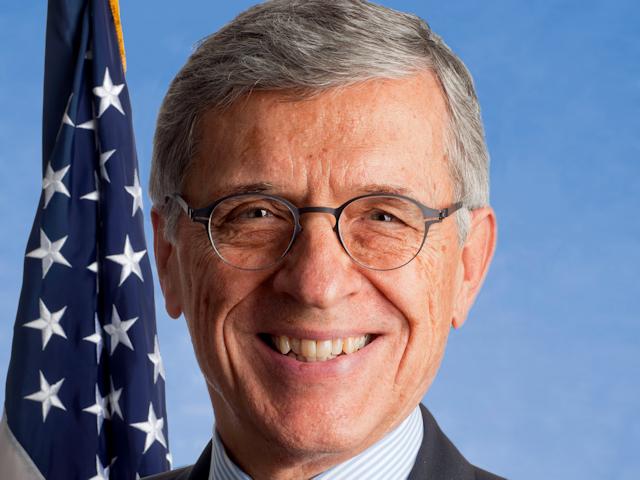
FCC Chairman Tom Wheeler is supposed to be an independent agency head. He was initially looking for a middle-road solution, now there are Congressional inquiries about possible policy interference from the White Houe.
How about Facetime or Skype Video calls? You like those don’t you? Well giving those applications priority through traditional ICMP (Internet Control Message Protocol) routing methods won’t mean as much since the network owners cannot prioritize that traffic either, but don’t worry, at least that email didn’t have to wait an extra few milliseconds.
The question of a flood of ultra-high bandwidth content
In my previous example, I only focused on voice and peer-to-peer type video, and I know there are limits to the ubiquity of those applications, not everyone uses Skype or Facetime, and voice activity has been stagnant. Given that, one might argue that our networks have the capacity to make all this stuff work. That could be true for right now, but know this, streaming a 1440p YouTube video on your quad-HD smartphone requires about 6-10Mbps of throughput. Ultra-HD 4K streaming content requires about 15-20Mbps.
Traditional 1080p needs only about 2Mbps when properly managed and prioritized. We are on the crux of a lot of advanced content being widely available. The consumer hardware and content is walking hand-in-hand, but our networks are not and “we don’t know where things go next.”
Implications for mobile – read between the lines
The FCC says it will not get into pricing permissions with the carriers over new plans that Title II empowers the regulator to do, if it so chooses. Whatever is not deemed a “bright line” item, the FCC will apply a “standard for future conduct,” whatever that means. To that point, let us look again at POTS. I still maintain a POTS line because I’m just old-school like that and its reliability is still unmatched in my opinion. The price of traditional telephone service has not gone up or down by any appreciable amount in decades. Why is that? Because the telephone companies have to file tariffs with the state and the FCC before changes to prices or features can be made.
“There are opportunities to do so...” In any given scenario, these regulations will increase the cost of doing business, and that means either slowing the rate of growth to maintain capital expenditures, or cut a business’ most expensive asset (or liability) item: the employee.
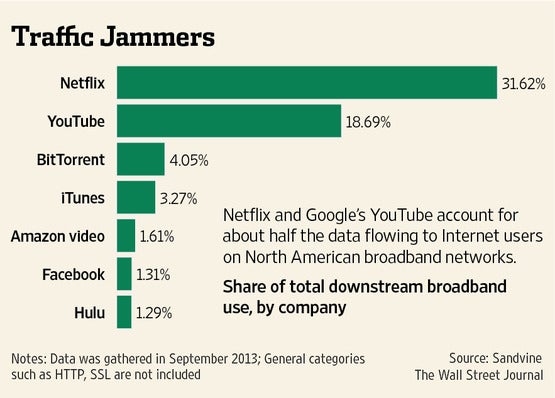
Netflix deliver HD video quite efficiently, yet it is the single biggest source of traffic on the web. YouTube rounds up half.
The implications of this vote are far more reaching than anyone is giving credit, and frankly, I’m astonished at the lack of vision from the tech corridor. “Utilities” are the most regulated entities in the country. The “feel good” types that are cheering, “Yay! All data is equal, because, yeah man, data, it needs to be equal,” are not thinking things through. None of this has to do with your personal data use, but it may very well impact that use because “we don’t know where things go next.”
All services are on the table now
Title II also regulates services, meaning that a company that makes commercial use of a “utility” is free game to fall under scrutiny. Remember, the FCC cannot rewrite Title II, so it has a de facto open door to play a role in the services we use on these data networks, including Google, Facebook, Twitter, your favorite streaming radio service, your email, et al. Don’t believe me? Look up the “fairness doctrine” from the days of radio prior to the 1980s.
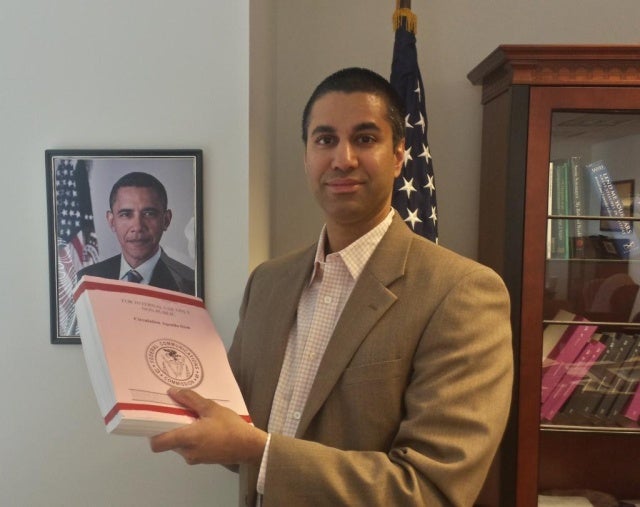
Such a good idea, it takes 300-plus pages to keep things "open." These rules have yet to be presented to the public. FCC Commissioner Ajit Pai holds the now voted regulations.
As long as the carriers, and the services we use abide by some abiguous “future conduct” rule, I guess we’re good to go right? Then again, to coin the low-confidence-inspiring words so aptly uttered by FCC Chairman Tom Wheeler, “We don’t know where things go next.”
references: FierceWireless and The Wall Street Journal


Popular stories




Latest News


Things that are NOT allowed:
To help keep our community safe and free from spam, we apply temporary limits to newly created accounts: