Samsung and Stanford invent a 10,000 PPI display
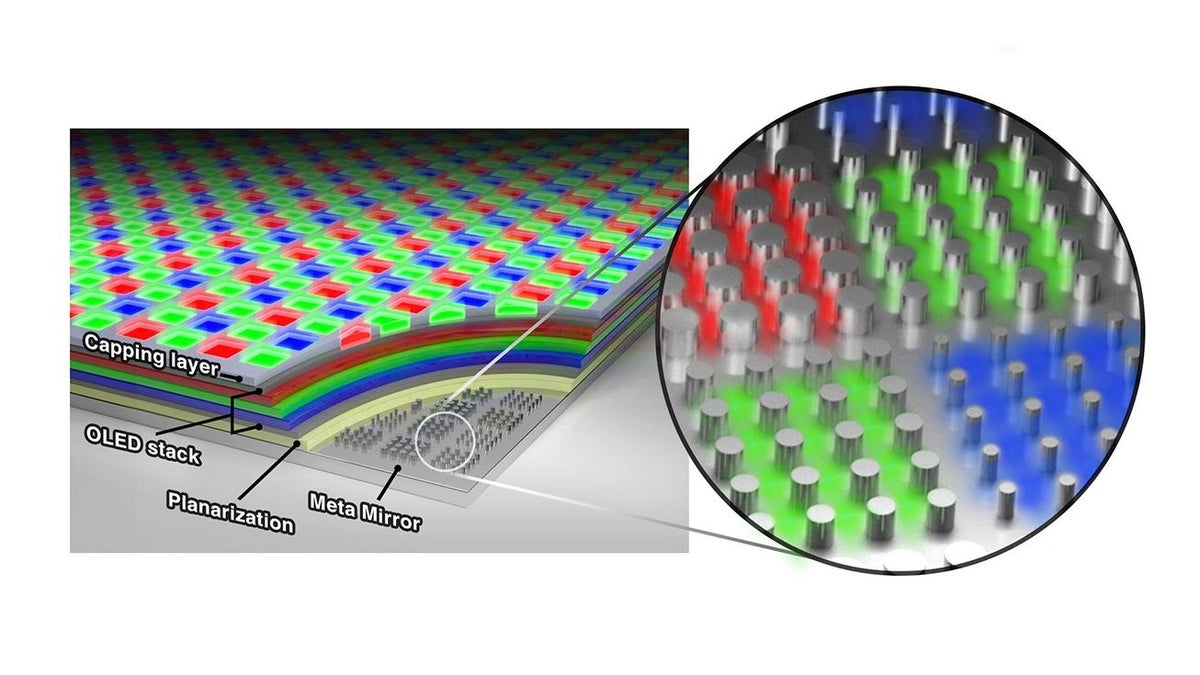
Pixel density is one of those elusive areas where display manufacturers often speculate and engage in number wars. It’s hard to say if an 800 pixels per inch display is vastly superior to a 400 one, especially when it comes to smartphones. Truth be told, pixel count does matter in areas where the display is close to your eyes. The best example is VR. Most VR glasses put the displays at a fraction of the inch away from your eyes and individual pixels become easily noticeable, even with pixel densities above 500 PPI.
Samsung researchers, along with colleagues from Stanford University, have developed a new type of OLED screen with a pixel density of 10,000 PPI. It uses a clever trick called light resonance - the concept is the same as sound resonance - for example when a guitar body resonates with the strings to produce sound. In this case, the light resonates on a nanoscale level between two very special surfaces to produce different colors out of a white light OLED source. As lightwaves of different colors are quite tiny, using this method the researchers can effectively produce really tiny color “pixels”.
Of course, the prototype is still in the lab and probably won’t leave to enter mass-production anytime soon. When it happens though, it might revolutionize the OLED display industry, leading to immersive VR tech, crazy high pixel count TVs, and smartphone display.


Popular stories




Latest News



Things that are NOT allowed:
To help keep our community safe and free from spam, we apply temporary limits to newly created accounts: