Google Search features prevent users from believing "fake news"
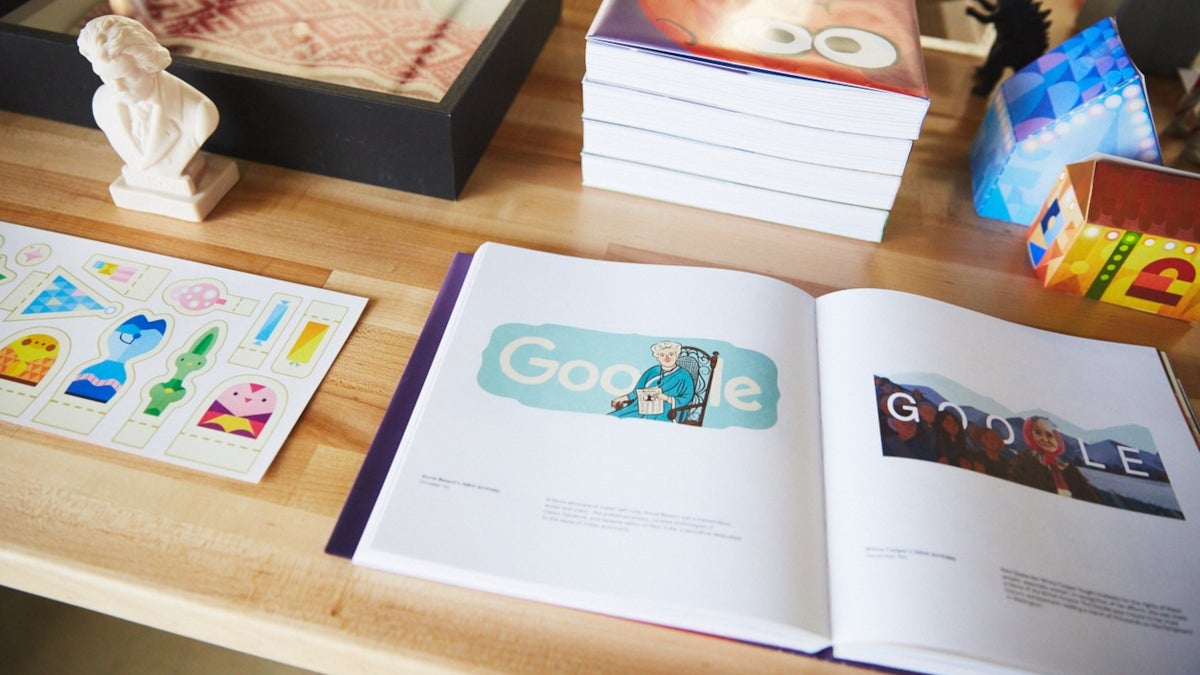
On Thursday, Google published a story written by its own product manager Nidhi Hebbar. The gist of the piece was that Google offers users options that can help them separate real legitimate news from fake news. Tomorrow is International Fact-Checking Day and Hebbar wrote about different ways that Google allows you to check whether something you've looked up on Google is real or fake.
Google Search will add a "Highly Cited" label to stories that are used as a source by multiple publications
For example, Google will soon be putting a label on Top Stories that says "Highly Cited" on articles that have been mentioned as a source by multiple news organizations. The goal is to help Search users find the story that was the original source for an article that might have been written originally by a smaller publication. By accessing the original source, a user might find local information or color that wasn't included in the story as written by larger publications.
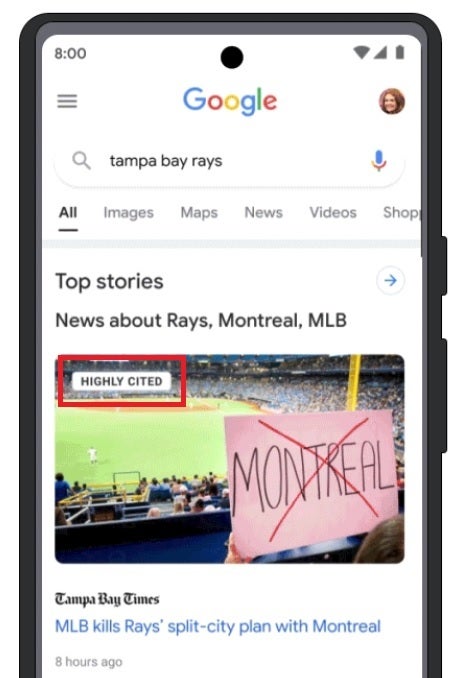
Stories used as a source multiple times will receive a label that says Highly Cited
Google says that this feature will be launching soon in English for mobile devices in the U.S. It will also be available globally in the coming weeks.
Currently on Google Search, if you are looking up a hot breaking story, the information that you're looking for may not yet be widely available. If your search is related to a fast-moving, trending story, you are apt to receive a notice that says how it could take some time for multiple sources to report on this topic. This notice is available to Search users in 20 languages throughout the world.
Starting today on English searches conducted in the U.S., these notices will include tips on how you can determine whether information obtained online can be trusted. These tips include suggestions to return to Search after more information becomes available, check to see whether a particular source is trusted when it comes to a certain topic, and try to figure out what the motive is for the source to share this information.
If there is a self-serving reason for a source to write about a particular subject, it is important to know since it could indicate that there is a bias to the story. And in this vein, did you know that Google Search has features that will help you fact-check a story? When you use Search to look for information about a disputed topic, you might see snippets to support a claim made in a story.
Fact Check Explorer shows you which claims have been shot down by reputable sites
On the desktop version of Google News, you can see fact-checked claims from local, independent publishers as they compare to the day's top stories. And speaking of fact checking, Google has a Fact Check Explorer that has gathered more than 150,000 fact checks from reputable publishers around the world. This tool will present a claim and then present a response from a legitimate source.
Here's a good example. One claim that a surprisingly large number of people believe is that the Earth is flat. According to Google's Fact Check Explorer, this claim is made by social media users who state that if the Earth were spherical, a compass wouldn't work. The response from USA Today? The claim is false because magnetic field lines allow a compass to work on the Earth, which is spherical.
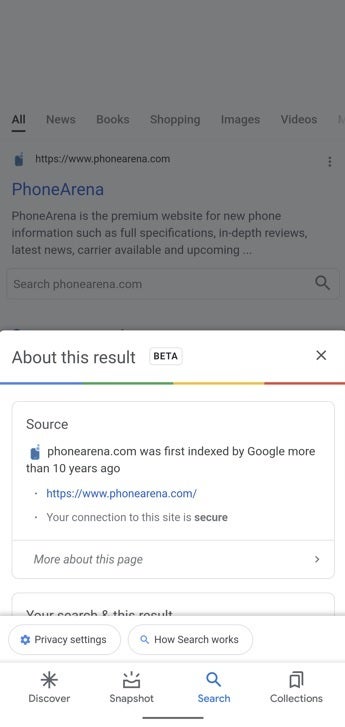
About this result allows you to determine how trustworthy a website is
Let's say that you're looking to make an investment and you go to Google Search and come across an article from a publication called Hoover Flags (Google it!) that suggests you put all your assets in a particular stock. But you're nervous because you know nothing about this publication. Google allows you to learn more about any page posted online via a tool it calls About this result.
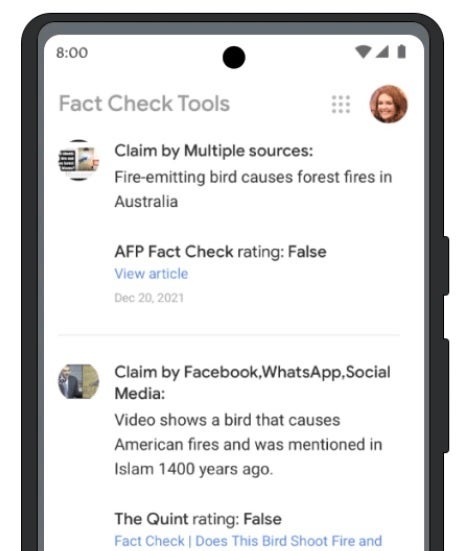
Google offers fact-check tools
To get there, tap the three dots next to any Search result and you'll see a pop-up menu with four options: About this result, Share, Send feedback and Add to Home Screen. Press on About this result to learn more. You'll also learn what the source says about itself and what others have to say about it.
Google's Hebbar says, "We’re committed to helping people spot misinformation online and to supporting the fact-checking ecosystem for the long term and hope today’s announcements and tips help people feel more confident about navigating information online."


Popular stories


Latest News



Things that are NOT allowed:
To help keep our community safe and free from spam, we apply temporary limits to newly created accounts: