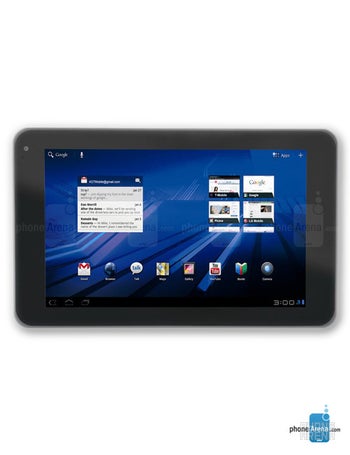
T-Mobile G-Slate

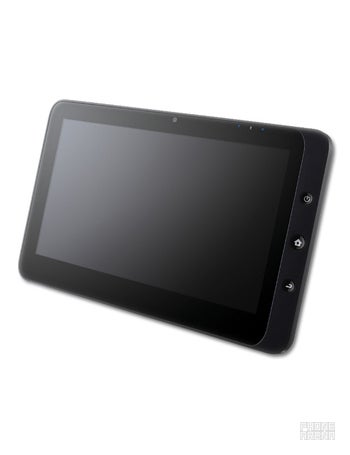
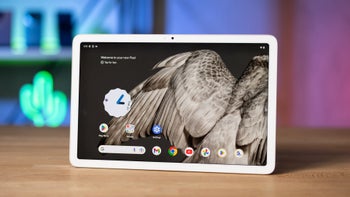
The T-Mobile G-Slate made by LG is the next player joining the tablet race. The device runs Android 3.0 and it is powered by NVIDIA Tegra 2 processor. It features an 8.9-inch display and is capable of recording in full HD, as well as 3D, thanks to two rear-facing cameras.

Share

T-Mobile G-Slate specifications

also known as LG G-Slate, LG Optimus Pad

Pros

  • Dual core processor
  • Dual-lens camera for capturing 3D content
  • Fast processor (1000 MHz)

Cons

  • Low pixel densitiy screen, below 180ppi (168 ppi)
  • Lacks microSD slot for storage expansion

Design

  • Device type:
    • Tablet
  • OS:
    • Android (3.0)
  • Form factor:

    Form factor - Refers to the form factor of a phone. The main handset designs are bar, clamshell, slide, swivel

    • Candybar
  • Dimensions:
    • 9.56 x 5.88 x 0.49 (243 x 149 x 12 mm)
  • Weight:
    • 21.87 oz (620 g)
      the average is 17.3 oz (494 g)

Display

  • Physical size:
    • 8.90 inches
  • Resolution:
    • 1280 x 768 pixels
  • Pixel density:

    Pixel density - The pixel density of a display represents the number of pixels over an area of one inch. It’s measured in “pixels per inch”, or ppi. The higher the number, the more detailed and good-looking the display is.

    • 168 ppi
  • Touchscreen:
      • Capacitive, Multi-touch
  • Features:
    • Light sensor, Proximity sensor

Battery

  • Stand-by time:
    • 11.4 days (273 hours)
      the average is 61 days (1470 h)
  • Capacity:
    • 6400 mAh

Hardware

  • System chip:

    System chip - Most modern handsets use an advanced chip that includes many of the device’s hardware modules like the processor, Wi-Fi, Bluetooth and sometimes even the wireless radio. This field shows what particular system chip (or System-on-a-Chip) is used in the phone.

    • NVIDIA Tegra 2
  • Processor:

    Processor - The processor is the main computing component of a phone and is a major factor when it comes to the overall speed of the device. Some more powerful smartphones use dual-core and quad-core processors designed to deliver greater performance.

    • Dual core, 1000 MHz
  • Graphics processor:
      • Yes
  • Built-in storage:
    • 32000 MB

Camera

  • Camera:
      • 5 megapixels
    • Flash:
      • LED
    • Features:
      • Auto focus, Digital zoom
  • Camcorder:
      • 1920x1080 (1080p HD) (30 fps)
    • Features:
      • Video calling
  • 3D capture:
    • Videos: 1280x720 (720p) (30 fps)
  • Front-facing camera:
    • 2 megapixels

Multimedia

  • Speakers:
    • Earpiece, Loudspeaker
  • YouTube player:
    • Yes

Internet browsing

  • Browser:
      • Yes
    • Supports:
      • HTML, HTML5, XHTML, Flash
  • Built-in online services support:
    • Facebook, Picasa, Twitter

Technology

  • GSM:

    GSM - Global System for Mobile communications. A world standard for digital cellular communications using narrowband TDMA (Time Division Multiple Access), which allows up to eight calls at a time on 800 MHz and 1800 MHz frequencies. Introduced in 1991. Is the standard most commonly used in Europe and Asia, but not in the United States. GSM phones use a Subscriber Identity Module (SIM) smart card that contains user account information. Any GSM phone becomes immediately programmed after plugging in the SIM card, thus allowing GSM phones to be easily rented or borrowed.

    • 850, 900, 1800, 1900 MHz
  • UMTS:

    UMTS - Universal Mobile Telecommunications Service, also called WCDMA, is a 3G (Third Generation) packet-based transmission of text, digitized voice, video, and multimedia at data rates up to 2 Mbps. It is based on GSM standard and is supported by major standards bodies and manufacturers

    • 900, 1700/2100, 2100 MHz
  • Data:

    Data - Shows the particular phone's type of data. the major mobile phone data types are GPRS, CDMA2000 1xRTT, EDGE, CDMA2000 1xEV-DO, UMTS, etc.

    • HSDPA 10.2 Mbit/s, HSUPA 5.76 Mbit/s, UMTS, EDGE
  • Positioning:

    Positioning - This field shows the positioning systems supported by the device. There are three main types: GPS, A-GPS and GLONASS. GPS - This is one of the most widespread global positioning technologies, developed and maintained by the U.S. government. It uses satellites in order to detect your location. Works best in clear weather. A-GPS - A-GPS stands for Assisted GPS and is the industry standard for positioning and navigation. “Assisted” means that it can use local wireless networks, in addition to satellites, for quicker and more precise localization. GLONASS - GLONASS is a global positioning system, developed by the Russian Federation. It’s very similar to GPS, but isn’t so popular in cell phones.

    • GPS, A-GPS
  • Navigation:
    • Yes

Phone features

  • Phonebook:
    • Unlimited entries
  • Organizer:
    • Calendar, Alarm, Document viewer, Calculator
  • Messaging:
    • Predictive text input
  • E-mail:
      • IMAP, POP3, SMTP, Microsoft Exchange

Connectivity

  • Bluetooth:
      • 2.1
  • Wi-Fi:

    Wi-Fi - Wireless Local Area Network (WLAN) - used radio waves (RF) or infrared signals to send and receive data over the air. Most popular WLAN solutions today is Wi-Fi (802.11b and 802.11g) standards. 801.11b provides data speeds of around 11mbps while 802.11g can go up to 54 mbps.

      • 802.11 b, g, n
  • USB:
      • USB 2.0
    • Connector:
      • microUSB
    • Features:

      Features - Universal Serial Bus - is a plug-and-play interface for connection a computer and add-on devices such as joysticks, keyboards, wireless phones, scanner, cameras etc. USB supports hot-swap (ability to add a new device without having to reboot the computer). USB supports data speed of 12 megabits per second.

      • Mass storage device
  • HDMI:
      • Yes
    • DLNA, Computer sync, OTA sync

Other features

  • Notifications:
    • Haptic feedback, Music ringtones (MP3), Polyphonic ringtones, Vibration, Flight mode, Silent mode, Speakerphone
  • Sensors:
      • Accelerometer, Gyroscope, Compass
    • Voice commands, Voice recording

Availability

  • Officially announced:
    • 05 Jan 2011

To see the full specifications with in-depth details click here.

Despite our efforts to provide full and correct T-Mobile G-Slate specifications, there is always a possibility of admitting a mistake. If you see any wrong or incomplete data, please LET US KNOW.

If you are interested in using our specs commercially, check out our Phone specs database licensing page.

Share this page:

Discuss0

New T-Mobile Phones

T-Mobile Prism

T-Mobile Prism

T-Mobile Vivacity

T-Mobile Vivacity

T-Mobile SpringBoard

T-Mobile SpringBoard

T-Mobile myTouch Q

T-Mobile myTouch Q

T-Mobile myTouch

T-Mobile myTouch

T-Mobile myTouch 4G Slide

T-Mobile myTouch 4G Slide


User circle

chinakidol

Want it

cnpthe3rd

Have it

djjsvi38tj

Want it

haro247

Want it

HurtsBad

Want it

jay12dhuma

Have it

jsoliz1985

Had it

ketanpande

Want it

LeoLeinhea

Have it

nandy

Want it

remixfa

Have it

rjvillanue

Have it

rnianoop

Have it

rod1978

Want it

saiful_968

Want it

skeptikal2

Want it

sojizy

Want it

ssjassassi

Want it

Trevnerdio

Have it

WillEmert

Want it

Rivals

Here you'll find the models that our readers have compared to T-Mobile G-Slate the most, using our specs comparison tool.
Click on a rival to jump to it.
iPad 2 Cases

All content (phone reviews, news, specs, info), design and layouts are Copyright 2001-2012 phoneArena.com. All rights reserved.
Reproduction in whole or in part or in any form or medium without written permission is prohibited!
Privacy | Terms of use