Elon Musk says buying Verizon is "not out of the question"
Acquisition of EchoStar spectrum may transform SpaceX into a global carrier.

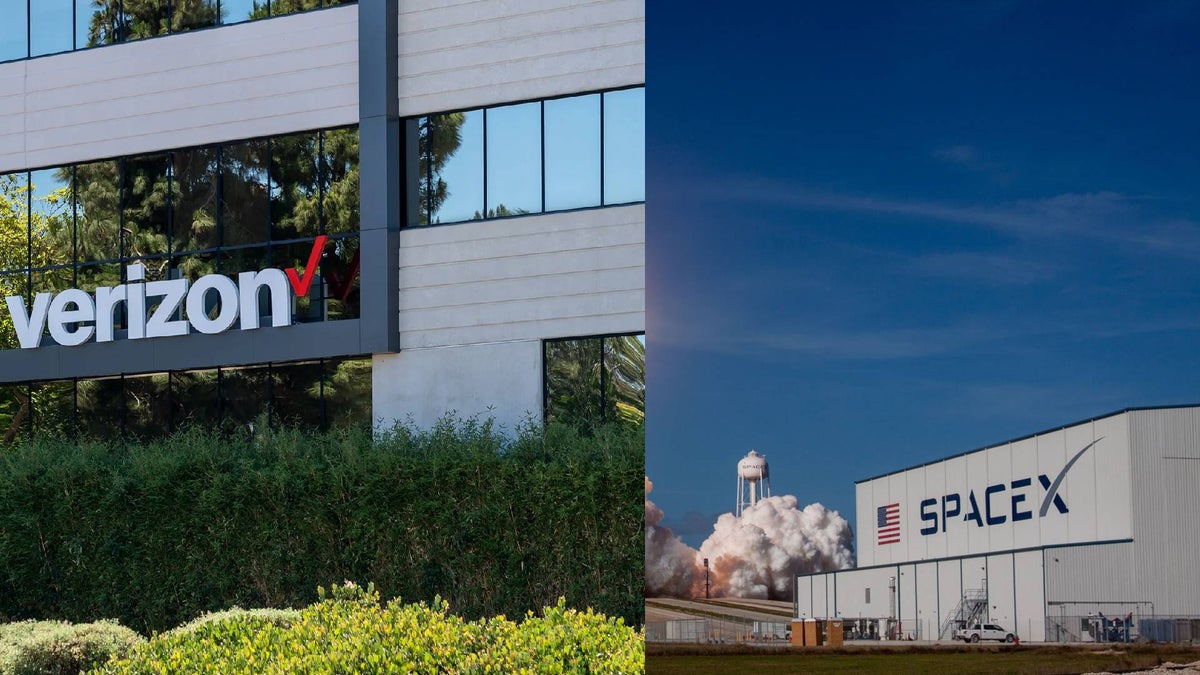
If Verizon ever decides to sell itself, it's sure to have one potential customer: Elon Musk.
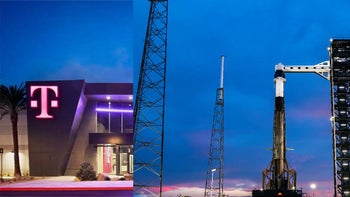
Musk is already involved in the carrier business through his company SpaceX's partnership with T-Mobile. SpaceX relies on T-Mobile's mid-band PCS spectrum to bring connectivity to areas with no terrestrial towers using its Starlink satellites. That calculus has somewhat changed because SpaceX has agreed to buy spectrum from EchoStar for nearly $17 billion.
SpaceX is acquiring EchoStar's AWS-4 and H-block spectrum licenses, which have been allocated for satellite and mobile communications. EchoStar's CEO, Hamid Akhavan, highlighted that the spectrum would turbocharge SpaceX's direct-to-cell vision. And Musk is already thinking along those lines and beyond.
Musk recently appeared as a guest on the All-In podcast. He revealed that the purchase of EchoStar's spectrum would allow satellites to beam high-bandwidth connectivity to phones. However, the frequencies he has bought aren't supported by the current chipsets, and it could take around two years for phones that can use the spectrum to arrive on the market.
SpaceX will also have to build satellites that can communicate on the frequencies.
Once the company is done building the satellites and working with smartphone manufacturers to enable support for the newly acquired frequencies, customers should be able to do data-intensive tasks just about anywhere.
EchoStar has international spectrum assets, giving Starlink the option of evolving into a global carrier. SpaceX doesn't see itself putting other carriers out of business, given that they have a lot of spectrum.
When asked about buying Verizon to own more spectrum, Musk didn't shoot down the possibility.
Musk is already involved in the carrier business through his company SpaceX's partnership with T-Mobile. SpaceX relies on T-Mobile's mid-band PCS spectrum to bring connectivity to areas with no terrestrial towers using its Starlink satellites. That calculus has somewhat changed because SpaceX has agreed to buy spectrum from EchoStar for nearly $17 billion.
SpaceX is acquiring EchoStar's AWS-4 and H-block spectrum licenses, which have been allocated for satellite and mobile communications. EchoStar's CEO, Hamid Akhavan, highlighted that the spectrum would turbocharge SpaceX's direct-to-cell vision. And Musk is already thinking along those lines and beyond.
SpaceX will also have to build satellites that can communicate on the frequencies.
Once the company is done building the satellites and working with smartphone manufacturers to enable support for the newly acquired frequencies, customers should be able to do data-intensive tasks just about anywhere.
So the phones that are able to use the spectrum that was acquired probably start shipping in around two years. And then we also need to build the satellites that are going to communicate on those frequencies. So in parallel, we're building the satellites and working with the handset makers to add these frequencies to the phones.
–Elon Musk, SpaceX CEO, September 2025
To be clear, we're not going to put the other carriers out of business. They're still going to be around because they own a lot of spectrum.
–Elon Musk, SpaceX CEO, September 2025
Not out of the question, I suppose, if that may happen.
–Elon Musk, SpaceX CEO, September 2025
Would you want SpaceX to buy Verizon?
264 Votes
Yes, I don't like where Verizon is going.
42.8%
No, that would reduce competition.
35.98%
Verizon might benefit from being sold, but not to Musk.
21.21%
Verizon is one of the biggest carriers in the US and is in great financial shape. It's not up for sale, but it's still interesting to see Musk alluding to his intentions of assuming a bigger role in the smartphone market.
For now, the company remains committed to working with telecom companies. According to one report, SpaceX may even lease some of the spectrum rights to T-Mobile.

Popular stories


Latest News
Things that are NOT allowed:
To help keep our community safe and free from spam, we apply temporary limits to newly created accounts: