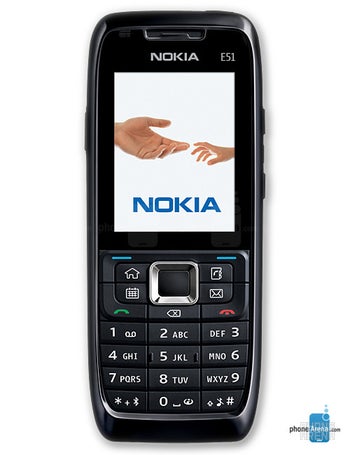
Nokia E51
- Bookmark
- Posted: 19 Sep 2007 Announced: 18 Sep 2007
- Market Status: Released
-
Do you ...?
- Links: Nokia E51 manual Nokia E51 Official Page Nokia E51 Review
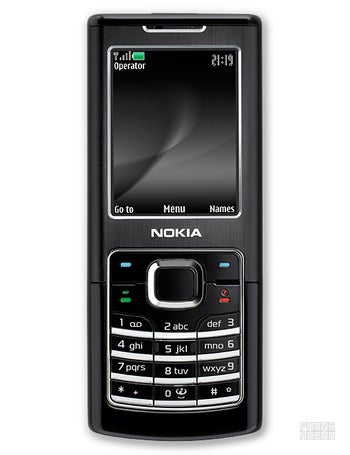
Nokia E51 is the 3G successor of the E50. The new phone adds 850/2100 MHz HSDPA to the quad-band GSM which makes it 2G/3.5G capable both in Europe and America. Other improvements over the previous model include support for Wireless LAN (WiFi) and newer Symbian 9.2.
Rating
Nokia E51 specifications
Pros
- Small dimensions (4.51 x 1.81 x 0.47 inches)
Cons
- Low resolution display (240 x 320 pixels)
- Lacks global positioning system (GPS)
- Slow processor (369 MHz)
- Too little RAM memory (96 MB RAM)
- Low-resolution camera (2 megapixels)
- The camera lacks autofocus
- Low-resolution video capture
- Lacks a standard (3.5mm) headphones jack
- Lacks an ambient light sensor for automatic screen brightness adjustment
Design
- Device type:
- Smart phone
- OS:
OS - Phone that has capabilities, not usually associated with phones. Usually it has some of the above features: - Email, Web browsing - Personal information management - LAN connectivity etc
- Symbian (9.2) S60 3rd Edition, Feature Pack 1
- Form factor:
Form factor - Refers to the form factor of a phone. The main handset designs are bar, clamshell, slide, swivel
- Candybar
- Dimensions:
Dimensions - Phone's dimensions
- 4.51 x 1.81 x 0.47 (115 x 46 x 12 mm)
- Weight:
Weight - Phone's weight
- 3.52 oz (100 g)
the average is 4.4 oz (126 g)
- 3.52 oz (100 g)
Display
- Resolution:
Resolution - Refers to the width and the height of the display
- 240 x 320 pixels
- Technology:
Technology - Refers to the type of the color displays. There are five major types: LCD, TFT, TFD, STN and OLED
- TFT
- Colors:
Colors - Shows the number of colors that the display supports
- 16 777 216
Battery
- Talk time:
Talk time - Maximum talk time in hours
- 4.40 hours
the average is 7 h (448 min)
- 4.40 hours
- Stand-by time:
- 13.0 days (312 hours)
the average is 16 days (390 h)
- 13.0 days (312 hours)
- Capacity:
Capacity - Shows the battery capacity in mAh
- 1070 mAh
Hardware
- Processor:
- Single core, 369 MHz, ARM11
- System memory:
- 96 MB RAM / 256 MB ROM
- Built-in storage:
- 130 MB
- Storage expansion:
Storage expansion - Capability to add additional memory to your phone.
- Slot Type:
Slot Type - Shows what type of additional memory can be added to the particular phone. Eight major memory slot types are available: MMC, SD, CF, Memory Stick Duo, miniSD, RS MMC, TransFlash (microSD), Memory Stick Pro Duo
- microSD
- Slot Type:
Camera
- Camera:
Camera - Camera specs
- 2 megapixels
- Features:
- Digital zoom
- Camcorder:
- 320x240 (QVGA) (15 fps)
- Features:
- Video calling
Multimedia
- Radio:
- FM, Stereo, Visual Radio
Internet browsing
- Browser:
Browser - Capability to access special Internet sites using the mobile phone
- S60 OSS Browser
- Supports:
- HTML, XHTML, WAP 2.0, Flash Lite
Technology
- GSM:
GSM - Global System for Mobile communications. A world standard for digital cellular communications using narrowband TDMA (Time Division Multiple Access), which allows up to eight calls at a time on 800 MHz and 1800 MHz frequencies. Introduced in 1991. Is the standard most commonly used in Europe and Asia, but not in the United States. GSM phones use a Subscriber Identity Module (SIM) smart card that contains user account information. Any GSM phone becomes immediately programmed after plugging in the SIM card, thus allowing GSM phones to be easily rented or borrowed. SIM cards can be programmed to display custom menus for personalized services.GSM provides a short messaging service (SMS) that enables text messages up to 160 characters in length to be sent to and from a GSM phone.
- 850, 900, 1800, 1900 MHz
- UMTS:
UMTS - Universal Mobile Telecommunications Service, also called WCDMA, is a 3G (Third Generation) packet-based transmission of text, digitized voice, video, and multimedia at data rates up to 2 Mbps. It is based on GSM standard and is supported by major standards bodies and manufacturers
- 850, 2100 MHz
- Data:
Data - Shows the particular phone's type of data. the major mobile phone data types are GPRS, CDMA2000 1xRTT, EDGE, CDMA2000 1xEV-DO, UMTS, etc.
- HSDPA 3.6 Mbit/s, UMTS, EDGE
Phone features
- Phonebook:
- Unlimited entries, Multiple numbers per contact, Picture ID, Ring ID
- Organizer:
- Calendar, Alarm, To-Do, Calculator, Notes
- Messaging:
- SMS, MMS (T9), Predictive text input
- E-mail:
E-mail - Shows if the phone supports email features
- IMAP, POP3, SMTP, Microsoft Exchange, Visto, Seven Always-On Mail, Push e-mail
Connectivity
- Bluetooth:
Bluetooth - Low power radio technology replacing the need for wires connecting electronic devices such as personal computers, printers, palm top computers and mobile phones.
- 2.0, EDR
- Wi-Fi:
Wi-Fi - Wireless Local Area Network (WLAN) - used radio waves (RF) or infrared signals to send and receive data over the air. Most popular WLAN solutions today is Wi-Fi (802.11b and 802.11g) standards. 801.11b provides data speeds of around 11mbps while 802.11g can go up to 54 mbps.
- 802.11 g
- USB:
- USB 2.0
- Computer sync, Infrared, SyncML, VoIP
Other features
- Notifications:
- Service lights, Music ringtones (MP3), Vibration, Phone profiles, Speakerphone
- Voice dialing, Voice commands, Voice recording, Push-to-Talk
Availability
- Officially announced:
- 18 Sep 2007
To see the full specifications with in-depth details click here.
Despite our efforts to provide full and correct Nokia E51 specifications, there is always a possibility of admitting a mistake. If you see any wrong or incomplete data, please LET US KNOW.

If you are interested in using our specs commercially, check out our Phone specs database licensing page.