PhoneArena is looking for new authors! To view all available positions, click here.

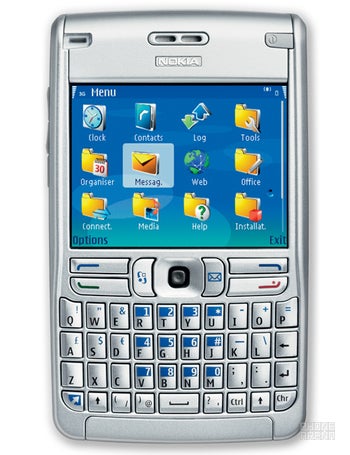
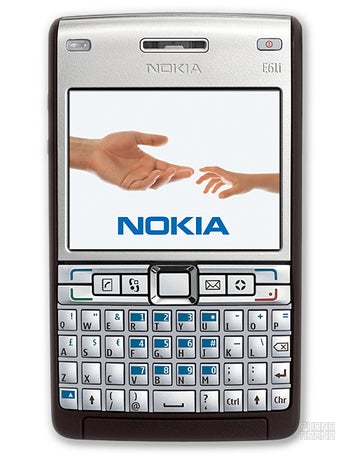
Nokia E61 vs Nokia E61i

Nokia E61 Remove phone

phone
User Rating - 7.9

Posted: 12 Oct 2005
Market Status: Released

Nokia E61i Remove phone

phone
User Rating - 8.9

Posted: 12 Feb 2007
Market Status: Released

Add phone to compare

Design
Device typeSmart phoneSmart phone 
OSSymbian (9.1) S60 3rd EditionSymbian (9.1) 
Form factorCandybarCandybar 
Dimensions4.60 x 2.74 x 0.55 inches (117 x 70 x 14 mm)4.60 x 2.75 x 0.55 inches (117 x 70 x 14 mm) 
Weight4.60 oz (144 g)
the average is 4.4 oz (125 g)
5.29 oz (150 g)
the average is 4.4 oz (125 g)
 
Design featuresFull keyboard, Soft keys (2)Full keyboard, Soft keys (2) 
Side KeysLeft: Volume control, OtherLeft: Volume control, Other 
Display
Physical size 2.8 inches 
Resolution320 x 240 pixels320 x 240 pixels 
Pixel density

Pixel density - The pixel density of a display represents the number of pixels over an area of one inch. It’s measured in “pixels per inch”, or ppi. The higher the number, the more detailed and good-looking the display is.

 143 ppi 
Technology

Technology - There are two main screen technologies currently used in phones and tablets: LCD and AMOLED. The former usually features a light source and liquid crystals, while the latter is based on organic light-emitting diodes. Newer LCD variations like IPS-LCD and Super-LCD allow for very accurate color reproduction and very wide viewing angles, where no significant image quality loss is observed. Current AMOLED screens differ in such a way that they can exhibit much more saturated colors (sometimes too much) and incredibly high contrast levels, which is due to black color being completely black in AMOLED displays.

TFTTFT 
Colors16 777 21616 777 216 
Battery
Talk time7.00 hours
the average is 10 h (623 min)
5.00 hours
the average is 10 h (623 min)
 
Stand-by time11.0 days (264 hours)
the average is 18 days (434 h)
17.0 days (408 hours)
the average is 18 days (434 h)
 
Capacity1500 mAh1500 mAh 
TypeLi - IonLi - Ion 
Hardware
Processor

Processor - The processor is the main computing component of a phone and is a major factor when it comes to the overall speed of the device. Some more powerful smartphones use dual-core and quad-core processors designed to deliver greater performance.

 Single core, 220 MHz, ARM9 
System memory

System memory - System memory, or RAM memory is the type of memory that the device uses to temporarily store data from the OS or currently-running apps. The more RAM available to the device, the better the performance will be when multiple or heavier programs are running.

 64 MB RAM / 128 MB ROM 
Built-in storage0.075 GB0.06 GB 
Storage expansionminiSDmicroSD 
Camera
Camera 2 megapixels 
Aperture size

Aperture size - The aperture of a camera is the opening through which light travels before it reaches the camera sensor. The smaller the number is, the bigger this opening is, allowing for more light to pass.

 F2.8 
Features Digital zoom, Self-timer 
Camcorder 352x288 (CIF) 
FeaturesVideo callingVideo calling 
specifications continue after the ad
Multimedia
Music player   
Supported formatsMP3, AAC, AAC+, eAAC+MP3, AAC, AAC+, eAAC+, M4A (Apple lossless), MP4, AMR 
Video playback   
Supported formatsMPEG4, 3GPMPEG4, H.263, 3GPP, RealVideo 
StreamingAudio, VideoAudio, Video 
Internet browsing
Browsersupports: supports: HTML, XHTML, WAP 2.0, Flash Lite (1.1)S60 OSS Browser, supports: supports: HTML, XHTML, WAP 2.0, Flash Lite (1.1) 
Technology
GSM850, 900, 1800, 1900 MHz850, 900, 1800, 1900 MHz 
UMTS2100 MHz2100 MHz 
DataUMTS, EDGEUMTS, EDGE 
Global RoamingYesYes 
Phone features
PhonebookCaller groups, Multiple numbers per contact, Picture ID, Ring IDUnlimited entries, Multiple numbers per contact, Picture ID, Ring ID 
OrganizerCalendar, Alarm, To-Do, Calculator, Converter, NotesCalendar, Alarm, To-Do, Calculator, Notes 
MessagingSMS, MMSSMS, MMS, Predictive text input 
E-mailIMAP, POP3, SMTP, Blackberry Connect, Visto, Seven Always-On MailIMAP, POP3, SMTP, Blackberry Connect 
Instant MessagingYesYes 
JAVA

JAVA - J2ME (Java 2 Platform, Micro Edition) is a technology that allows programmers to use the Java programming language and related tools to develop programs for mobile wireless information devices such as cellular phones and personal digital assistants (PDAs). J2ME consists of programming specifications and a special virtual machine, the K Virtual Machine, that allows a J2ME-encoded program to run in the mobile device.

Midp 2.0, CLDC 1.1Midp 2.0, CLDC 1.1 
APIJSR-75, JSR-184, JSR-185  
GamesDownloadable  
Connectivity
Bluetooth1.21.2 
ProfilesBasic Imaging (BIP), Dial-up networking (DUN), File Transfer (FTP), Generic Access (GAP), Generic Object Exchange (GOEP), Handsfree (HFP), Headset (HSP), Object Push (OPP), Serial Port (SPP), SIM Access (SAP)Basic Imaging (BIP), Dial-up networking (DUN), File Transfer (FTP), Generic Access (GAP), Generic Object Exchange (GOEP), Handsfree (HFP), Headset (HSP), Human Interface Device (HID), Object Push (OPP), Serial Port (SPP), SIM Access (SAP) 
Wi-FiYes802.11 b, g 
USBYesUSB 2.0 
ConnectorProprietaryProprietary 
Features Mass storage device 
OtherComputer sync, Infrared, SyncML, VoIPComputer sync, Infrared, SyncML, VoIP 
Other features
NotificationsService lights, Music ringtones (MP3), Polyphonic ringtones (48 voices), Vibration, Phone profiles, SpeakerphoneMusic ringtones (MP3), Polyphonic ringtones (48 voices), Vibration, Phone profiles, Speakerphone 
OtherVoice dialing, Voice commands, Voice recording, Push-to-TalkVoice dialing, Voice commands, Voice recording, Push-to-Talk 
Regulatory Approval
FCC approval

FCC approval - The Federal Communications Commission (FCC) is an independent United States government agency, directly responsible to Congress. The FCC was established by the Communications Act of 1934 and is charged with regulating interstate and international communications by radio, television, wire, satellite and cable. The FCC's jurisdiction covers the 50 states, the District of Columbia, and U.S. possessions. Every wireless phone device that that is sold in the U.S. has to be tested and approved for sale by the FCC.

   
Date approved

Date approved - Shows the date when the particular phone is approved by the Federal Communications Commission

01 Mar 200622 Jan 2007 
FCC ID value: PYARM-89 linkFCC ID value: PYARM-294 link 
FCC measured SAR

FCC measured SAR - The exposure standard for mobile devices employs a unit of measurement known as the Specific Absorption Rate, or SAR. The SAR limit stated in the international guidelines is 2.0 W/ kg*. Tests for SAR are conducted using standard operating positions with the device transmitting at its highest certified power level in all tested frequency bands. Although the SAR is determined at the highest certified power level, the actual SAR of the device while operating can be well below the maximum value.

   
Head0.78 W/kg0.78 W/kg 
Measured in1900 MHz1900 MHz 
Body0.56 W/kg0.41 W/kg 
Measured in1900 MHz1900 MHz 
EU SAR   
Head0.79 W/kg0.57 W/kg 
Availability
Officially announced12 Oct 2005  
  • Nokia Lumia 925Nokia Lumia 925
  • BlackBerry Q5BlackBerry Q5
  • Sony Xperia ZRSony Xperia ZR
  • Nokia Lumia 928Nokia Lumia 928
  • Vertu TiVertu Ti
  • Nokia Asha 501Nokia Asha 501
  • Samsung Galaxy CoreSamsung Galaxy Core
  • Samsung Galaxy Tab 3Samsung Galaxy Tab 3
View all