Beyond LTE"
A phone is only as good as the network it's on." You've probably heard that line many times, usually coming from spokespersons of wireless carriers, but like it or not, it's a fact that mobile networks are the backbone of the wonderful services we're so used to enjoying on our smartphones. In fact, as mobile technologies progress with time, our dependance on the carriers' networks seems to be growing stronger and stronger. For example, if the mobile network goes down, not only are we going to be unable to call and text each other, as in years past, but we'll also be prevented from accessing the infinite resources of the web whenever we want, not to mention our documents residing in the cloud, our email, streaming services for music and video, and, what's probably most important, a decent weekly forecast! Indeed, as some of us are awaiting the winter season to come and hit us with full force, what could be more awful than having our weather radars jammed by a sudden network outage?! But we digress...
The point is that while smartphone manufacturers are doing whatever they can to bring exciting new features to market, it is the mobile network that enables us to use them whenever and wherever we want, which is the whole point of mobile devices. In our new "Beyond LTE" article series we'll take a look at what lies ahead of us. Obviously, that should be something called 5G, but this is just a general term housing all the future technologies that are being currently researched. By the looks of it, there are no defined "standards" yet for what 5G should be, but there is some partial info here and there that can at least give us a hint of where mobile technology is going.
However, don't want to simply offer you fragments of information. Instead, we'd like to paint a complete picture for you, which means we're going to start from what is considered to be the dawn of wireless connectivity - the mobile radio telephone technology or, as it is also called, 0G. From here, we'll time-travel through the years until we reach present day and make an overview of all that awaits us in the future - as in-depth as we can go. But fear not! We ain't going to bore you with long articles about the history of cell phones. This first part of the series will provide you with a brief summary of how it all started - think of it as a timeline of the most significant moments of those dark (and magnificent?), early years.
We'll divide the series into three parts, with Part 1 focusing on pre-cellular mobile technology, Part 2 exploring the events from the first truly wireless phones (1G) all the way to the current 4G standards, and Part 3 being dedicated to the most recent developments of mobile technology that, with a bit of luck, may some day find its way to our pockets. That article isn't going to read itself, guys, let's get going!
0G - The mobile radio telephone is born
Before the arrival of the first cellular technologies, there was a not-that-brief period when the mobile radio telephone roamed the world (not literally). As you can imagine, the pre-cellular era wasn't as exciting as today's rapidly-developing mobile markets. The mobile telephones of those years didn't exactly fly off the shelves like iPhones, so to speak, but they laid the foundations for the forthcoming generation of truly wireless mobile telecommunications.
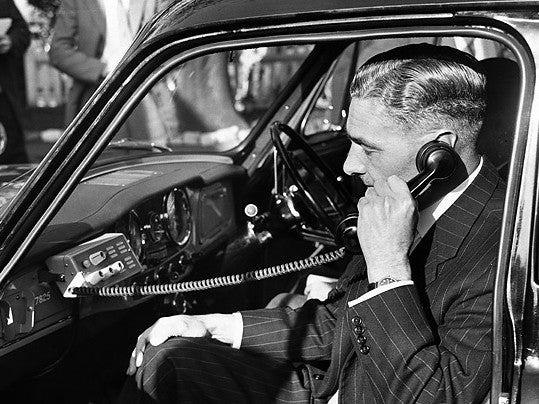
Reginald Blevins, Postmaster General of the UK
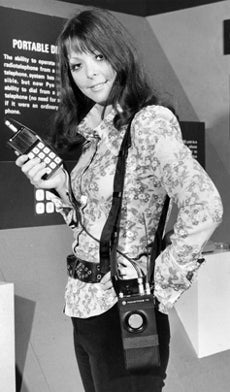
It all started sometime around 1946, when Motorola and Bell System began operating the first commercial mobile phone service, known as MTS (Mobile Telephone System). And yes, back in those days, calls were not connected automatically, but by humans. The so-called "mobile phones" were mainly installed in various kinds of vehicles, with a bulky transceiver neatly tucked somewhere in the trunk of the car, and a handset and a dialer positioned somewhere near the driver's seat. This allowed users to stay connected while out and about with their vehicles, although coverage was originally pretty scarce, to put it mildly. The few models that weren't designed for car use were "briefcase" models, which were also mainly used by some kind of specialists, who needed "extreme connectivity."
Imagine what an ad of that time would be like: "
This is the future of mobile telephones, but you can have it now! Weighs in at just over 1000oz (30kg) and takes no more space than the spare tire in your trunk!" Who could resist?
Mobile telephones finally went fully automatic in 1962, when Bell System introduced IMTS, or Improved Mobile Telephone System. No longer was a person needed in order to connect the calls (imagine the job cuts!).
Coming as a beta version just a year later, though, from the USSR (Union of Soviet Socialist Republics) with love, was the Altay system, which is considered to be the first fully automatic mobile phone system in whole Europe. Altay became fully operational two years later, being gradually deployed across major cities in Russia. You may not believe it, but some variations of the Altay system are still in use today in some parts of Russia. The Scandinavian countries, which were to become the pioneers of mobile devices in Europe, also had their fair share of 0G glory, with Norway deploying its first mobile system in about 1966, followed by Finland in 1971. The devices that were offered were still designed mainly for use in cars.
Meanwhile in the US, Bell and its IMTS had an interesting competitor in the form of the RCC technology, or Radio Common Carrier. RCC service providers were operated by most various companies, and although they were a force to be reckoned with, RCCs were basically doomed due to them not complying to any available technology standard. Actually, some RCC providers, which happened to be in close proximity of one another, designed their gear so that it could work on each of their networks, but on the whole, RCC providers didn't give much thought to the ability to "roam" seamlessly from one network to another, probably because they were too busy as they had to operate calls manually.
The RCC industry in the United States eventually started work on a unified standard, but this has obviously been too late, as shortly after that Bell introduced AMPS - the first true wireless telephone technology (1G) in the US, putting an end to its longtime rivalry with RCC providers.
Stay tuned for Beyond LTE (Part 2): From AMPS to LTE!


 FCC OKs Cingular\'s purchase of AT&T Wireless
Things that are NOT allowed: